


Review
doi: 10.1038/nrc2345.
Small integrin-binding ligand N-linked glycoproteins (SIBLINGs): multifunctional proteins in cancer
Affiliations
- PMID: 18292776
- PMCID: PMC2484121
- DOI: 10.1038/nrc2345
Item in Clipboard
Review
Small integrin-binding ligand N-linked glycoproteins (SIBLINGs): multifunctional proteins in cancer
Nat Rev Cancer.
2008 Mar.
Abstract
Numerous components and pathways are involved in the complex interplay between cancer cells and their environment. The family of glycophosphoproteins comprising osteopontin, bone sialoprotein, dentin matrix protein 1, dentin sialophosphoprotein and matrix extracellular phosphoglycoprotein - small integrin-binding ligand N-linked glycoproteins (SIBLINGs) - are emerging as important players in many stages of cancer progression. From their detection in various human cancers to the demonstration of their key functional roles during malignant transformation, invasion and metastasis, the SIBLINGs are proteins with potential as diagnostic and prognostic tools, as well as new therapeutic targets.
Figures
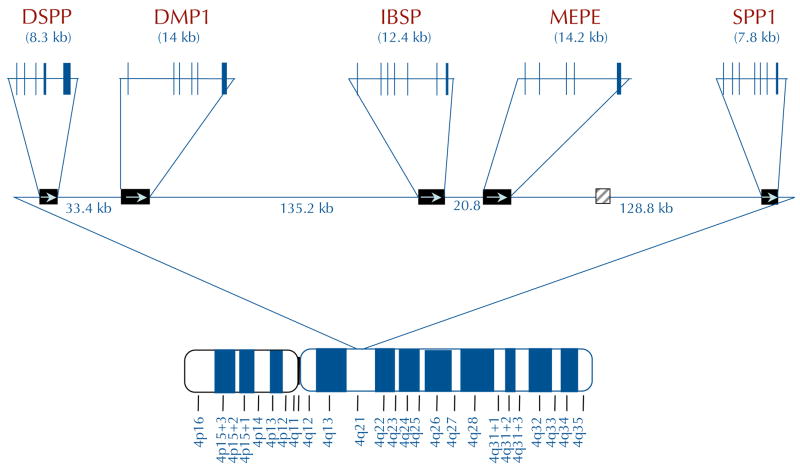
a| The genes are clustered within a 375 kb region of chromosome 4 and are similarly arranged in all completed mammalian genomes to date. Except for an apparent pseudogene (HSP90AB177) between matrix extracellular phosphoglycoprotein (MEPE) and secreted phosphoprotein 1 (SPP1) in humans and chimps only (light grey box), there are no other significant open-reading frames within this region. Integrin-binding sialoprotein (IBSP) encodes bone sialoprotein (BSP) and SPP1 encodes osteopontin (OPN). Vertical lines represent exons. b | The transcripts of small integrin-binding ligand N-linked glycoprotein (SIBLING) genes. The SIBLINGs, which are composed almost exclusively of hydrophilic amino acids, are likely to be flexible, extended structures in solution. The exons (boxes; not drawn to scale) often have similar motifs and properties and are separated by type 0 introns. The first exon is non-coding. The second exon contains the start codon, the hydrophobic signal peptide and the first two amino acids of the mature protein (A1A2). Exons 3 and 5 frequently contain consensus sequences for serine phosphorylation (PO4). Exon 4 can be relatively proline-rich and, like the other small exons (3 and 5), has been shown in some cases to be spliced out of a subset of mRNA (exons with dashed borders). The integrinbinding tripeptide, Arg–Gly–Asp (RGD), is found within the last one or two large exons (which typically encode >80% of the protein). All SIBLINGs contain variously located N- and/or O-linked oligosaccharides, but only the observed (GAG*) and proposed (GAG) consensus attachment sites of the relatively long chain glycosaminoglycans are shown. (Orange GAG indicates chondroitin or dermatan sulphate chains and green GAG indicates keratan sulphate chains.) Cleavage of SIBLINGs (scissors) by specific proteases (bone morphogenetic protein 1 (BMP1), thrombin, matrix metallopeptidases and so on) is thought to be important, although whether this activates and/or inactivates specific SIBLING functions is currently under investigation. Human DSPP also contains ~240 tandem repeats of the phosphorylated nominal Ser–Ser–Asp (SSD) tripeptide. (For summary of some of the post-translational modifications and protease cleavage sites, see REF. .) DMP1, dentin matrix protein 1; DSPP, dentin sialophosphoprotein.
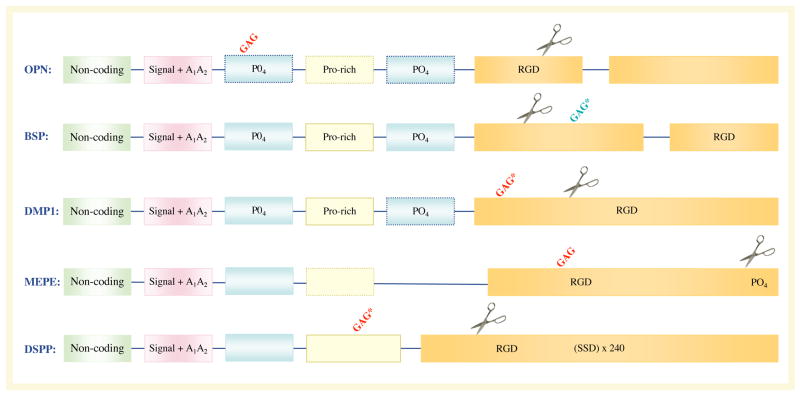
a| The genes are clustered within a 375 kb region of chromosome 4 and are similarly arranged in all completed mammalian genomes to date. Except for an apparent pseudogene (HSP90AB177) between matrix extracellular phosphoglycoprotein (MEPE) and secreted phosphoprotein 1 (SPP1) in humans and chimps only (light grey box), there are no other significant open-reading frames within this region. Integrin-binding sialoprotein (IBSP) encodes bone sialoprotein (BSP) and SPP1 encodes osteopontin (OPN). Vertical lines represent exons. b | The transcripts of small integrin-binding ligand N-linked glycoprotein (SIBLING) genes. The SIBLINGs, which are composed almost exclusively of hydrophilic amino acids, are likely to be flexible, extended structures in solution. The exons (boxes; not drawn to scale) often have similar motifs and properties and are separated by type 0 introns. The first exon is non-coding. The second exon contains the start codon, the hydrophobic signal peptide and the first two amino acids of the mature protein (A1A2). Exons 3 and 5 frequently contain consensus sequences for serine phosphorylation (PO4). Exon 4 can be relatively proline-rich and, like the other small exons (3 and 5), has been shown in some cases to be spliced out of a subset of mRNA (exons with dashed borders). The integrinbinding tripeptide, Arg–Gly–Asp (RGD), is found within the last one or two large exons (which typically encode >80% of the protein). All SIBLINGs contain variously located N- and/or O-linked oligosaccharides, but only the observed (GAG*) and proposed (GAG) consensus attachment sites of the relatively long chain glycosaminoglycans are shown. (Orange GAG indicates chondroitin or dermatan sulphate chains and green GAG indicates keratan sulphate chains.) Cleavage of SIBLINGs (scissors) by specific proteases (bone morphogenetic protein 1 (BMP1), thrombin, matrix metallopeptidases and so on) is thought to be important, although whether this activates and/or inactivates specific SIBLING functions is currently under investigation. Human DSPP also contains ~240 tandem repeats of the phosphorylated nominal Ser–Ser–Asp (SSD) tripeptide. (For summary of some of the post-translational modifications and protease cleavage sites, see REF. .) DMP1, dentin matrix protein 1; DSPP, dentin sialophosphoprotein.
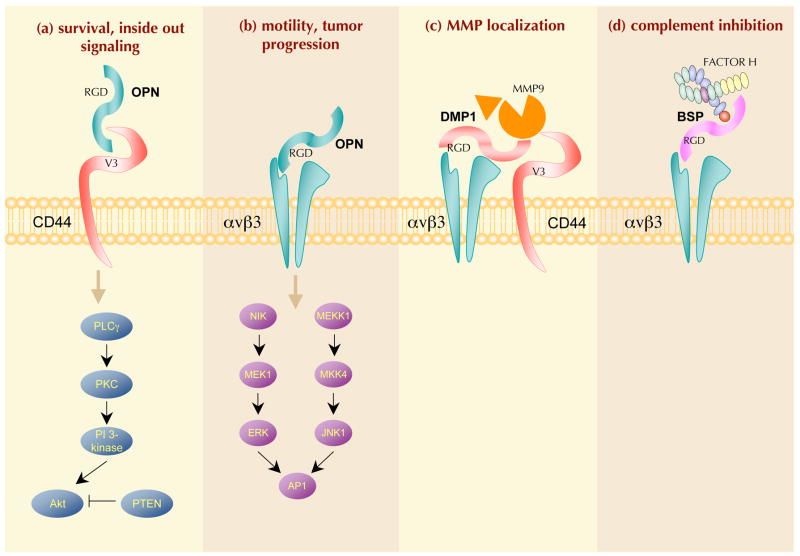
Small integrin-binding ligand N-linked glycoproteins (SIBLINGs; bone sialoprotein (BSP), dentin matrix protein 1 (DMP1) and osteopontin (OPN) are shown) can initiate Arg–Gly–Asp (RGD)-dependent and RGD-independent interactions with several integrins (such as αvβ3 and a9β1, respectively). OPN (and perhaps DMP1) can also interact with the CD44 family of receptors. Some of these complexes are able to mediate the following functions: (a) cell survival through phospholipase C-γ (PLCγ)–protein kinase C (PKC)–phosphatidylinositol 3-kinase (PI3K)–Akt pathway activation that leads to anti-apoptotic signals in tumour cells. OPN-induced Akt phosphorylation can be blocked by the tumour suppressor PTEN (phosphatase and tensin homologue). However, PTEN is frequently mutated and thus rendered inactive in cancer cells such as melanoma and glioma; (b) motility through the activation of the canonical αvβ3 integrin pathway where both nuclear factorinducing kinase (NIK)–ERK (extracellular signal-related kinase) and MEKK1 (also known as mitogen-activated protein kinase kinase kinase 1 (MAP3K1)–JNK1 (also known as MAPK8) signalling promote cell migration by activating AP1- dependent gene expression (for a review see REF. 178). Upon binding to αvβ3, OPN also stimulates epidermal growth factor receptor (EGFR) transactivation, ERK phosphorylation and AP1 activation; (c) bridging of otherwise soluble matrix metalloproteinases (MMPs) to cell membranes and their activation, enabling digestion of local extracellular matrix and thereby aiding tissue remodelling and cell migration through the extracellular matrix, a key step for cancer cell invasion; and (d) bridging and activation of complement factor H (CFH) to receptors including αvβ3 integrin. By promoting the degradation of the C3 convertase complex C3bBb, SIBLING-activated CFH disables the formation of the membrane attack complex (MAC) and the subsequent lysis of cancer cells, thus favouring their escape from host immune defence. The ? illustrates that it is not known if all binding of SIBLINGs (with or without ligands) necessarily results in signal transduction. MKK4, MAP kinase kinase 4.
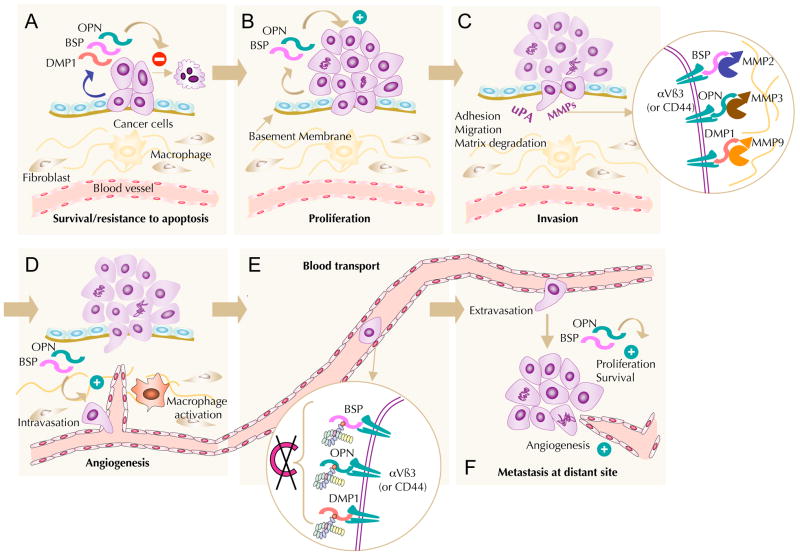
a, b | At the primary site, cancer cells secrete high levels of small integrin-binding ligand, N-linked glycoproteins (SIBLINGs), which favour their proliferation (osteopontin (OPN) and bone sialoprotein (BSP)) and survival (OPN, BSP and dentin matrix protein 1 (DMP1)). c | Cancer cells with enhanced adhesive and migratory capabilities can detach from the primary tumour mass and degrade the basement membrane to invade the stroma. The associated proteolysis of the extracellular matrix (ECM) is mediated through matrix metalloproteinases (MMPs) and urokinase plasminogen activator (uPA). OPN enhances uPA activation, cell motility and invasion into the surrounding tissue. The insert shows BSP, DMP1 and OPN bound to their respective receptors (αvβ3 integrins and/or CD44), which may actively promote local proteolysis through binding specific MMPs (MMP2, MMP9 and MMP3, respectively). d | As ligands for αvβ3 integrin, OPN and BSP have roles in angiogenesis. The expression of these SIBLINGs by tumour cells promotes the migration and adhesion of activated endothelial cells, which are crucial during angiogenesis. OPN acts as a chemotactic and adhesion molecule for macrophages and promotes their infiltration of the tumour. e | The transport of cancer cells in the circulation is one of the limiting steps for metastasis to distant organs because they are confronted by the host immune system. The insert shows that, in this context, the expression and the presentation of BSP, DMP1 and OPN on the cancer cell surface enables them to sequester and activate complement factor H (CFH) and protect themselves from complement-mediated lysis. f | At distant site(s), cancer cell extravasation is followed by the formation of a secondary colony. Proliferative, survival and angiogenenic signals by newly formed metastatic colonies occur mainly through mechanisms similar to those that are used during the early steps of tumour progression with tumour-secreted SIBLINGs continuing to act as enhancing factors.
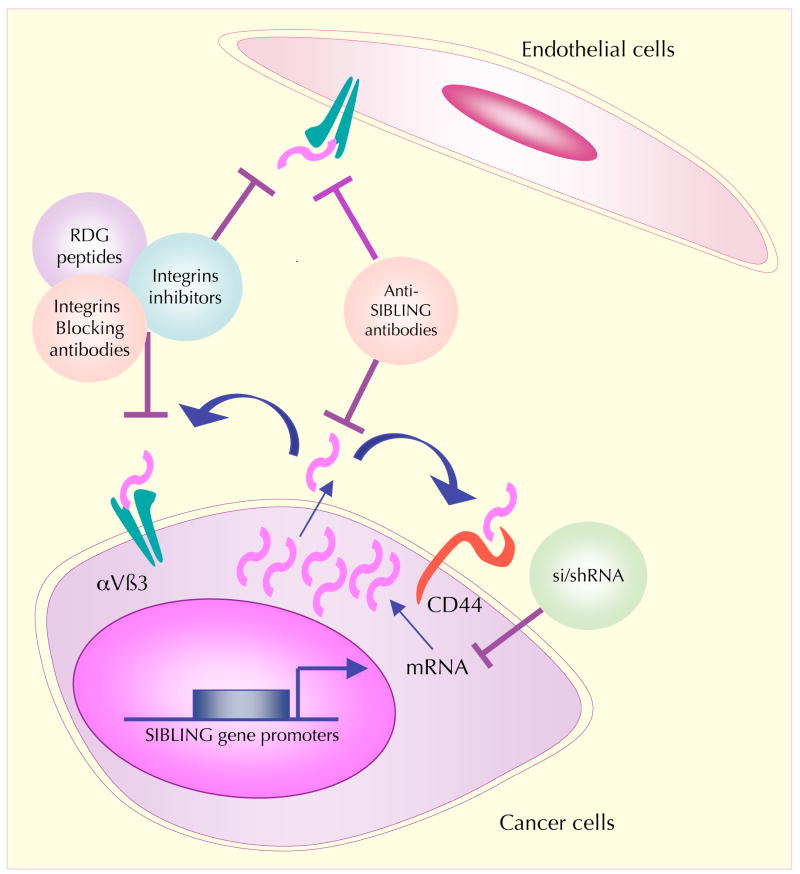
Suppression of the expression of small integrin-binding ligand N-linked glycoproteins (SIBLINGs) in cancer cells at the level of mRNA can be accomplished through RNA interference by the use of specific small interfering RNAs (siRNAs) or short hairpin RNAs (shRNAs). Blocking of tumour-derived SIBLINGs at the protein level by specific blocking peptides and antibodies reduces tumour progression and metastatic dissemination because it affects interactions of SIBLINGs with their receptors on the cancer cell surface. This might result in the dysfunction of signalling pathways that affect tumour cell proliferation and survival. Because SIBLINGs exert their effects principally through integrins and CD44, antibody-mediated interference with these receptor– ligand interactions or suppression of associated signal transduction events are other potential means to restrain tumour progression. Inhibition of the binding of SIBLINGs to endothelial cell surface integrin receptors triggers endothelial cell apoptosis and can thereby decrease tumour-associated angiogenesis.
References
-
- Fisher LW, Torchia DA, Fohr B, Young MF, Fedarko NS. Flexible structures of SIBLING proteins, bone sialoprotein, and osteopontin. Biochem Biophys Res Commun. 2001;280:460–465. Like many other proteins that have multiple binding partners, BSP and OPN are shown by NMR to be unstructured and flexible in solution. The SIBLING family is first defined here based on common exon and intron elements. - PubMed
-
- Chaplet M, et al. Expression of dentin sialophosphoprotein in human prostate cancer and its correlation with tumor aggressiveness. Int J Cancer. 2006;118:850–856. - PubMed
-
- Chen J, et al. Bone sialoprotein promotes tumor cell migration in both in vitro and in vivo models. Connect Tissue Res. 2003;44(Suppl 1):279–284. - PubMed
-
- El-Tanani MK, et al. The regulation and role of osteopontin in malignant transformation and cancer. Cytokine Growth Factor Rev. 2006;17:463–474. This is a detailed overview of OPN-mediated cell signalling in relation to cancer progression. - PubMed
-
- Furger KA, Menon RK, Tuck AB, Bramwell VH, Chambers AF. The functional and clinical roles of osteopontin in cancer and metastasis. Curr Mol Med. 2001;1:621–632. - PubMed
Publication types
MeSH terms
Substances
Grants and funding
LinkOut - more resources
Full Text Sources
Other Literature Sources
Research Materials
