. 2008 Mar;118(3):1099-109.
doi: 10.1172/JCI34409.

Regression of human kidney cancer following allogeneic stem cell transplantation is associated with recognition of an HERV-E antigen by T cells

Affiliations

Regression of human kidney cancer following allogeneic stem cell transplantation is associated with recognition of an HERV-E antigen by T cells

Yoshiyuki Takahashi et al. J Clin Invest. 2008 Mar.

Erratum in

  • J Clin Invest. 2008 Apr;118(4):1584. Abdul, Tawab [corrected to Tawab, Abdul]

Abstract

Transplanted donor lymphocytes infused during hematopoietic stem cell transplantation (HSCT) have been shown to cure patients with hematological malignancies. However, less is known about the effects of HSCT on metastatic solid tumors. Thus, a better understanding of the immune cells and their target antigens that mediate tumor regression is urgently needed to develop more effective HSCT approaches for solid tumors. Here we report regression of metastatic renal cell carcinoma (RCC) in patients following nonmyeloablative HSCT consistent with a graft-versus-tumor effect. We detected RCC-reactive donor-derived CD8(+) T cells in the blood of patients following nonmyeloablative HSCT. Using cDNA expression cloning, we identified a 10-mer peptide (CT-RCC-1) as a target antigen of RCC-specific CD8(+) T cells. The genes encoding this antigen were found to be derived from human endogenous retrovirus (HERV) type E and were expressed in RCC cell lines and fresh RCC tissue but not in normal kidney or other tissues. We believe this to be the first solid tumor antigen identified using allogeneic T cells from a patient undergoing HSCT. These data suggest that HERV-E is activated in RCC and that it encodes an overexpressed immunogenic antigen, therefore providing a potential target for cellular immunity.


Figures
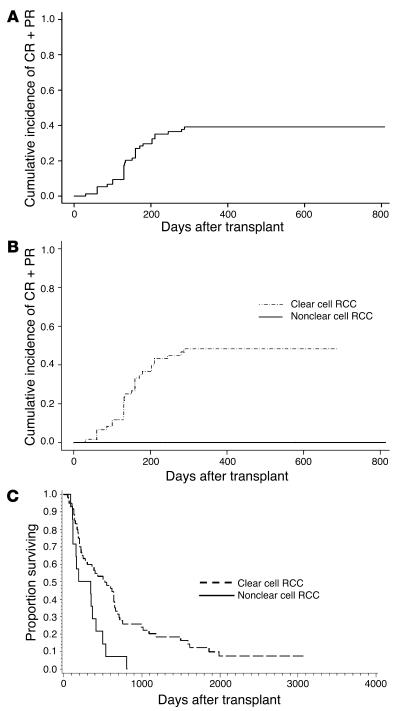
Figure 1
Figure 1. Disease response and survival based on RCC histology (clear-cell RCC versus non-clear-cell RCC).
(A) The cumulative incidence of disease response (combined complete and partial responses [CR + PR]) following nonmyeloablative allogeneic HSCT. Onset of disease regression was delayed a median 133 days (range, 30–287 days) following HSCT. (B) Disease responses (complete responses plus partial responses) were only observed in RCC patients with clear-cell histology (48% versus 0% cumulative incidence of a disease response; P = 0.0018). (C) Patients with clear-cell histology had longer survival after HSCT compared with those with non-clear-cell RCC (median survival, 525 versus 273 days; P = 0.003).
Figure 2
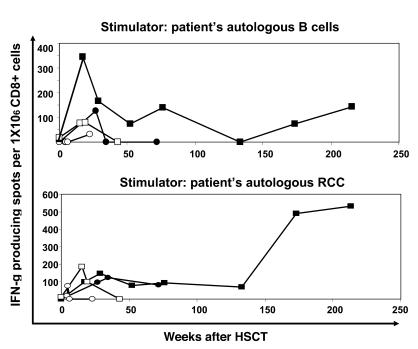
Figure 2. Detection of RCC-reactive CD8+ T cells in PBMCs after transplantation.
The frequency of CD8+ T cells in PBMCs before and at multiple time points after HSCT that recognized patient B cells or patient RCC cells was measured by an IFN-γ ELISPOT analysis; SAUJ (filled squares), LYO (filled circles), JOH (open squares), and POR (open circles). Alloreactive CD8+ T cells that recognized patient B cells were absent at baseline, then became detectable in all 4 patients after HSCT, with the highest precursor frequency measured in the first few months after transplantation. RCC-reactive T cells were absent before HSCT in patients but became detectable after HSCT in 3 of 4 RCC patients. In patient JOH, who did not have a disease response, these populations were detected only transiently. In contrast, patients LYO and SAUJ, who had evidence for a GVT effect, had RCC-reactive T cells detected for more than 1.5 and 4 years, respectively, after HSCT.
Figure 3
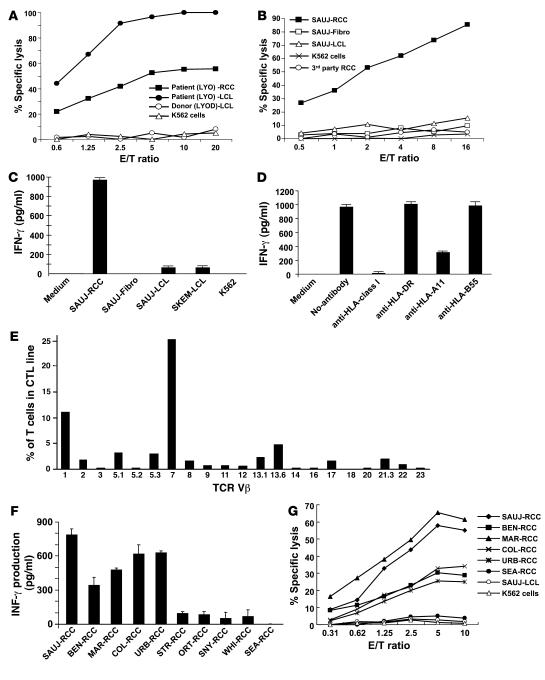
Figure 3. Characterization and generation of tumor-reactive CTLs.
CTLs and T cell clones that killed patient RCC cells were isolated using PBMCs collected after transplant and stimulated in vitro with irradiated patient tumor cells. (A) A CTL line was expanded from RCC patient LYO by stimulating posttransplant day +211 PBMCs collected following tumor regression with irradiated LYO-RCC cells; a 51Cr release assay showed these CTLs had in vitro cytotoxicity against both patient LYO-LCL and LYO-RCC cells but not donor (LYOD) LCL cells. (B) SAUJ-CTLs generated by stimulating SAUJ day +1,213 PBMCs with irradiated SAUJ RCC cells killed SAUJ-RCC cells but not SAUJ-LCL cells, SAUJ-fibroblasts (SAUJ-Fibro), K562 cells, or a third-party HLA-mismatched RCC cell line. (C) SAUJ-CTLs secreted IFN-γ when cultured with patient SAUJ-RCC cells but not with SAUJ-Fibro, K562 cells, or patient (SAUJ) or donor (SKEM) LCL cells. (D) IFN-γ production by the SAUJ-CTLs following coculture with SAUJ-RCC cells was inhibited by incubation with anti–HLA class I and anti–HLA-A11 mAbs. (E) Flow cytometry revealed CD8+TCR-Vβ7+ cells to be the dominant T cell population in the SAUJ-CTL line. (F) SAUJ-CTL clone BZ-4 was cocultured with various HLA-A11+ RCC cell lines, with tumor recognition assessed by an ELISA measuring IFN-γ secretion; the BZ-4 clone recognized 5 of 10 HLA-A11+ RCC cell lines. (G) A cytotoxicity assay showed that the BZ-4 clone also killed all 5 HLA-A11+ RCC lines recognized in the ELISA assay but not SAUJ-LCL or K562 cells.
Figure 4
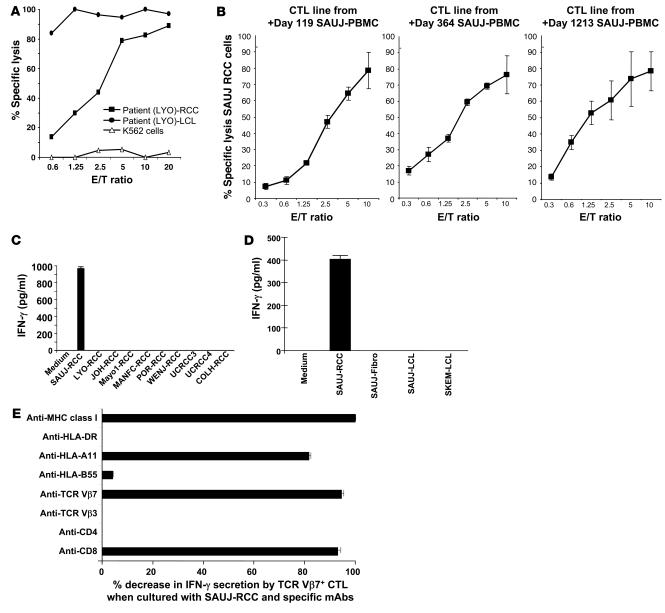
Figure 4. Detection of RCC-reactive CD8+ T cells in PBMCs after transplantation.
(A) A CTL line was expanded from RCC patient LYO by stimulating posttransplant day +211 PBMCs collected following tumor regression with irradiated LYO-RCC cells. Following limiting dilution cloning, an HLA class I–restricted CD8+ T cell clone (LYO-clone 1) was isolated that was highly cytotoxic to both patient autologous LCL and RCC cells. (B) CTL lines were expanded from patient SAUJ by stimulating PBMCs collected on post-HSCT days +119, +364, and +1,213 with irradiated SAUJ-RCC cells; expanded CTLs from all 3 time points were highly cytotoxic to SAUJ-RCC cells. (C) An ELISA showed that day +1,213 SAUJ-CTLs secreted IFN-γ when cultured with SAUJ-RCC cells but not with third-party HLA-mismatched RCC cell lines. (D) An ELISA assay measuring IFN-γ secretion showed that flow-sorted TCR-Vβ7+ SAUJ-CTLs recognized SAUJ-RCC cells but not patient SAUJ-LCL or donor SKEM-LCL cells or fibroblasts (SAUJ-Fibro). (E) Coculture of SAUJ-RCC cells with TCR-Vβ7+ SAUJ-CTLs. IFN-γ secretion by ELISA decreased substantially when SAUJ-CTLs were pretreated with either anti-CD8 or anti–TCR-Vβ7 mAbs or when SAUJ-CTLs were cocultured with SAUJ-RCC cells in the presence of anti–HLA class I or anti–HLA-A11 mAbs.
Figure 5
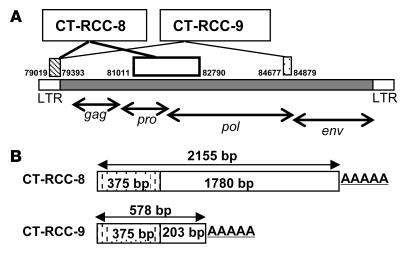
Figure 5. Schematic drawing of the identified clones CT-RCC-8 and CT-RCC-9 and their localization on chromosome 6q.
(A) CT-RCC-8 and CT-RCC-9 are shown with the relative positions of the common region, exons, and the nucleotide numbers corresponding to those of the clone RP3-488C13 on chromosome 6q (GenBank accession number AL133408). gag, capsid region; pro, protease region; pol, polymerase region; env, envelope region. (B) The striped boxes represent the 375-bp common region, and the open and dotted boxes represent the unique regions of CT-RCC-8 (1,780 bp) and CT-RCC-9 (203 bp), respectively.
Figure 6
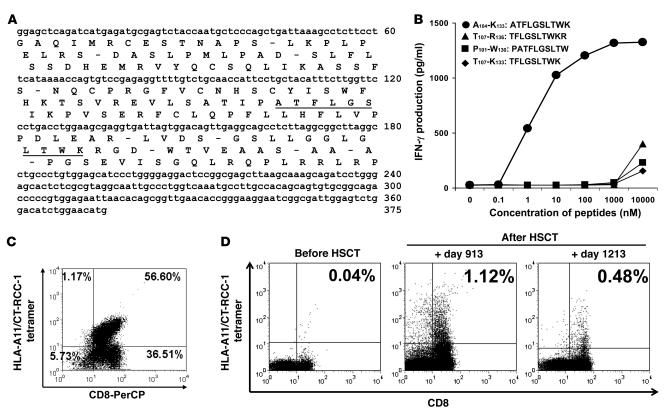
Figure 6. Identification of the peptide recognized by CTL expanded from a responding patient and detection of circulating CT-RCC-1 peptide–specific T cells after HSCT.
A 10-amino-acid HERV-E–derived peptide (CT-RCC-1) expressed on RCC was identified to be the target antigen of tumor-reactive CTL. (A) The position of the peptide was identified to be located in frame 2 of the 375-bp CT-RCC common region. (B) Four candidate peptides were synthesized from the predicted amino acid translations of these minigenes; only the 10-mer peptide ATFLGSLTWK induced dose-dependent IFN-γ production by SAUJ-RCC–reactive CTLs. (C) RCC-reactive SAUJ-CTL was generated by stimulating SAUJ-PBMCs (day +1,213) with irradiated SAUJ-RCC cells followed by flow sorting for TCR-Vβ7+CD8+ T cells. These CTLs were stained with a PE-conjugated HLA-A*1101/CT-RCC-1 (ATFLGSLTWK) tetramer; 56.6% of the CD3+CD8+ cells in this CTL line had antigen specificity for the CT-RCC-1 peptide. (D) PBMCs collected from SAUJ before HSCT did not bind to the CT-RCC-1 tetramer. CT-RCC-1–specific T cells were detected by tetramer analysis after HSCT in patient SAUJ on days +913 and +1,213 following tumor regression, constituting 1.12% and 0.48% of the CD3+CD8+ T cell repertoire, respectively.
Figure 7
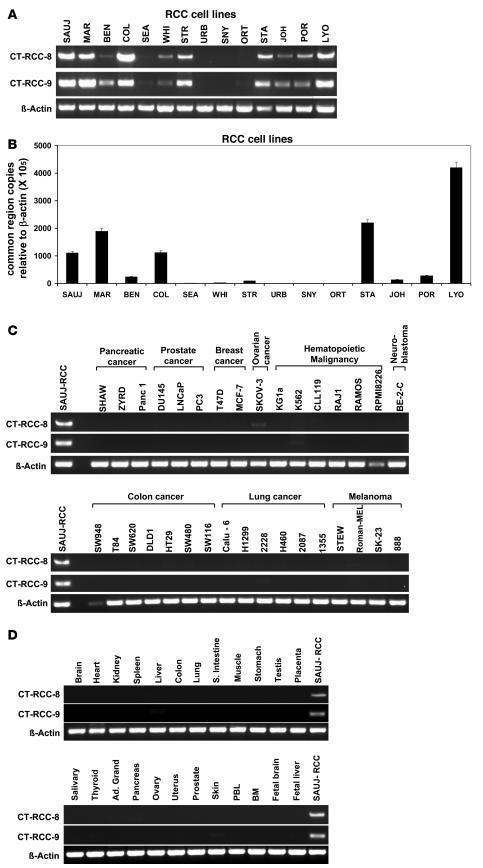
Figure 7. Expression of CT-RCC-8 and CT-RCC-9 in tumors and nonmalignant tissues.
CT-RCC-8 and CT-RCC -9 were found to be expressed only in RCC cells and not a variety of different non-RCC tumor cell lines or in any normal tissues. (A) Semiquantitative RT-PCR for CT-RCC-8 and -9 was performed using cDNAs prepared from 14 different human RCC tumor lines. Both CT-RCC-8 and -9 were detected in 8 of 14 RCC cell lines. (B) CT-RCC common region transcripts were detectable in the same 8 RCC cell lines at variable levels by quantitative real-time RT-PCR analysis using primers and probes specific to CT-RCC common region. (C) Lack of expression of CT-RCC-8 and -9 transcripts by RT-PCR in a variety of different non-RCC malignant cell lines. (D) Neither transcript was detected by RT-PCR in pooled cDNAs obtained from 24 normal human tissues, including the kidney and testis. β-Actin was used as an internal control, and cDNA from SAUJ-RCC was used as a positive control.

References

    1. Childs R., et al. Engraftment kinetics after nonmyeloablative allogeneic peripheral blood stem cell transplantation: full donor T-cell chimerism precedes alloimmune responses. Blood. 1999;94:3234–3241. - PubMed
    1. Bregni M., Ueno N.T., Childs R. The second international meeting on allogeneic transplantation in solid tumors. Bone Marrow Transplant. 2006;38:527–537. - PubMed
    1. Sprangers B., Van Wijmeersch B., Fevery S., Waer M., Billiau A.D. Experimental and clinical approaches for optimization of the graft-versus-leukemia effect. Nat. Clin. Pract. Oncol. 2007;4:404–414. - PubMed
    1. Tykodi S.S., et al. Allogeneic hematopoietic cell transplantation for metastatic renal cell carcinoma after nonmyeloablative conditioning: toxicity, clinical response, and immunological response to minor histocompatibility antigens. Clin. Cancer Res. 2004;10:7799–7811. - PubMed
    1. Childs R., et al. Regression of metastatic renal-cell carcinoma after nonmyeloablative allogeneic peripheral-blood stem-cell transplantation. N. Engl. J. Med. 2000;343:750–758. - PubMed

Publication types

Substances