. 2008 May;99(5):1000-7.
doi: 10.1111/j.1349-7006.2008.00770.x. Epub 2008 Feb 24.

Production and characterization of highly tumor-specific rat monoclonal antibodies recognizing the extracellular domain of human L-type amino-acid transporter 1

Affiliations

Production and characterization of highly tumor-specific rat monoclonal antibodies recognizing the extracellular domain of human L-type amino-acid transporter 1

Yoshiya Ohno et al. Cancer Sci. 2008 May.

Abstract

L-type large amino acid transporter (LAT) 1, the first light chain (lc) of cluster of differentiation 98 (CD98) to be identified, is associated with the heavy chain (hc) of CD98 and expressed on the surface of various tumor cells irrespective of their origin. Because LAT1 is a 12-pass membrane protein and its possible immunogenic extracellular region is very small, specific monoclonal antibodies (mAb) had not been developed. We report the successful preparation and characterization of mAb recognizing the extracellular domain of human LAT1 protein. Two mAb were selected from hybridoma clones established by fusing mouse myeloma cells and spleen cells from rats immunized against RH7777 rat hepatoma cells expressing recombinant green fluorescent protein fused to human LAT1 protein. Designated SOL22 and SOL69, these mAb specifically reacted with the extracellular domain of LAT1 on cells transfected with cDNA of LAT1, but not with cells transfected with cDNA of other CD98 lc, namely, LAT2, y(+)LAT1, y(+)LAT2, and xCT amino acid transporters. These mAb immunoprecipitated 35- and 90-kDa proteins under reducing conditions in extracts prepared from human HeLa tumor cells, indicating the existence of intermolecular disulfide bonds between cysteine residues in the 90-kDa hc and 35-kDa lc (LAT1). SOL22 and SOL69 mAb reacted with a wide variety of living unfixed human tumor cell lines, but were only weakly reactive with HEK293F human embryonic kidney cells and human peripheral blood cells. Comparative immunohistochemical analyses of normal human tissues with anti-CD98 hc and anti-LAT1 revealed LAT1 to be an excellent molecular target for antibody therapy, possibly even superior to CD98 hc.


Figures
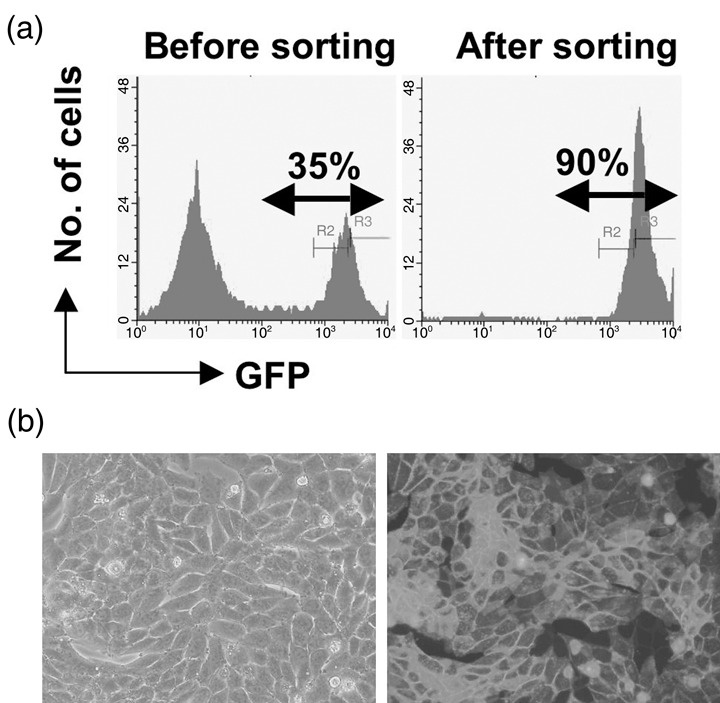
Figure 1
Figure 1
Establishment of an RH7777 rat hepatoma cell line expressing green fluorescent protein (GFP)‐human l‐type amino‐acid transporter (LAT) 1. (a) RH7777 cells were transfected with GFP‐human LAT1 cDNA using Lipofectamine 2000. The transfected cells were cultured in Dulbecco's modified Eagle's medium containing 7% fetal bovine serum and 400 µg/mL G418 for 2 weeks (left), and cells strongly expressing GFP‐human LAT1 proteins were clone sorted and expanded (right). (b) Phase‐contrast micrographs (left) and micrographs of ultraviolet‐excited green‐colored GFP‐LAT1 proteins (right) of clone‐sorted cells.
Figure 2
Figure 2
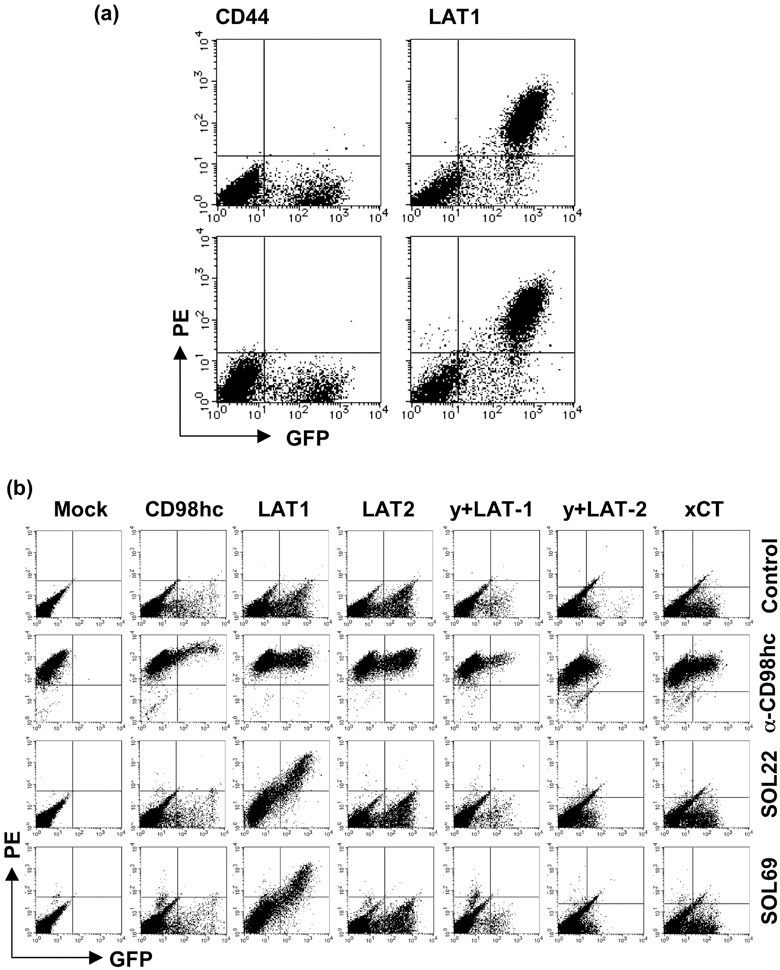
Specific binding of the monoclonal antibodies (mAb) SOL22 and SOL69 to human l‐type amino‐acid transporter (LAT) 1. (a) HEK293F cells were transfected with cDNA of green fluorescent protein (GFP)‐human CD44 (left) or GFP‐human LAT1 (right), and were stained with SOL22 (upper panel) or SOL69 (lower panel), followed by phycoerythrin (PE)‐conjugated anti‐rat IgG Fcγ. (b) HEK293F cells were mock‐transfected or transfected with cDNA of GFP‐fused human cluster of differentiation 98 (CD98) heavy chain and various human CD98 light chains, and were stained with anti‐CD98 heavy chain rat mAb (HR35), SOL22, or SOL69 with PE‐conjugated anti‐rat IgG Fcγ.
Figure 3
Figure 3
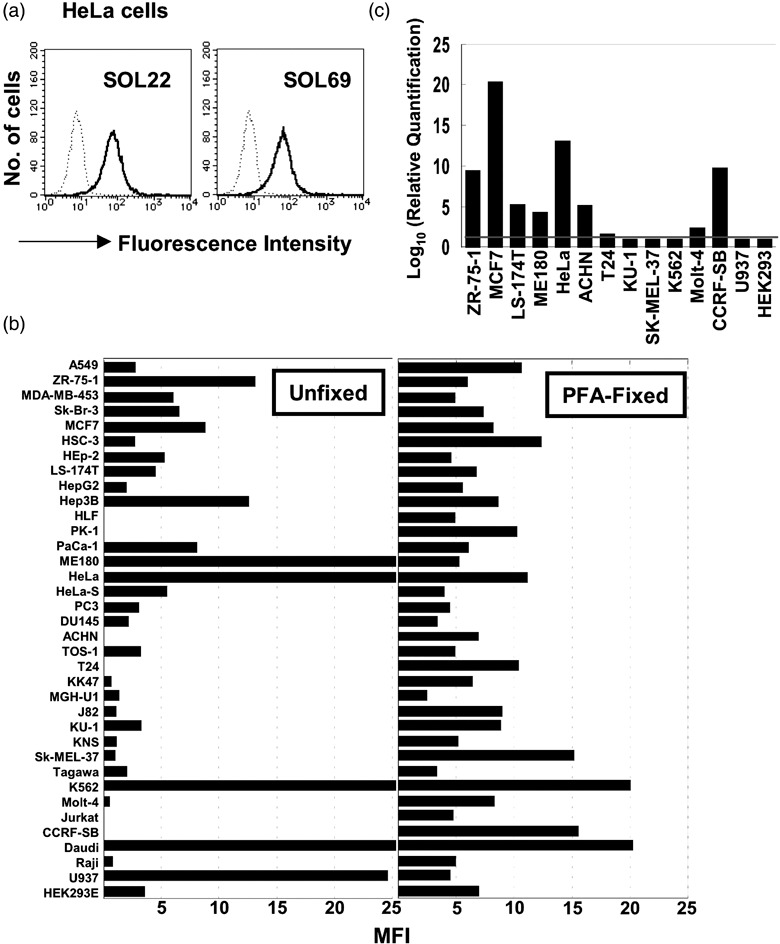
Expression of l‐type amino‐acid transporter (LAT) 1 protein and mRNA in various human cell lines. (a) Unfixed HeLa cells, and (b) unfixed and paraformaldehyde (PFA)‐fixed human cell lines were stained with SOL22, followed by fluorescein isothiocyanate (FITC)‐conjugated anti‐rat IgG Fcγ, and analyzed by flow cytometry. Dotted lines show control cells without the first monoclonal antibody (mAb), while solid lines show cells stained with mAb (a). A statistical analysis was carried out using CellQuest software, and mean fluorescence intensity (MFI) was subtracted from values without the first antibody (b). (c) Real time quantitative reverse transcription–polymerase chain reaction was carried out. The expression of LAT1 mRNA was normalized to the expression of glyceraldehyde‐3‐phosphate dehydrogenase mRNA in each cell line.
Figure 4
Figure 4
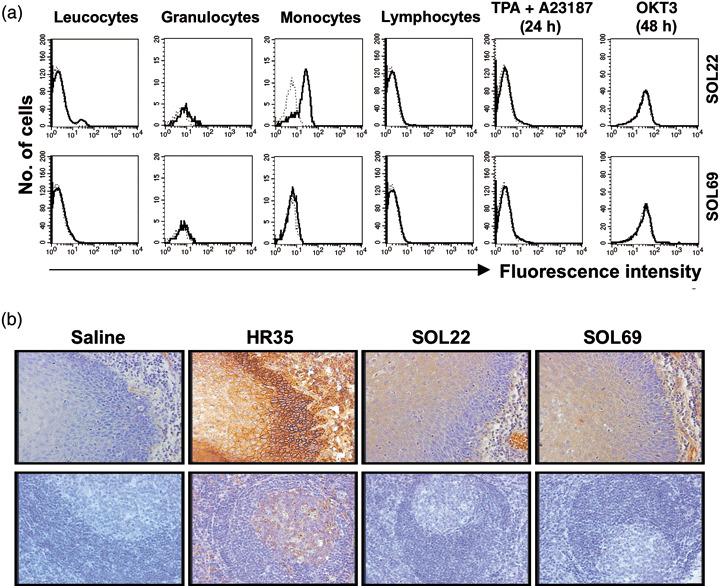
Reactivity of monoclonal antibodies (mAb) with human normal cells and tissues. (a) Peripheral blood leucocytes (PBL) was isolated by Ficoll gradient and cells were stained with SOL22 or SOL69 with fluorescein isothiocyanate‐conjugated anti‐rat IgG Fcγ. The population of lymphocytes, monocytes, and granulocytes was gated by forward and side scatters from the total PBL population. Activated lymphocytes were obtained from lymphocytes cultured with TPA and A23187 for 24 h, or with OKT3 for 48 h. (b) Human tonsil tissues were stained with anti‐cluster of differentiation 98 heavy chain mAb, SOL22, or SOL69 mAb by an immunoperoxidase method, and nuclei were counterstained with hematoxylin.
Figure 5
Figure 5
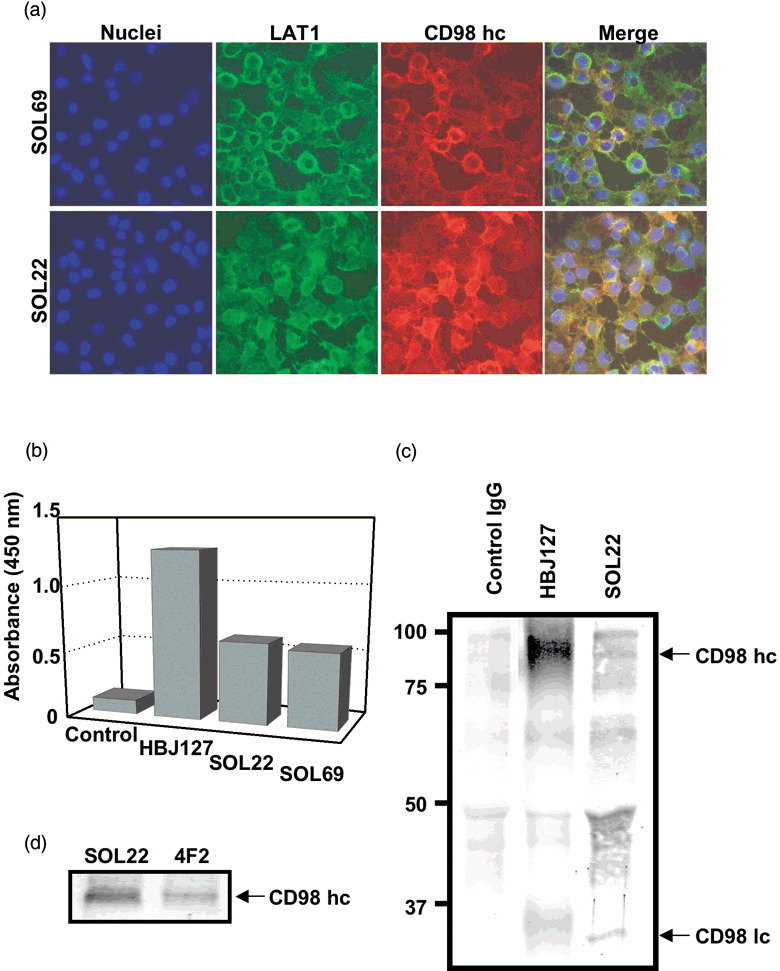
Association of cluster of differentiation 98 (CD98) heavy chain (hc) with the antigen recognized by SOL22 and SOL69. (a) HeLa cells were stained with SOL22 (upper) or SOL69 (lower) with species‐specific fluorescein isothiocyanate (FITC)‐conjugated anti‐rat IgG, and simultaneously stained with HBJ127 anti‐CD98 hc with species‐specific TexasRed‐conjugated anti‐mouse IgG. (b) Sandwich‐type enzyme‐linked immunosorbent assay was carried out with a combination of anti‐human CD98 hc human monoclonal antibody (mAb) (HH25) as the capture mAb, and anti‐human CD98 hc mouse mAb (HBJ127), SOL22, or SOL69 as the detecting mAb using HeLa cell lysates. (c) The lysates of biotin‐labeled HeLa cells were immunoprecipitated with SOL22 or anti human CD98hc mAb (4F2), subjected to sodium dodecylsulfate–polyacrylamide gel electrophoresis (SDS‐PAGE), and blotted onto polyvinylidene difluoride (PVDF) membranes, and proteins were visualized using Elite ABC and substrates. (d) The lysates of HeLa cells were immunoprecipitated with SOL22 or 4F2, subjected to SDS‐PAGE, and blotted onto PVDF membrane, and proteins were immunostained with anti‐CD98 mAb (HH25). LAT, l‐type amino‐acid transporter; lc, light chain.
Figure 6
Figure 6
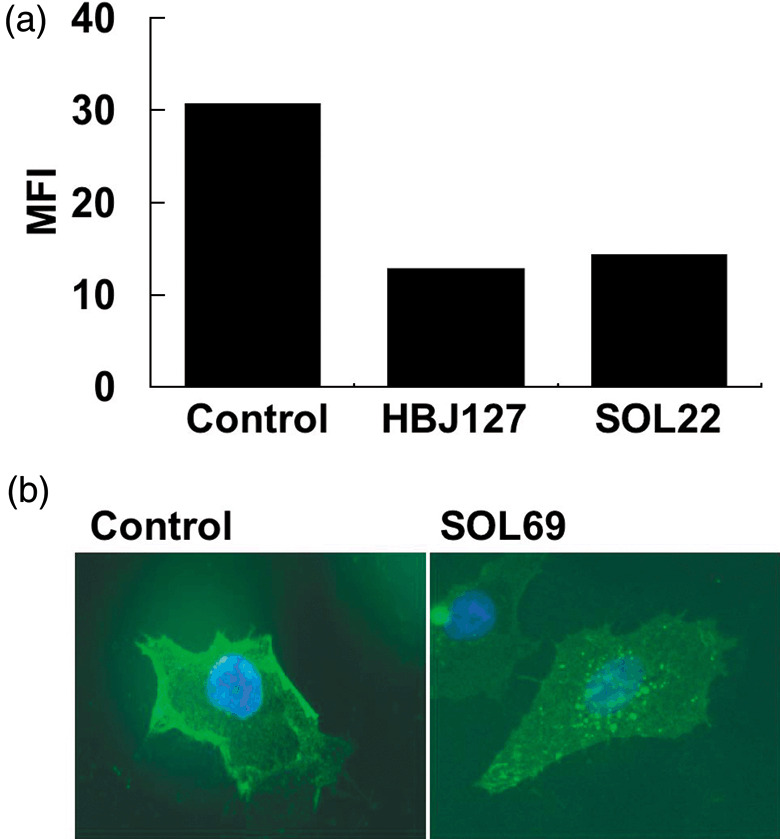
Downregulation of cluster of differentiation 98 (CD98) expression by anti‐l‐type amino‐acid transporter 1 monoclonal antibody (mAb). (a) HeLa cells were cultured without mAb (control), or with HBJ127 or SOL22 for 24 h, and stained with SOL69 followed by fluorescein isothiocyanate (FITC)‐conjugated anti rat IgG Fcγ. Reactivity was analyzed by flow cytometry, and the data are shown as mean fluorescence intensity (MFI). (b) HeLa cells cultured under standard conditions (control, left) or cultured with SOL69 (10 µg/mL) for 24 h (right) were stained with SOL69 followed by FITC‐conjugated anti rat IgG Fcγ, and observed under a fluorescence microscope.

References

    1. Broer S, Broer A, Hamprecht B. The 4F2hc surface antigen is necessary for expression of system 1‐like neutral amino acid‐transport activity in C6‐BU‐1 rat glioma cells: evidence from expression studies in Xenopus laevis oocytes. Biochem J 1995; 312: 863–70. - PMC - PubMed
    1. Haynes BF, Hemler ME, Mann DL et al . Characterization of a monoclonal antibody (4F2) that binds to human monocytes and to a subset of activated lymphocytes. J Immunol 1981; 126: 1409–14. - PubMed
    1. Kanai Y, Segawa H, Miyamoto K, Uchino H, Takeda E, Endou H. Expression cloning and characterization of a transporter for large neutral amino acids activated by the heavy chain of 4F2 antigen (CD98). J Biol Chem 1998; 273: 23 629–32. - PubMed
    1. Masuko T, Abe J, Yagita H, Hashimoto Y. Human bladder cancer cell‐surface antigens recognized by murine monoclonal antibodies raised against T24 bladder cancer cells. Jpn J Cancer Res 1985; 76: 386–94. - PubMed
    1. Yagita H, Masuko T, Hashimoto Y. Inhibition of tumor cell growth in vitro by murine monoclonal antibodies that recognize a proliferation‐associated cell surface antigen system in rats and humans. Cancer Res 1986; 46: 1478–84. - PubMed

Publication types

MeSH terms

Substances