


Is tension band wiring technique the "gold standard" for the treatment of olecranon fractures? A long term functional outcome study
- PMID: 18294381
- PMCID: PMC2265682
- DOI: 10.1186/1749-799X-3-9
Is tension band wiring technique the "gold standard" for the treatment of olecranon fractures? A long term functional outcome study
Abstract
Background: Tension band wiring (TBW) remains the most common operative technique for the internal fixation of olecranon fractures despite the potential occurrence of subjective complaints due to subcutaneous position of the hardware. Aim of this long term retrospective study was to evaluate the elbow function and the patient-rated outcome after TBW fixation of olecranon fractures.
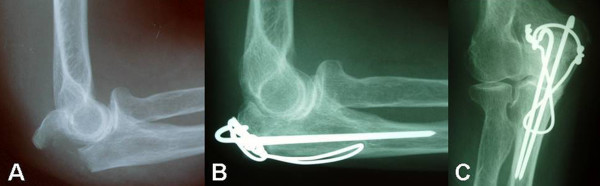
Methods: We reviewed 62 patients (33 men and 29 women) with an average age of 48.6 years (range, 18-85 years) who underwent TBW osteosynthesis for isolated olecranon fractures. All patients were assessed both clinically with measurement of flexion-extension and pronation-supination arcs and radiologically with elbow X-Rays. Functional outcome was estimated using the Mayo Elbow Performance Score (MEPS), Visual Analogue Scale (VAS) subjective pain score and VAS patient satisfaction score. Follow up: 6-13 years (average 8.2 years).
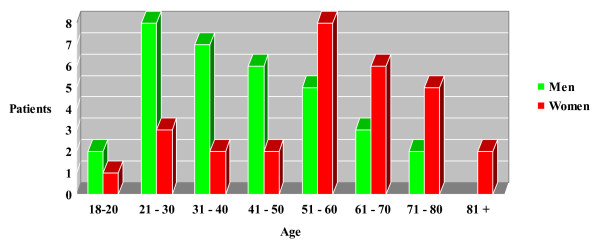
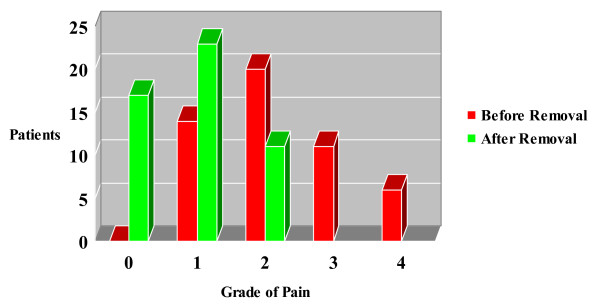
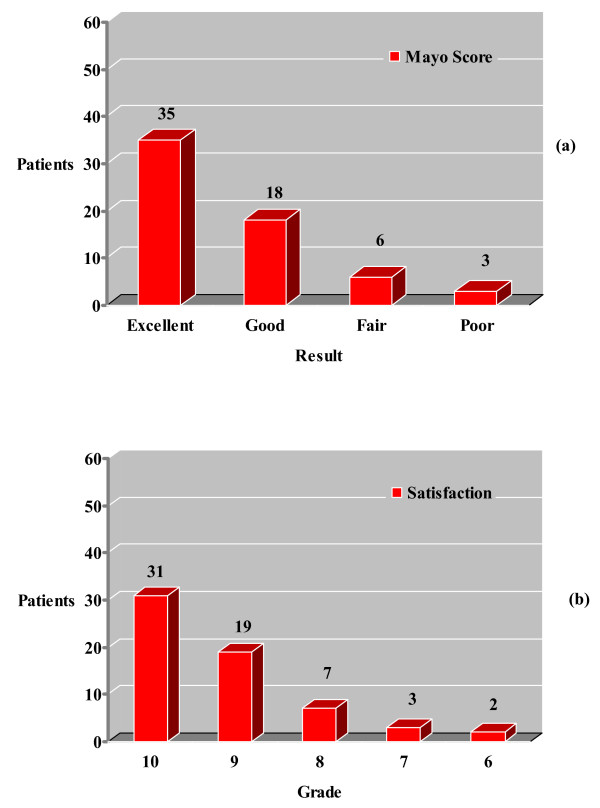
Results: There was a higher prevalence of fractures among men until the 5th decade of life and among women in elderly (p = 0.032). Slip or simple fall onto the arm was the main mechanism of injury for 38 fractures (61.3%) while high energy trauma, such as fall from a height (> 2 m) or road accident, was reported in 24 fractures (38.7%). Hardware removal performed in 51 patients (82.3%) but 34 of them (66.6% of removals) were still complaining for mild pain during daily activities. The incidence of pin migration and loosening was not statistically decreased when penetration of the anterior ulnar cortex was accomplished (p = 0.304). Supination was more often affected than pronation (p = 0.027). According to MEPS, 53 patients (85.5%) had a good to excellent result, 6 (9.7%) fair and 3 (4.8%) poor result. The average satisfaction rating was 9.3 out of 10 (range, 6-10) with 31 patients (50%) to remain completely satisfied from the final result. Degenerative changes recorded in 30 elbows (48.4%). However, no correlation could be found between radiographic findings and MEPS (p = 0.073).
Conclusion: Tension band wiring fixation remains the "gold standard" for the treatment of displaced and minimally comminuted olecranon fractures. In long term, low levels of pain may be evident regardless of whether the metalware is removed and degenerative changes have been developed.
Figures
References
-
- van der Horst CM, Keeman JN. Treatment of olecranon fractures. Neth J Surg. 1983;35:27–29. - PubMed
-
- Morrey BF. Current concepts in the treatment of fractures of the radial head, the olecranon, and the coronoid. Instr Course Lect. 1995;44:175–185. - PubMed
-
- Cabanela. Morrey . The elbow and its disorders. 3d. Philadelphia , Saunders; 2000. pp. 365–379.
-
- Horne JG, Tanzer TL. Olecranon fractures: a review of 100 cases. J Trauma. 1981;21:469–472. - PubMed
LinkOut - more resources
Full Text Sources
Medical
