


Application of activity-based probes to the study of enzymes involved in cancer progression
- PMID: 18294838
- PMCID: PMC2474457
- DOI: 10.1016/j.gde.2007.12.001
Application of activity-based probes to the study of enzymes involved in cancer progression
Abstract
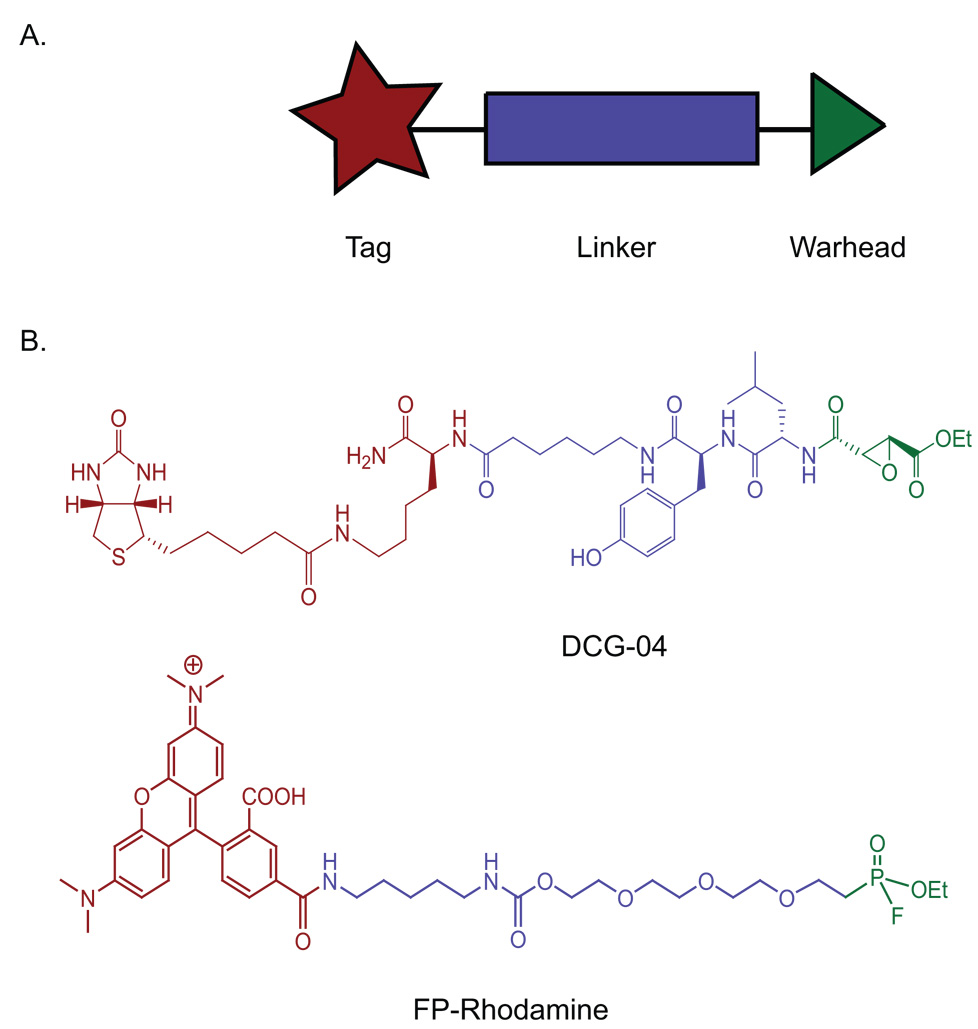
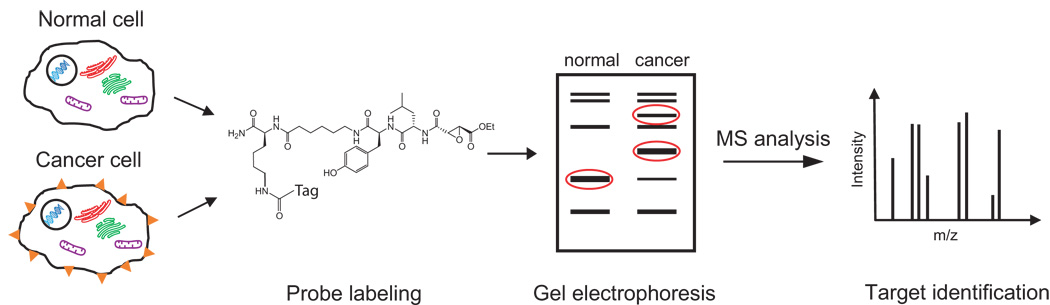
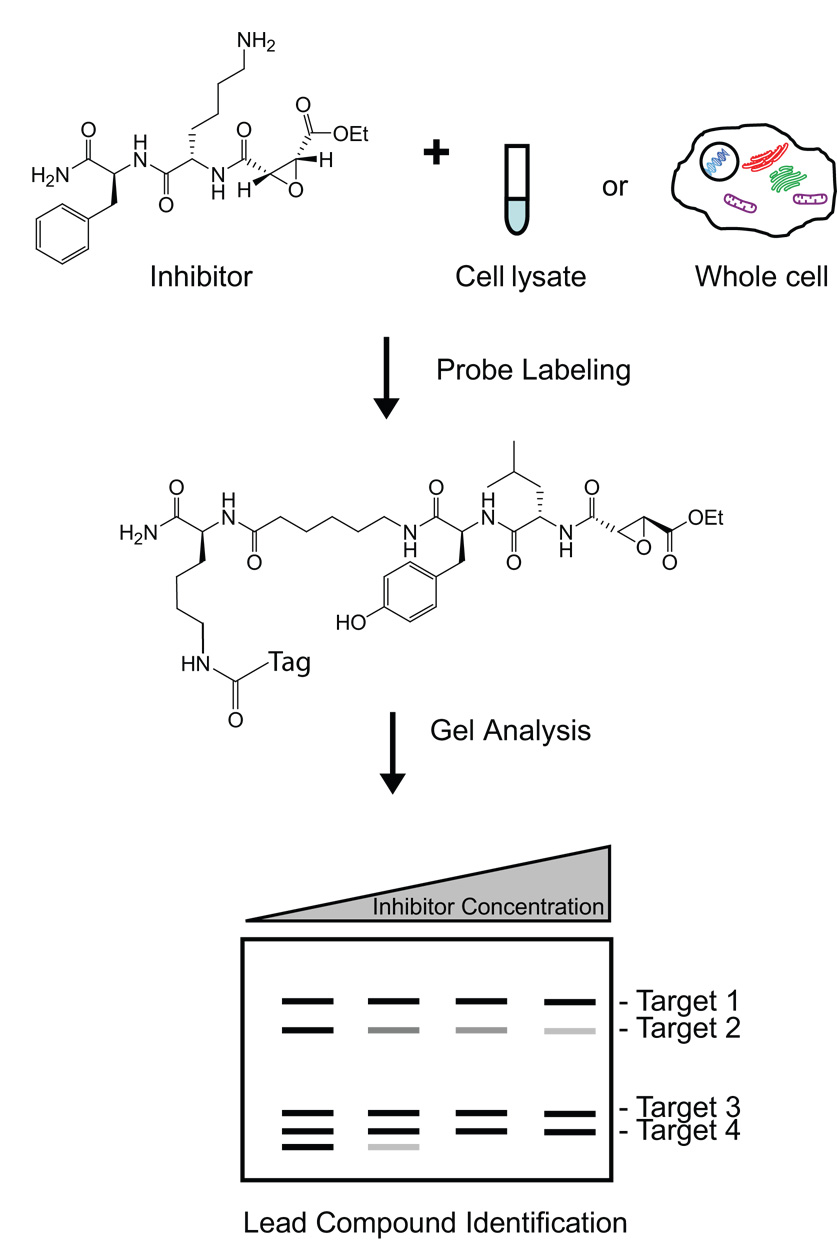
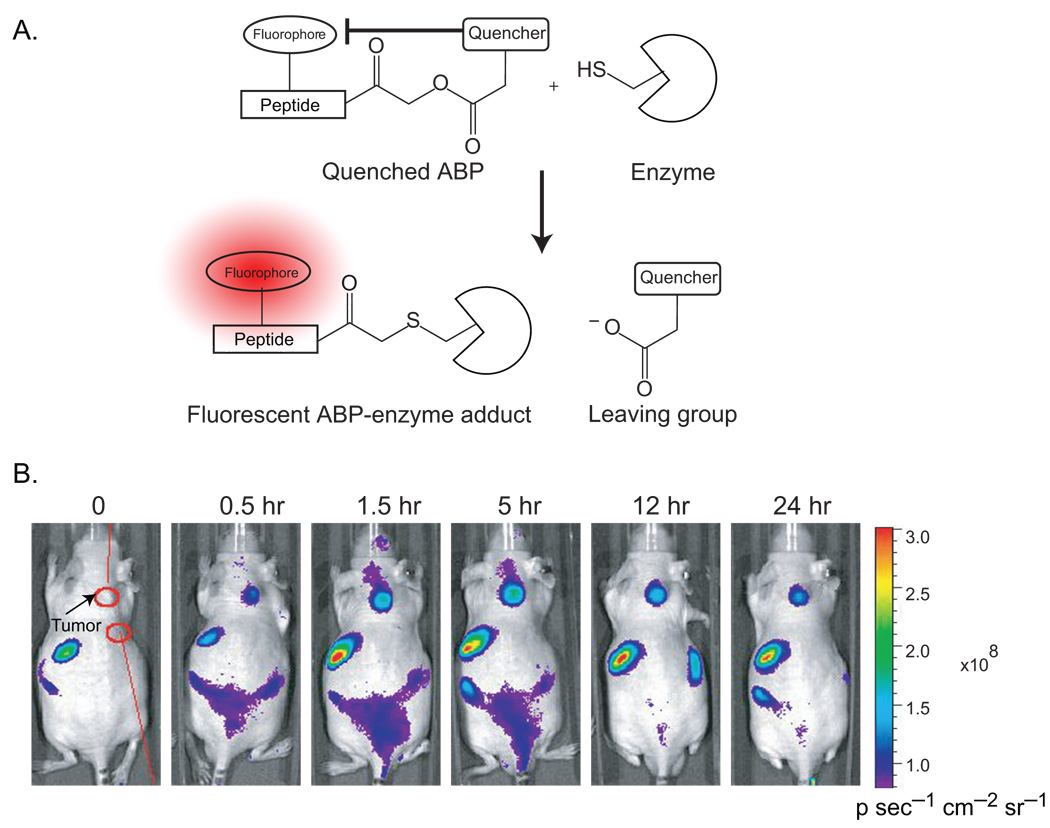
Many tumor cells have elevated levels of hydrolytic and proteolytic enzymes, presumably to aid in key processes such as angiogenesis, cancer cell invasion, and metastasis. Functional roles of enzymes in cancer progression are difficult to study using traditional genomic and proteomic methods because the activities of these enzymes are often regulated by post-translational mechanisms. Thus, methods that allow for the direct monitoring of enzyme activity in a physiologically relevant environment are required to better understand the roles of specific players in the complex process of tumorigenesis. This review highlights advances in the field of activity-based proteomics, which uses small molecules known as activity-based probes (ABPs) that covalently bind to the catalytic site of target enzymes. We discuss the application of ABPs to cancer biology, especially to the discovery of tumor biomarkers, the screening of enzyme inhibitors, and the imaging of enzymes implicated in cancer.
Figures
References
-
- Hanahan D, Weinberg RA. The hallmarks of cancer. Cell. 2000;100:57–70. - PubMed
-
- Lee M, Fridman R, Mobashery S. Extracellular proteases as targets for treatment of cancer metastases. Chem Soc Rev. 2004;33:401–409. - PubMed
-
- Borgono CA, Diamandis EP. The emerging roles of human tissue kallikreins in cancer. Nat Rev Cancer. 2004;4:876–890. - PubMed
-
- Deryugina EI, Quigley JP. Matrix metalloproteinases and tumor metastasis. Cancer Metastasis Rev. 2006;25:9–34. - PubMed
-
- Patten LC, Berger DH. Role of proteases in pancreatic carcinoma. World J Surg. 2005;29:258–263. - PubMed
Publication types
MeSH terms
Substances
Grants and funding
LinkOut - more resources
Full Text Sources
Other Literature Sources
