


Diversity of Veillonella spp. from sound and carious sites in children
- PMID: 18296614
- PMCID: PMC2262147
- DOI: 10.1177/154405910808700308
Diversity of Veillonella spp. from sound and carious sites in children
Abstract
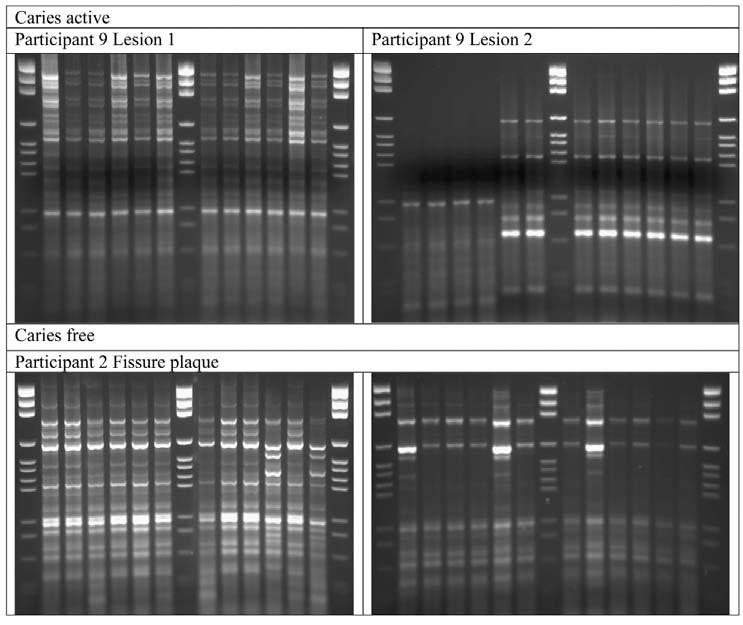
Detailed data on the distribution of Veillonella in caries-free and caries-active subjects are scarce. We hypothesized that the diversity of the genus would be lower in caries lesions than in plaque from caries-free individuals. The proportions of Veillonella were not significantly different in the two groups. All isolates (n = 1308) were genotyped by REP-PCR, and different genotypes (n = 170) were identified by 16S rRNA, dnaK, and rpoB sequencing. V. parvula, V. dispar, and V. atypica were in both groups, V. denticariosi only in caries lesions, and V. rogosae only from the caries-free individuals (p < 0.009). Lesions were more likely to harbor a single predominant species (p = 0.0018). The mean number of genotypes in the lesions was less than in the fissure (p < 0.001) or buccal (p = 0.011) sites. The Veillonella from caries-free sites were more diverse than those from caries lesions, and may be related to the acidic environment of caries lesions.
Figures
References
Publication types
MeSH terms
Substances
Grants and funding
LinkOut - more resources
Full Text Sources
Medical
Miscellaneous
