


Origin and progeny of reactive gliosis: A source of multipotent cells in the injured brain
- PMID: 18299565
- PMCID: PMC2265175
- DOI: 10.1073/pnas.0709002105
Origin and progeny of reactive gliosis: A source of multipotent cells in the injured brain
Abstract
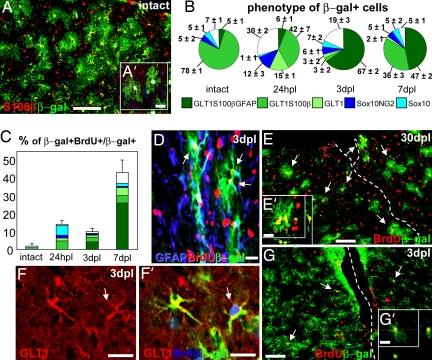
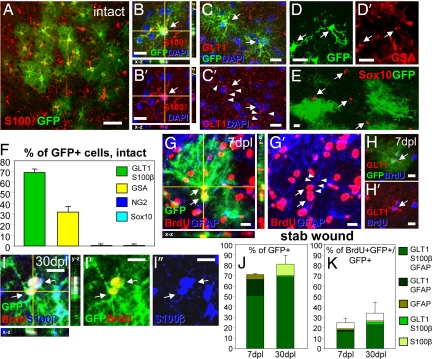
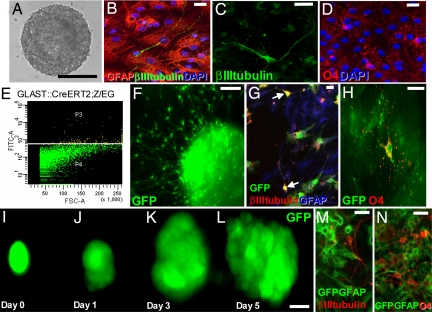
Reactive gliosis is the universal reaction to brain injury, but the precise origin and subsequent fate of the glial cells reacting to injury are unknown. Astrocytes react to injury by hypertrophy and up-regulation of the glial-fibrillary acidic protein (GFAP). Whereas mature astrocytes do not normally divide, a subpopulation of the reactive GFAP(+) cells does so, prompting the question of whether the proliferating GFAP(+) cells arise from endogenous glial progenitors or from mature astrocytes that start to proliferate in response to brain injury. Here we show by genetic fate mapping and cell type-specific viral targeting that quiescent astrocytes start to proliferate after stab wound injury and contribute to the reactive gliosis and proliferating GFAP(+) cells. These proliferating astrocytes remain within their lineage in vivo, while a more favorable environment in vitro revealed their multipotency and capacity for self-renewal. Conversely, progenitors present in the adult mouse cerebral cortex labeled by NG2 or the receptor for the platelet-derived growth factor (PDGFRalpha) did not form neurospheres after (or before) brain injury. Taken together, the first fate-mapping analysis of astrocytes in the adult mouse cerebral cortex shows that some astrocytes acquire stem cell properties after injury and hence may provide a promising cell type to initiate repair after brain injury.
Conflict of interest statement
The authors declare no conflict of interest.
Figures
References
-
- Okada S, et al. Conditional ablation of Stat3 or Socs3 discloses a dual role for reactive astrocytes after spinal cord injury. Nat Med. 2006;12:829–834. - PubMed
-
- Sofroniew MV. Reactive astrocytes in neural repair and protection. Neuroscientist. 2005;11:400–407. - PubMed
-
- Alonso G. NG2 proteoglycan-expressing cells of the adult rat brain: Possible involvement in the formation of glial scar astrocytes following stab wound. Glia. 2005;49:318–338. - PubMed
-
- Magnus T, et al. Evidence that nucleocytoplasmic Olig2 translocation mediates brain-injury-induced differentiation of glial precursors to astrocytes. J Neurosci Res. 2007;85:2126–2137. - PubMed
Publication types
MeSH terms
Substances
LinkOut - more resources
Full Text Sources
Other Literature Sources
Miscellaneous
