


Microbial ecology of four coral atolls in the Northern Line Islands
- PMID: 18301735
- PMCID: PMC2253183
- DOI: 10.1371/journal.pone.0001584
Microbial ecology of four coral atolls in the Northern Line Islands
Abstract
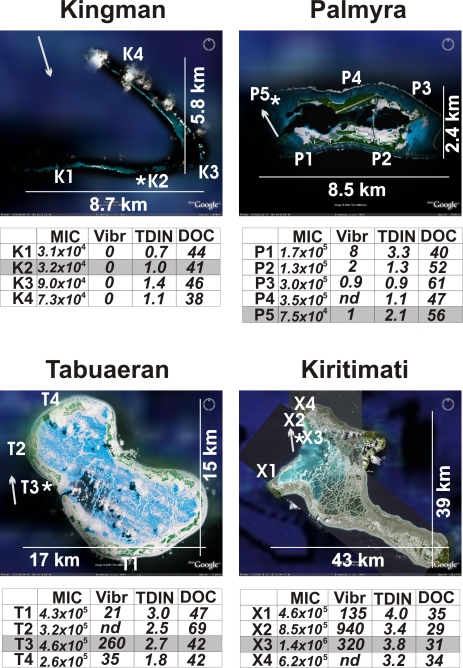
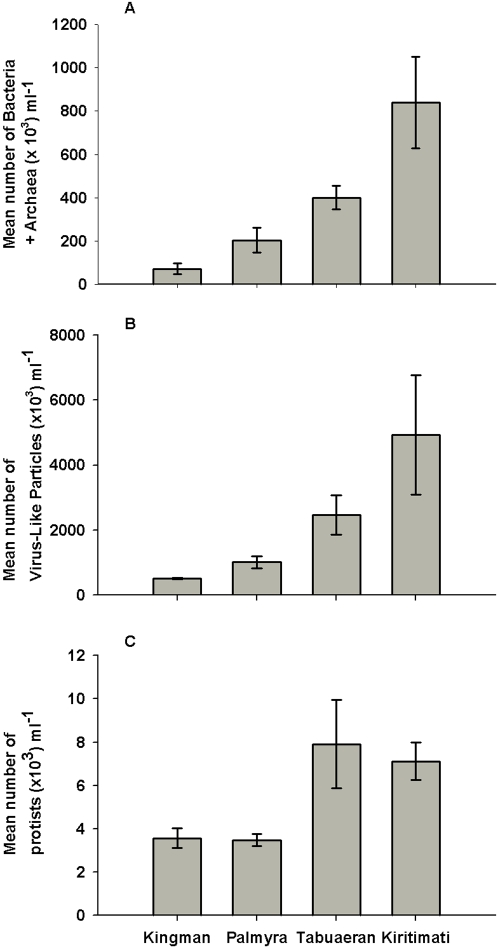
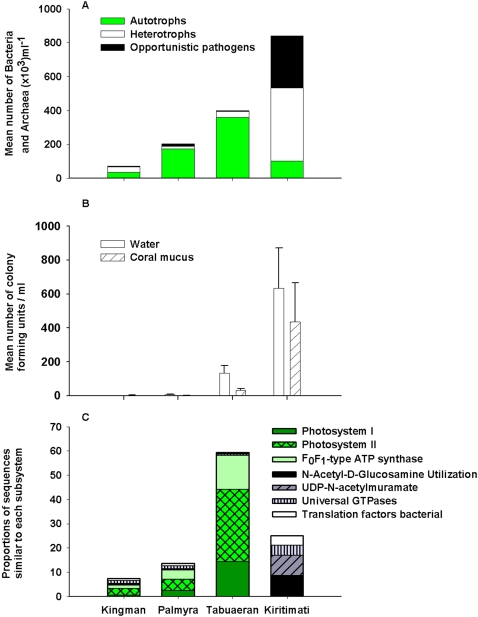
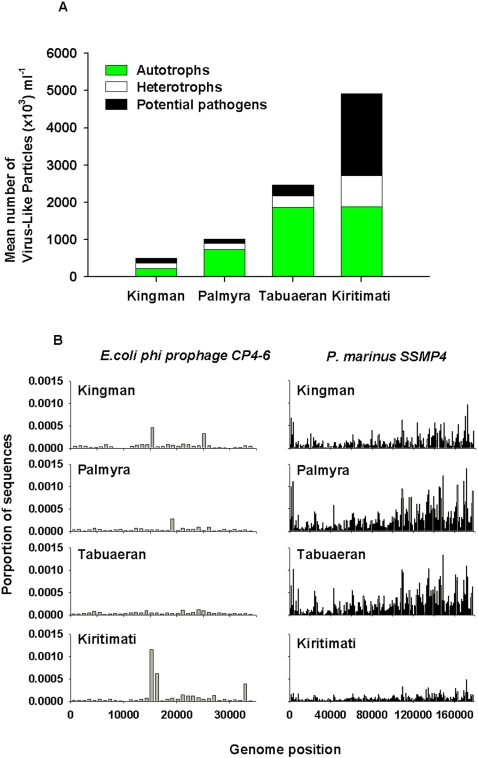
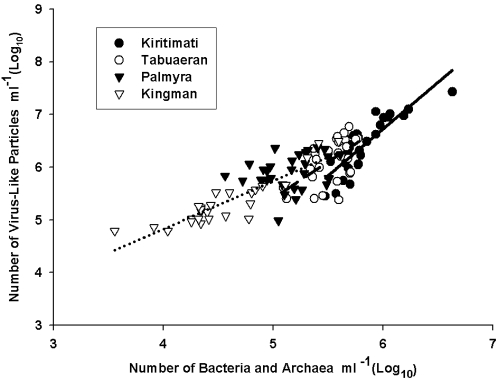
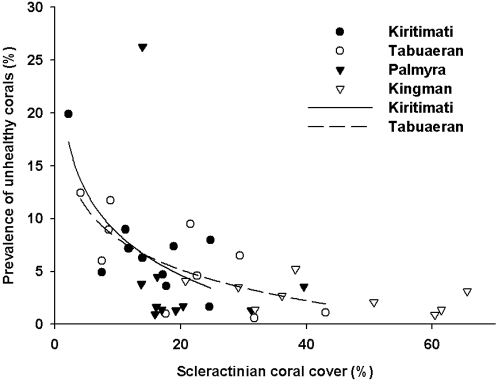
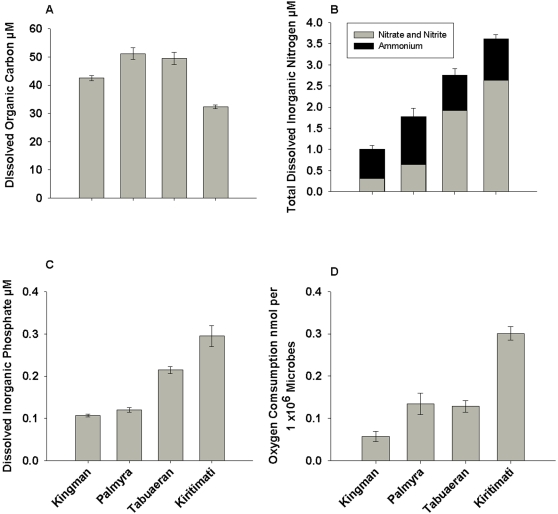
Microbes are key players in both healthy and degraded coral reefs. A combination of metagenomics, microscopy, culturing, and water chemistry were used to characterize microbial communities on four coral atolls in the Northern Line Islands, central Pacific. Kingman, a small uninhabited atoll which lies most northerly in the chain, had microbial and water chemistry characteristic of an open ocean ecosystem. On this atoll the microbial community was equally divided between autotrophs (mostly Prochlorococcus spp.) and heterotrophs. In contrast, Kiritimati, a large and populated ( approximately 5500 people) atoll, which is most southerly in the chain, had microbial and water chemistry characteristic of a near-shore environment. On Kiritimati, there were 10 times more microbial cells and virus-like particles in the water column and these microbes were dominated by heterotrophs, including a large percentage of potential pathogens. Culturable Vibrios were common only on Kiritimati. The benthic community on Kiritimati had the highest prevalence of coral disease and lowest coral cover. The middle atolls, Palmyra and Tabuaeran, had intermediate densities of microbes and viruses and higher percentages of autotrophic microbes than either Kingman or Kiritimati. The differences in microbial communities across atolls could reflect variation in 1) oceaonographic and/or hydrographic conditions or 2) human impacts associated with land-use and fishing. The fact that historically Kingman and Kiritimati did not differ strongly in their fish or benthic communities (both had large numbers of sharks and high coral cover) suggest an anthropogenic component in the differences in the microbial communities. Kingman is one of the world's most pristine coral reefs, and this dataset should serve as a baseline for future studies of coral reef microbes. Obtaining the microbial data set, from atolls is particularly important given the association of microbes in the ongoing degradation of coral reef ecosystems worldwide.
Conflict of interest statement
Figures
References
-
- Paul JH, Deflaun MF, Jeffrey WH. Elevated levels of microbial activity in the coral surface microlayer. MEPS. 1986;33:29–40.
-
- Ayukai T. Retention of phytoplankton and planktonic microbes on coral reefs within the Great Barrier Reef, Australia. Coral Reefs. 1995;14:141–147.
-
- Bak RPM, Joenje M, de Jong I, Lambrechts DYM, Nieuwand G. Bacterial suspension feeding by coral benthic organisms. MEPS. 1998;175:285–288.
-
- Sorokin YI. Bacteria as Food for Coral Reef Fauna. Oceanology-USSR. 1972;12:169–177.
-
- Sorokin YI. Trophical Role of Bacteria in Ecosystem of Coral Reef. Nature. 1973;242:415–417.
Publication types
MeSH terms
Substances
LinkOut - more resources
Full Text Sources
Other Literature Sources
Miscellaneous
