


Mass spectral characterization of peptide transmitters/hormones in the nervous system and neuroendocrine organs of the American lobster Homarus americanus
- PMID: 18304551
- PMCID: PMC2293973
- DOI: 10.1016/j.ygcen.2008.01.009
Mass spectral characterization of peptide transmitters/hormones in the nervous system and neuroendocrine organs of the American lobster Homarus americanus
Abstract
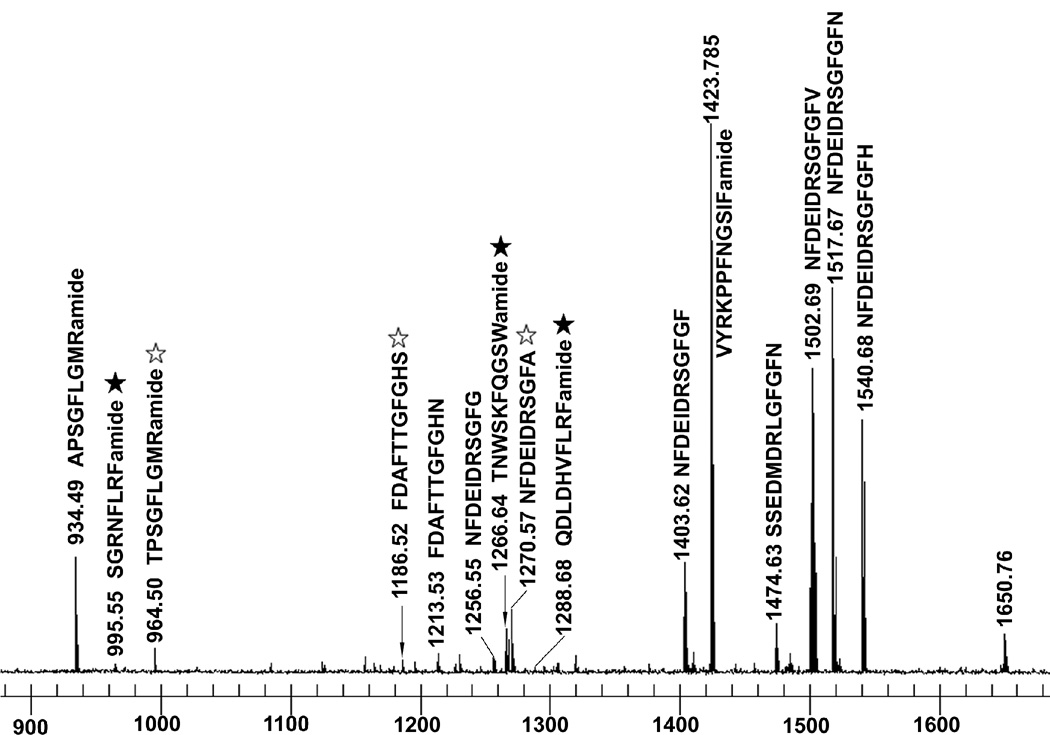
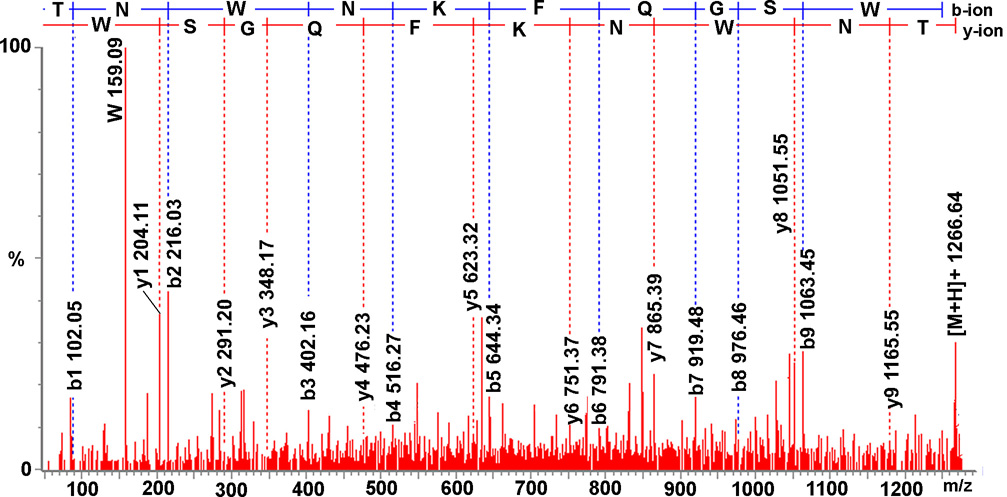
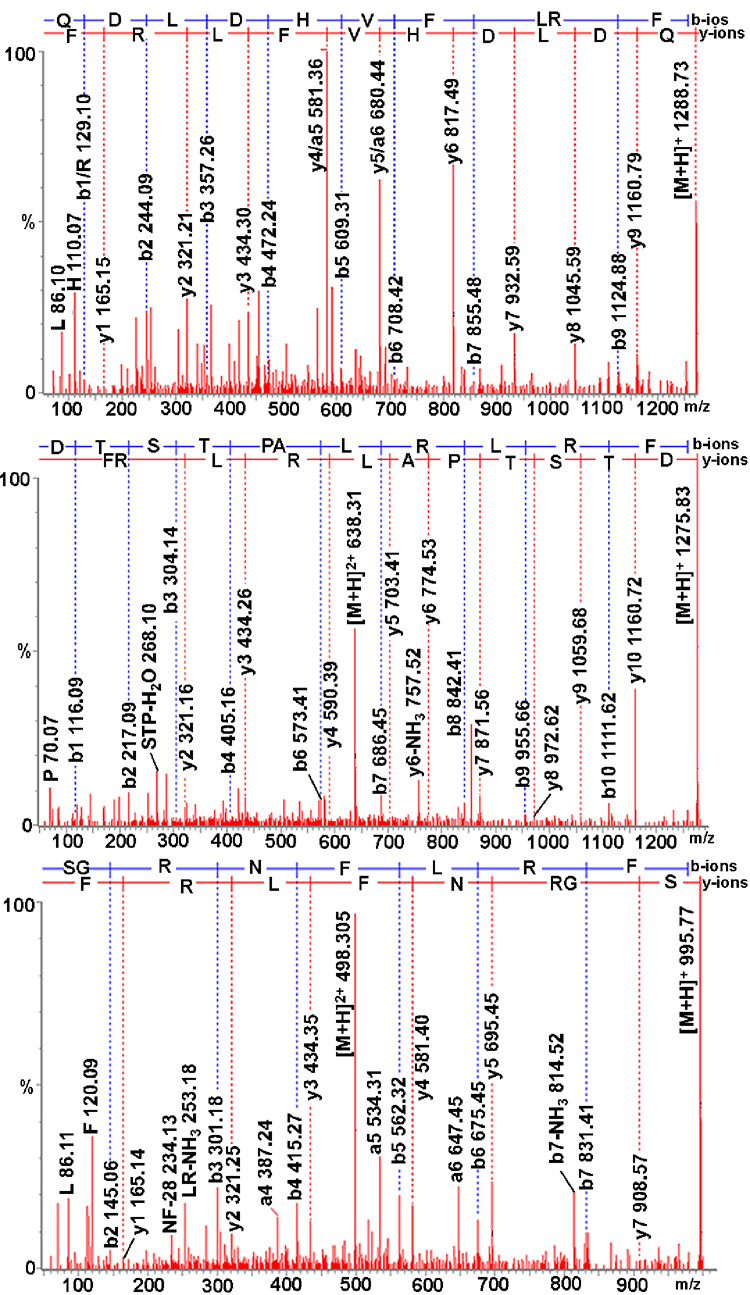
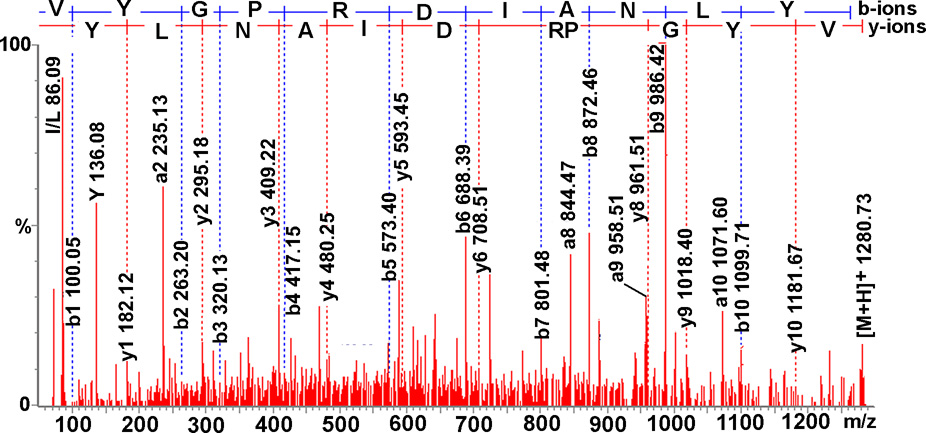
The American lobster Homarus americanus is a decapod crustacean with both high economic and scientific importance. To facilitate physiological investigations of peptide transmitter/hormone function in this species, we have used matrix-assisted laser desorption/ionization Fourier transform mass spectrometry (MALDI-FTMS), matrix-assisted laser desorption/ionization time-of-flight mass spectrometry (MALDI-TOF MS) and nanoscale liquid chromatography coupled to electrospray ionization quadrupole time-of-flight tandem mass spectrometry (nanoLC-ESI-Q-TOF MS/MS) to elucidate the peptidome present in its nervous system and neuroendocrine organs. In total, 84 peptides were identified, including 27 previously known H. americanus peptides (e.g., VYRKPPFNGSIFamide [Val(1)-SIFamide]), 23 peptides characterized previously from other decapods, but new to the American lobster (e.g., pQTFQYSRGWTNamide [Arg(7)-corazonin]), and 34 new peptides de novo sequenced/detected for the first time in this study. Of particular note are a novel B-type allatostatin (TNWNKFQGSWamide) and several novel FMRFamide-related peptides, including an unsulfated analog of sulfakinin (GGGEYDDYGHLRFamide), two myosuppressins (QDLDHVFLRFamide and pQDLDHVFLRFamide), and a collection of short neuropeptide F isoforms (e.g., DTSTPALRLRFamide and FEPSLRLRFamide). Our data also include the first detection of multiple tachykinin-related peptides in a non-brachyuran decapod, as well as the identification of potential individual-specific variants of orcokinin and orcomyotropin-related peptide. Taken collectively, our results not only expand greatly the number of known H. americanus neuropeptides, but also provide a framework for future studies on the physiological roles played by these molecules in this commercially and scientifically important species.
Figures
References
-
- Brown BE. Proctolin: a peptide transmitter candidate in insects. Life Sci. 1975;17:1241–1252. - PubMed
-
- Brown MR, Crim JW, Arata RC, Cai HN, Chun C, Shen P. Identification of a Drosophila brain-gut peptide related to the neuropeptide Y family. Peptides. 1999;20:1035–1042. - PubMed
-
- Bungart D, Dircksen H, Keller R. Quantitative determination and distribution of the myotropic neuropeptide orcokinin in the nervous system of astacidean crustaceans. Peptides. 1994;15:393–400. - PubMed
-
- Bungart D, Hilbich C, Dircksen H, Keller R. Occurrence of analogues of the myotropic neuropeptide orcokinin in the shore crab, Carcinus maenas: evidence for a novel neuropeptide family. Peptides. 1995;16:67–72. - PubMed
-
- Cashman CR, Hsu YA, Messinger DI, Christie AE, Dickinson PS, de la Iglesia HO, Stemmler EA. Program No. 140.4. 2007 Neuroscience Meeting Planner. San Diego, CA: Society for Neuroscience, 2007; 2007. Identification of individual-specific variations in peptide complement of crustacean neural tissues using direct tissue MALDI-FTMS. Online.
Publication types
MeSH terms
Substances
Grants and funding
LinkOut - more resources
Full Text Sources
