


Myeloma-derived Dickkopf-1 disrupts Wnt-regulated osteoprotegerin and RANKL production by osteoblasts: a potential mechanism underlying osteolytic bone lesions in multiple myeloma
- PMID: 18305214
- PMCID: PMC2435688
- DOI: 10.1182/blood-2008-01-132134
Myeloma-derived Dickkopf-1 disrupts Wnt-regulated osteoprotegerin and RANKL production by osteoblasts: a potential mechanism underlying osteolytic bone lesions in multiple myeloma
Abstract
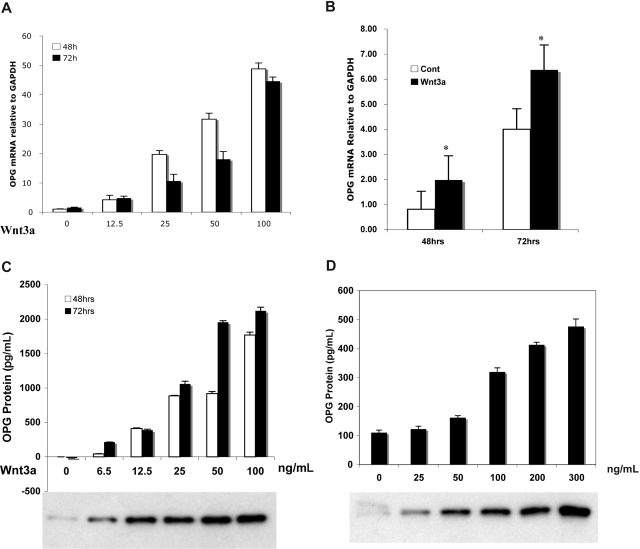
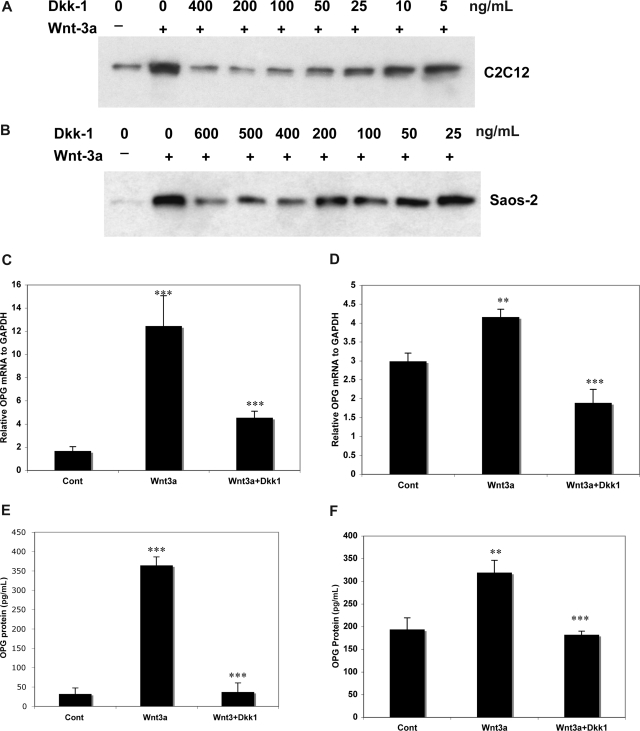
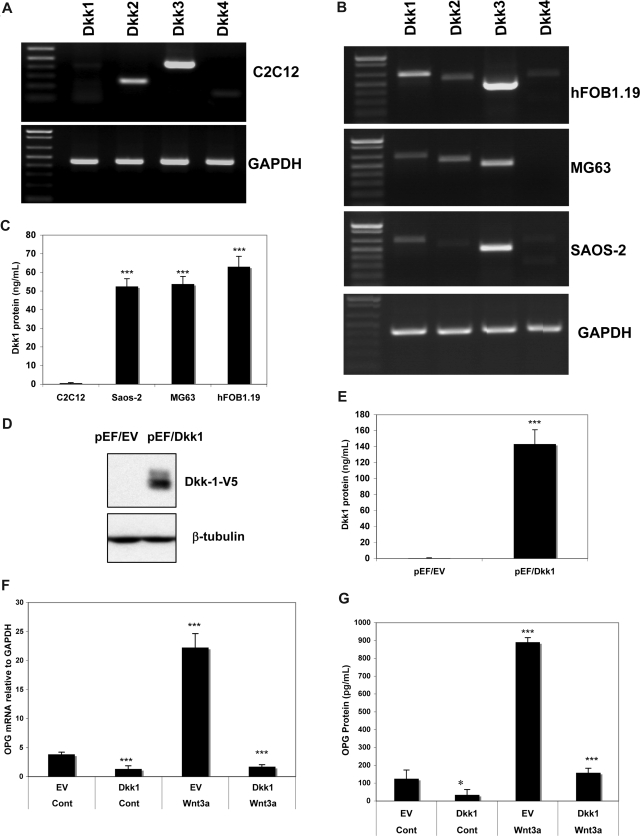
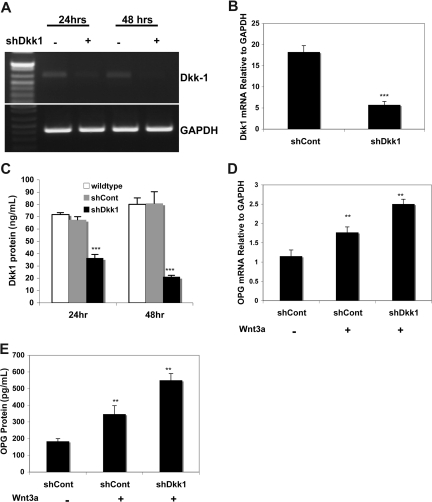
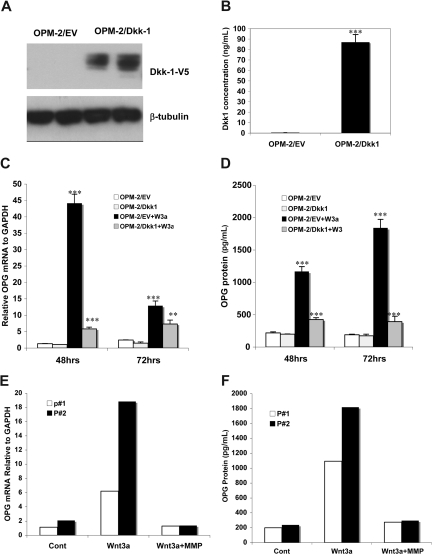
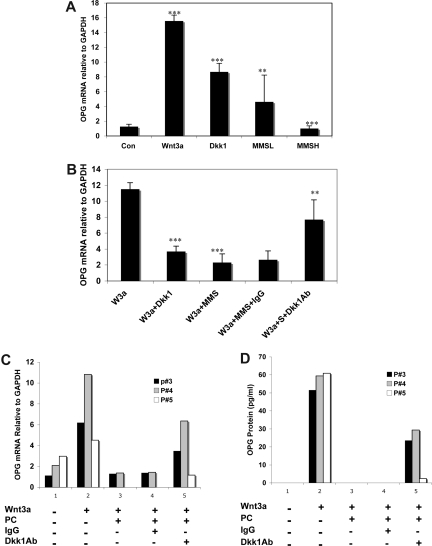
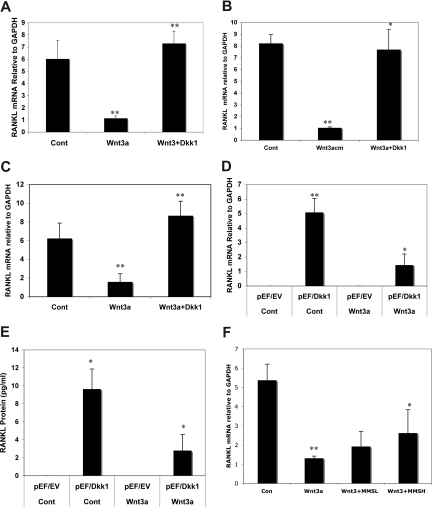
Multiple myeloma (MM) is characterized by osteolytic bone lesions (OBL) that arise as a consequence of osteoblast inactivation and osteoclast activation adjacent to tumor foci within bone. Wnt signaling in osteoblasts regulates osteoclastogenesis through the differential activation and inactivation of Receptor Activator of Nuclear factor Kappa B Ligand (RANKL) and osteoprotegerin (OPG), positive and negative regulators of osteoclast differentiation, respectively. We demonstrate here that MM cell-derived DKK1, a soluble inhibitor of canonical Wnt signaling, disrupted Wnt3a-regulated OPG and RANKL expression in osteoblasts. Confirmed in multiple independent assays, we show that pretreatment with rDKK1 completely abolished Wnt3a-induced OPG mRNA and protein production by mouse and human osteoblasts. In addition, we show that Wnt3a-induced OPG expression was diminished in osteoblasts cocultured with a DKK1-expressing MM cell line or primary MM cells. Finally, we show that bone marrow sera from 21 MM patients significantly suppressed Wnt3a-induced OPG expression and enhanced RANKL expression in osteoblasts in a DKK1-dependent manner. These results suggest that DKK1 may play a key role in the development of MM-associated OBL by directly interrupting Wnt-regulated differentiation of osteoblasts and indirectly increasing osteoclastogenesis via a DKK1-mediated increase in RANKL-to-OPG ratios.
Figures
Comment in
-
MM-induced osteolysis: partners in crime.Blood. 2008 Jul 1;112(1):3-4. doi: 10.1182/blood-2008-03-144097. Blood. 2008. PMID: 18574032 No abstract available.
References
-
- Roodman GD. Pathogenesis of myeloma bone disease. Blood Cells Mol Dis. 2004;32:290–292. - PubMed
-
- Taube T, Beneton MN, McCloskey EV, Rogers S, Greaves M, Kanis JA. Abnormal bone remodelling in patients with myelomatosis and normal biochemical indices of bone resorption. Eur J Haematol. 1992;49:192–198. - PubMed
-
- Anderson DM, Maraskovsky E, Billingsley WL, et al. A homologue of the TNF receptor and its ligand enhance T-cell growth and dendritic-cell function. Nature. 1997;390:175–179. - PubMed
-
- Kong YY, Yoshida H, Sarosi I, et al. OPGL is a key regulator of osteoclastogenesis, lymphocyte development and lymph-node organogenesis. Nature. 1999;397:315–323. - PubMed
Publication types
MeSH terms
Substances
Grants and funding
LinkOut - more resources
Full Text Sources
Medical
