


Susceptibility of Snark-deficient mice to azoxymethane-induced colorectal tumorigenesis and the formation of aberrant crypt foci
- PMID: 18307533
- PMCID: PMC11158890
- DOI: 10.1111/j.1349-7006.2008.00734.x
Susceptibility of Snark-deficient mice to azoxymethane-induced colorectal tumorigenesis and the formation of aberrant crypt foci
Abstract
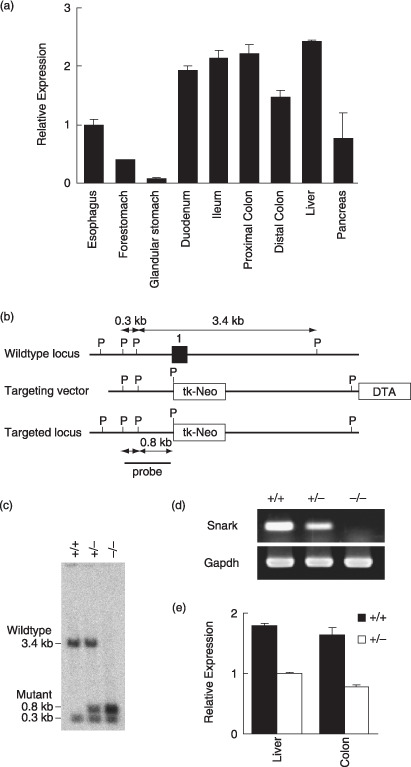
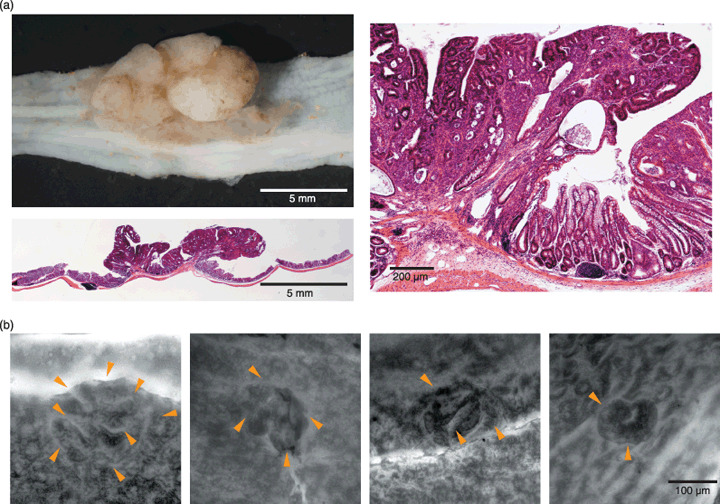
SNF-1/5'-AMP-activated kinase (AMPK)-related kinase (SNARK) is a member of the AMPK-related kinases. Snark(+/-) mice exhibited mature-onset obesity and related metabolic disorders. Obesity is regarded as a risk factor for colorectal cancer. To investigate whether Snark deficiency is involved in tumorigenesis in the large intestine, obese Snark(+/-) mice were treated with a chemical carcinogen, azoxymethane (AOM). The incidences of both adenomas and aberrant crypt foci (ACF) were significantly higher in Snark(+/-) mice than in their wild-type counterparts 28 weeks after the completion of AOM treatment (10 mg/kg/week for 8 weeks). Furthermore, ACF formation was enhanced in Snark(+/-) mice treated with AOM for 2 weeks, suggesting that Snark deficiency contributed to the early phase of tumorigenesis. The total number of ACF was correlated with bodyweight in Snark(+/-) and Snark(+/+) mice, suggesting that obesity was a risk factor for colorectal tumorigenesis in this model. However, the correlation coefficient was higher in Snark(+/-) mice. Moreover, AOM-induced ACF formation was also enhanced in preobese Snark(+/-) mice. Together, these findings suggest that AOM-induced tumorigenesis in Snark(+/-) mice was enhanced via obesity-dependent and -independent mechanisms.
Figures

References
-
- Kahn BB, Alquier T, Carling D, Hardie DG. AMP‐activated protein kinase: ancient energy gauge provides clues to modern understanding of metabolism. Cell Metab 2005; 1: 15–25. - PubMed
-
- Manning G, Whyte DB, Martinez R, Hunter T, Sudarsanam S. The protein kinase complement of the human genome. Science 2002; 298: 1912–34. - PubMed
Publication types
MeSH terms
Substances
LinkOut - more resources
Full Text Sources
Medical
Molecular Biology Databases
