


Evolution of the c-kit-positive cell response to pathological challenge in the myocardium
- PMID: 18308948
- PMCID: PMC4037162
- DOI: 10.1634/stemcells.2007-0751
Evolution of the c-kit-positive cell response to pathological challenge in the myocardium
Abstract
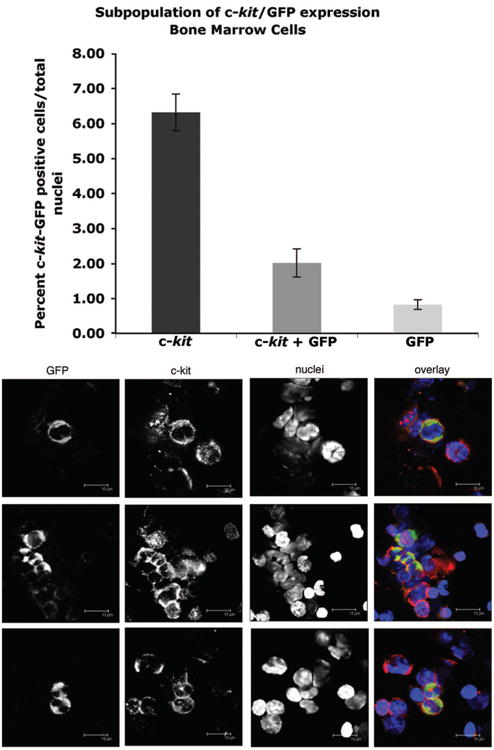
Cumulative evidence indicates that myocardium responds to growth or injury by recruitment of stem and/or progenitor cells that participate in repair and regenerative processes. Unequivocal identification of this population has been hampered by lack of reagents or markers specific to the recruited population, leading to controversies regarding the nature of these cells. Use of a transgenic mouse expressing green fluorescent protein driven by the c-kit promoter allows for unambiguous identification of this cell population. Green fluorescent protein (GFP) driven by the c-kit promoter labels a fraction of the c-kit+ cells recognized by antibody labeling for c-kit protein. Expression of GFP by the c-kit promoter and accumulation of GFP-positive cells in the myocardium is relatively high at birth compared with adult and declines between postnatal weeks 1 and 2, which tracks in parallel with expression of c-kit protein and c-kit-positive cells. Acute cardiomyopathic injury by infarction prompts increased expression of both GFP protein and GFP-labeled cells in the region of infarction relative to remote myocardium. Similar increases were observed for c-kit protein and cells with a slightly earlier onset and decline relative to the GFP signal. Cells coexpressing GFP, c-kit, and cardiogenic markers were apparent at 1-2 weeks postinfarction. Cardiac-resident c-kit+ cell cultures derived from the transgenic line express GFP that is diminished in parallel with c-kit by induction of differentiation. The use of genetically engineered mice validates and extends the concept of c-kit+ cells participating in the response to myocardial injury.
Conflict of interest statement
Figures


References
-
- Lensch MW, Daheron L, Schlaeger TM. Pluripotent stem cells and their niches. Stem Cell Rev. 2006;2:185–202. - PubMed
-
- Jahagirdar BN, Verfaillie CM. Multipotent adult progenitor cell and stem cell plasticity. Stem Cell Rev. 2005;1:53–59. - PubMed
-
- Beltrami AP, Barlucchi L, Torella D, et al. Adult cardiac stem cells are multipotent and support myocardial regeneration. Cell. 2003;114:763–776. - PubMed
-
- Guan K, Hasenfuss G. Do stem cells in the heart truly differentiate into cardiomyocytes? J Mol Cell Cardiol. 2007;43:377–387. - PubMed
Publication types
MeSH terms
Substances
Grants and funding
LinkOut - more resources
Full Text Sources
Other Literature Sources
Medical
Molecular Biology Databases
