


Inflammatory biomarkers and physical function in older, obese adults with knee pain and self-reported osteoarthritis after intensive weight-loss therapy
- PMID: 18312558
- PMCID: PMC9899049
- DOI: 10.1111/j.1532-5415.2007.01636.x
Inflammatory biomarkers and physical function in older, obese adults with knee pain and self-reported osteoarthritis after intensive weight-loss therapy
Abstract
Objectives: To describe the relationships between proinflammatory biomarkers and self-reported and performance-based physical function and to examine the effect of weight loss on these markers of inflammation.
Design: Randomized, longitudinal, clinical study comparing subjects eating an energy-restricted diet and participating in exercise training with a control group.
Setting: Community-base participants for the Physical Activity, Inflammation and Body Composition Trial.
Participants: Eighty-seven obese (body mass index (BMI) >30.0 kg/m(2)) adults aged 60 and older with knee pain and self-report of osteoarthritis.
Measurements: Inflammatory biomarkers (interleukin 6 (IL-6), tumor necrosis factor alpha (TNFalpha), C-reactive protein, and soluble receptors for TNFalpha (sTNFR1 and sTNFR2)) and self-reported (Western Ontario and McMaster University Osteoarthritis Index questionnaire) and performance-based (6-minute walk distance and stair climb time) measures of physical function at baseline and 6 months.
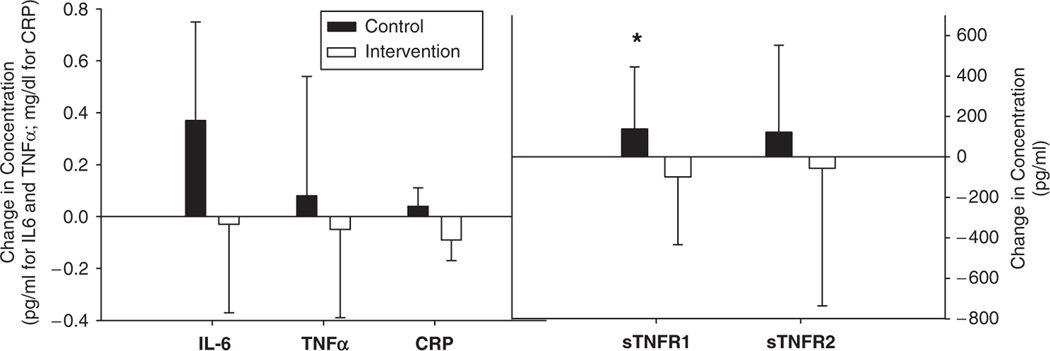
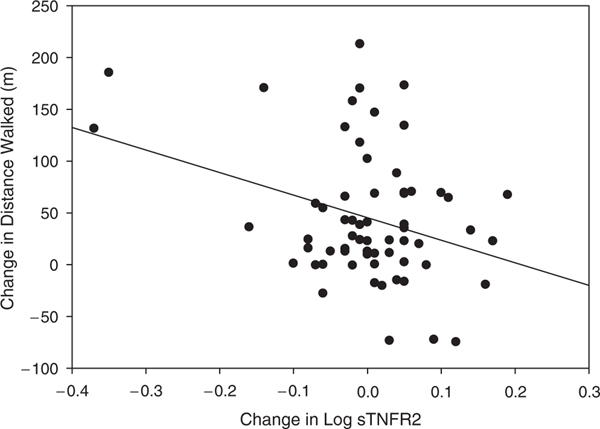
Results: Mean (standard error of the mean) weight loss was 8.7% (0.8%) in the intervention group, compared with 0.0% (0.7%) in the control group. sTNFR1 was significantly less in the intervention group than in the control group at 6 months. sTNFR1 and sTNFR2 predicted stair climb time at baseline. Change across the 6-month intervention for sTNFR2 was an independent predictor for change in 6-minute walk distance.
Conclusion: These results indicate that an intensive weight-loss intervention in older obese adults with knee pain can help improve inflammatory biomarkers and that changes in these concentrations showed associations with physical function.
Conflict of interest statement
Figures
References
-
- Centers for Disease Control and Prevention. Prevalence of disabilities and associated health conditions among adults—United States, 1999. MMWR Morb Mortal Wkly Rep 2001;50:120–125. - PubMed
-
- Maly MR, Krupa T. Personal experience of living with knee osteoarthritis among older adults. Disabil Rehabil 2007;29:1423–1433. - PubMed
-
- Felson DT, Zhang Y, Anthony JM et al. Weight loss reduces the risk for symptomatic knee osteoarthritis in women. The Framingham Study [see comments]. Ann Intern Med 1992;116:535–539. - PubMed
-
- Oliveria SA, Felson DT, Cirillo PA et al. Body weight, body mass index, and incident symptomatic osteoarthritis of the hand, hip, and knee. Epidemiology 1999;10:161–166. - PubMed
-
- Das UN. Is obesity an inflammatory condition? Nutrition 2001;17:953–966. - PubMed
Publication types
MeSH terms
Substances
Grants and funding
LinkOut - more resources
Full Text Sources
Medical
Research Materials
