


Reducing diabetes risk in American Indian women
- PMID: 18312806
- PMCID: PMC2275812
- DOI: 10.1016/j.amepre.2007.11.014
Reducing diabetes risk in American Indian women
Abstract
Background: American Indians experience high rates of type 2 diabetes. The impact of low-intensity interventions on diabetes risk among young American Indian women is unknown.
Design: Randomized controlled trial.
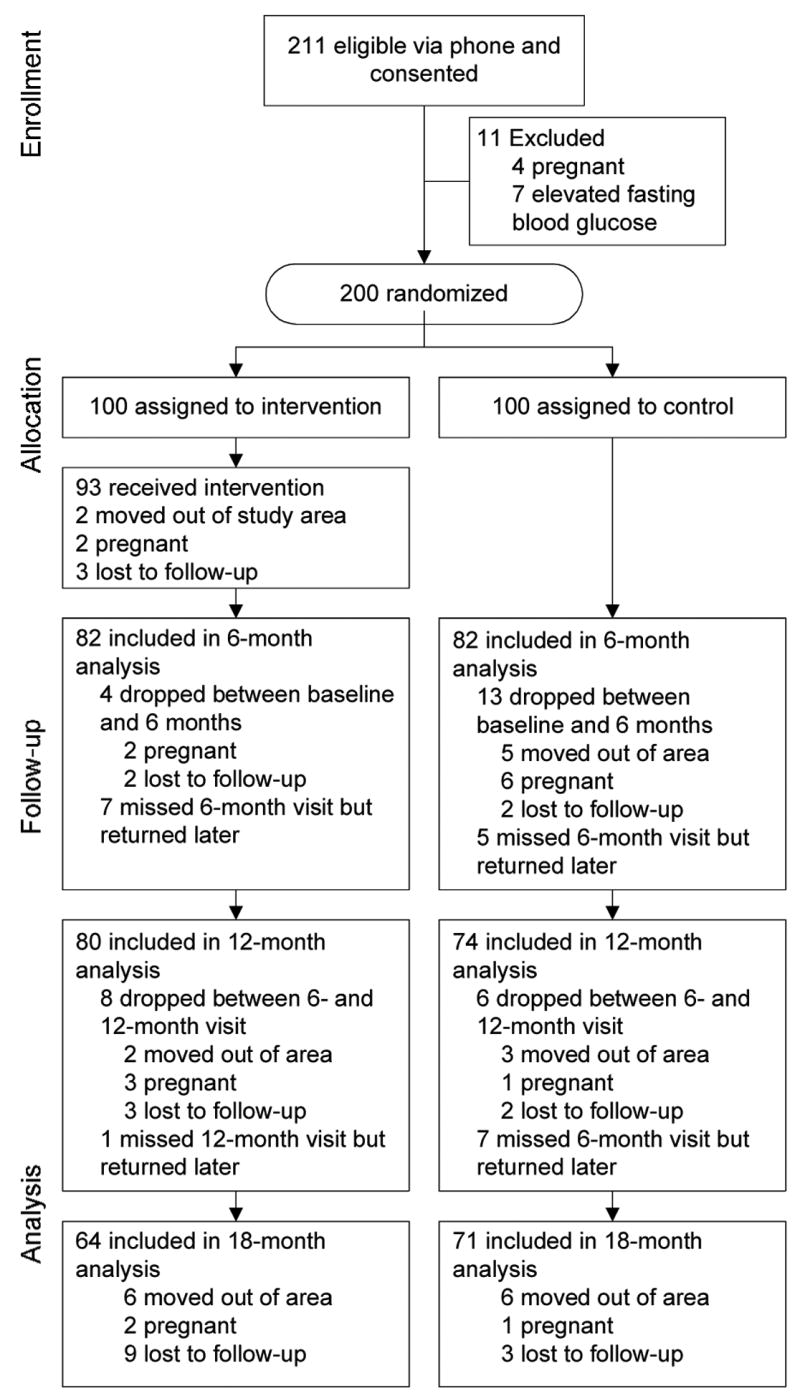
Setting/participants: Community-based; participants were 200 young urban American Indian women who were block-randomized on fasting blood glucose (FBG) into intervention and control groups. Inclusion criteria included self-reported identity, aged 18-40 years, not pregnant, willingness to stay in urban area for 2 years, and not having type 2 diabetes. Measures were taken at baseline, 6, 12, and 18 months. Data were gathered in 2002-2006 and analyzed in 2006-2007.
Intervention: Five discussion group sessions (one meeting per month for 5 months) were held focusing on healthful eating, physical activity, goal-setting, and social support.
Main outcome measures: Primary outcomes included dietary fat and vegetable consumption and self-reported physical activity. Secondary outcomes included cardiorespiratory fitness, insulin sensitivity, blood pressure, lipid profiles, percent body fat, BMI, intake of fruit, total sugar and sweetened beverages, FBG, and television viewing.
Results: Mean vegetable and fruit intake increased significantly more in the intervention group than in the control group over time (group by visit interaction, p=0.02 and p=0.002, respectively). Both groups had significant increases in percent body fat and decreases in waist circumference, insulin sensitivity, blood cholesterol, LDL, television viewing, and total intakes of energy, saturated fat, sugar, and sweetened beverages.
Conclusions: A culturally influenced, low-intensity lifestyle intervention can improve self-reported intakes of vegetables and fruit over 18 months in young, urban American Indian women.
Trial registration: ClinicalTrials.gov NCT00438126.
Figures
References
-
- Pleis JR, Lethbridge-Cejku M. Summary health statistics for U.S. adults: National health interview survey, 2005. National Center for Health Statistics Vital Health Stat. 2006;10:1–153. - PubMed
-
- NIDDK, National Diabetes Information Clearinghouse. Diabetes in American Indians and Alaska Natives. Washington DC: National Institutes of Health (NIH), NIDDK. NIH Pub. No. 02-4567; May, 2002.
-
- Harding A-H, Griffin SJ, Wareham NJ. Population impact of strategies for identifying groups at high risk of type 2 diabetes. Prev Med. 2006;42:364–8. - PubMed
-
- Stefan N, Stumvoll M, Weyer C, et al. Exaggerated insulin secretion in Pima Indians and African-Americans but higher insulin resistance in Pima Indians compared to African-Americans and Caucasians. Diabet Med. 2004;21:1090–5. - PubMed
Publication types
MeSH terms
Associated data
Grants and funding
LinkOut - more resources
Full Text Sources
Medical
