


Evaluation of Antioxidant and Wound Healing Effects of Alcoholic and Aqueous Extract of Ocimum sanctum Linn in Rats
- PMID: 18317555
- PMCID: PMC2249741
- DOI: 10.1093/ecam/nem004
Evaluation of Antioxidant and Wound Healing Effects of Alcoholic and Aqueous Extract of Ocimum sanctum Linn in Rats
Abstract
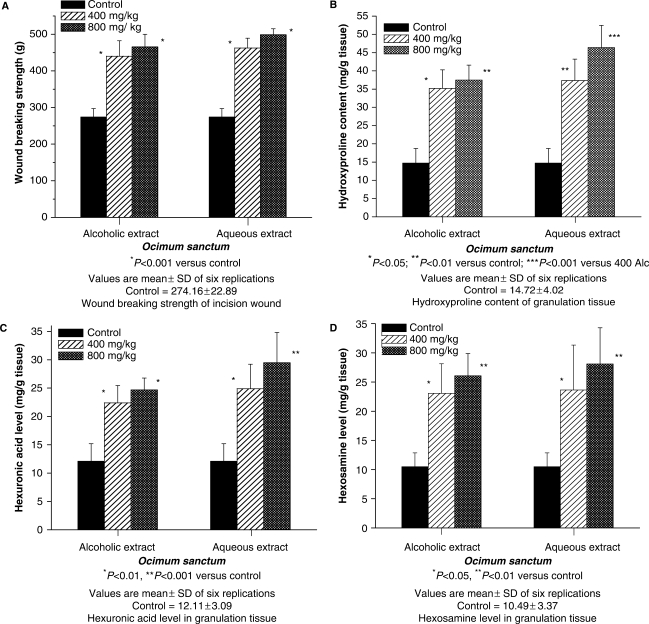
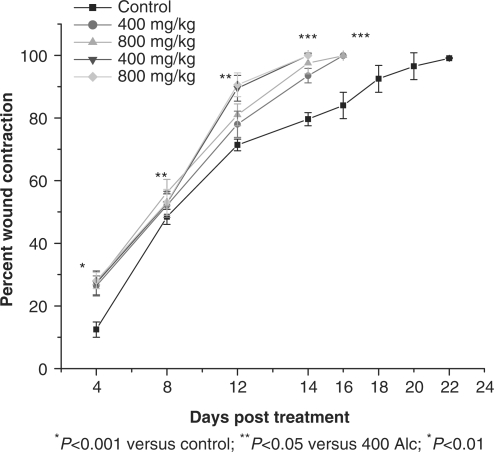
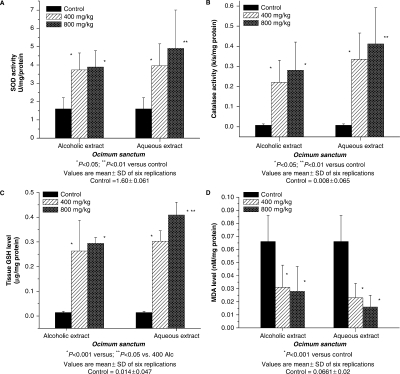
In recent years, oxidative stress and free radicals have been implicated in impaired wound healing. Ocimum sanctum (O. sanctum), a plant widely used in Ayurveda, possesses anti-inflammatory and antioxidant properties. The present study was undertaken to assess the potential of alcoholic and aqueous extracts in wound healing in Wistar albino rats. The rats were divided into five groups of six animals each. Group 1 is normal wounded control and the other four groups were treated with two different doses each of alcoholic and aqueous extract of O. sanctum. The wound healing parameters were evaluated by using incision, excision and dead space wounds in extract-treated rats and controls. Both the doses of alcoholic and aqueous extract significantly increased wound breaking strength, hydroxyproline, hexuronic acid, hexosamines, superoxide dismutase, catalase, reduced glutathione and significantly decreased percentage of wound contraction and lipid peroxidation when compared with the control group. The results suggest that O. sanctum has antioxidant properties, which may be responsible and favorable for faster wound healing and this plant extract may be useful in the management of abnormal healing and hypertropic scars.
Keywords: Ocimum sanctum; antioxidant property; wound healing activity.
Figures
References
-
- Godhwani S, Godhwani JL, Vyas DS. Ocimum sanctum – a preliminary study evaluating its immunoregulatory profile in albino rats. J Ethnopharmacol. 1988;24:193–8. - PubMed
-
- Godhwani S, Godhwani JL, Vyas DS. Ocimum sanctum: an experimental study evaluating its anti-inflammatory, analgesic and antipyretic activity in animals. J Ethnopharmacol. 1987;21:153–63. - PubMed
-
- Uma Devi P, Ganasoundari A, Vrinda B, Srinivasan KK, Unnikrishnan MK. Radiation protection by the Ocimum flavonoids orientin and vicenin: mechanism of action. Radiat Res. 2000;154:455–60. - PubMed
-
- Havsteen BH. The biochemistry and medical significance of the flavonoids. Pharmacol Ther. 2002;96:67–72. - PubMed
LinkOut - more resources
Full Text Sources
