


Loss of the glycine N-methyltransferase gene leads to steatosis and hepatocellular carcinoma in mice
- PMID: 18318442
- PMCID: PMC2405897
- DOI: 10.1002/hep.22159
Loss of the glycine N-methyltransferase gene leads to steatosis and hepatocellular carcinoma in mice
Abstract
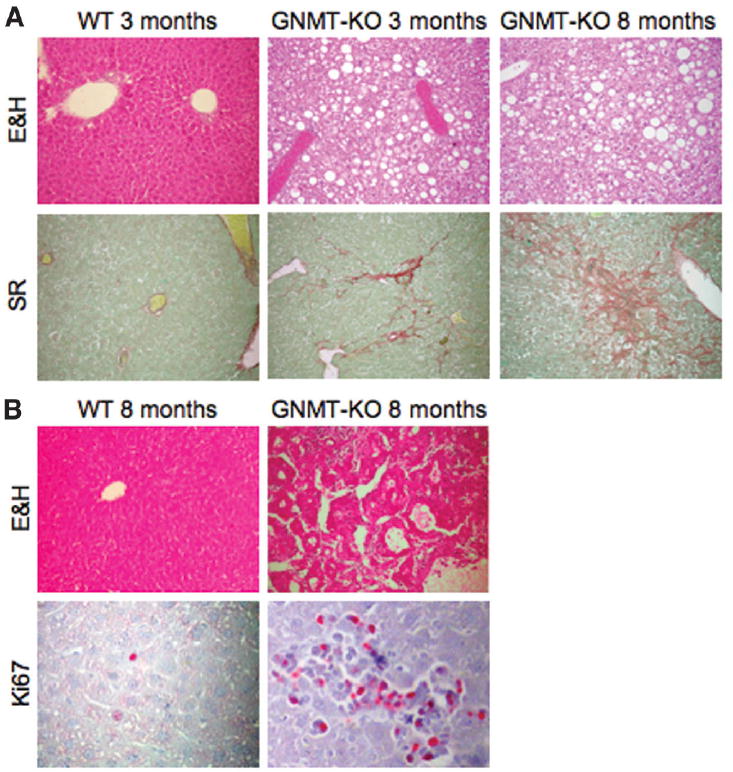
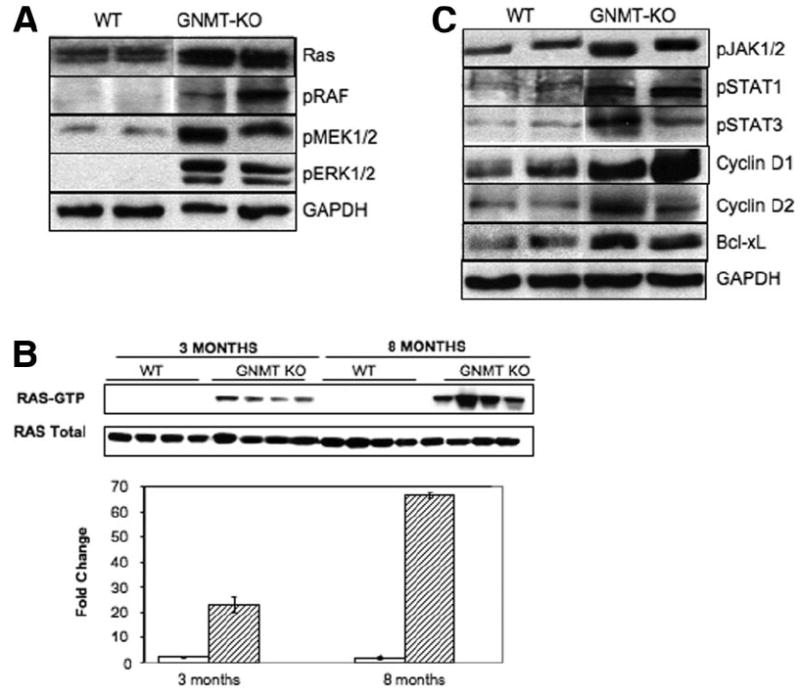
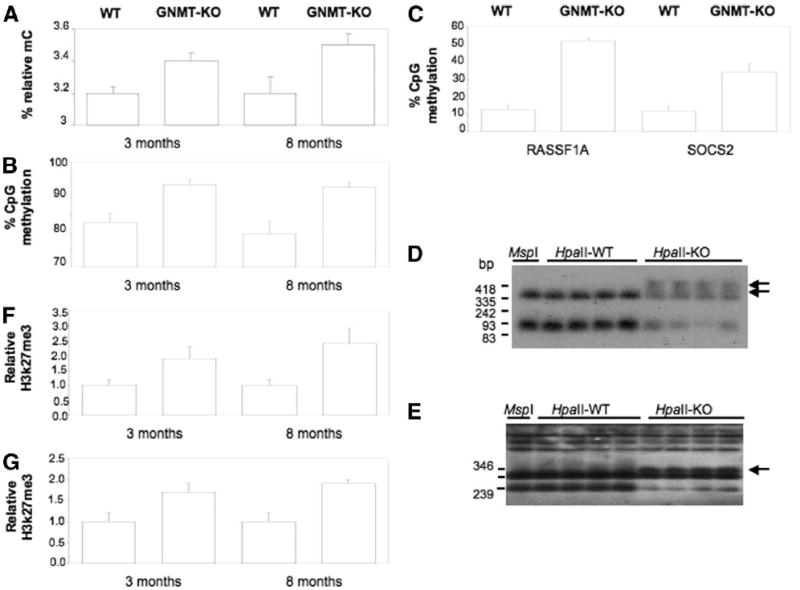
Glycine N-methyltransferase (GNMT) is the main enzyme responsible for catabolism of excess hepatic S-adenosylmethionine (SAMe). GNMT is absent in hepatocellular carcinoma (HCC), messenger RNA (mRNA) levels are significantly lower in livers of patients at risk of developing HCC, and GNMT has been proposed to be a tumor-susceptibility gene for liver cancer. The identification of several children with liver disease as having mutations of the GNMT gene further suggests that this enzyme plays an important role in liver function. In the current study we studied development of liver pathologies including HCC in GNMT-knockout (GNMT-KO) mice. GNMT-KO mice have elevated serum aminotransferase, methionine, and SAMe levels and develop liver steatosis, fibrosis, and HCC. We found that activation of the Ras and Janus kinase (JAK)/signal transducer and activator of transcription (STAT) pathways was increased in liver tumors from GNMT-KO mice coincidently with the suppression of the Ras inhibitors Ras-association domain family/tumor suppressor (RASSF) 1 and 4 and the JAK/STAT inhibitors suppressor of cytokine signaling (SOCS) 1-3 and cytokine-inducible SH2-protein. Finally, we found that methylation of RASSF1 and SOCS2 promoters and the binding of trimethylated lysine 27 in histone 3 to these 2 genes was increased in HCC from GNMT-KO mice.
Conclusion: These data demonstrate that loss of GNMT induces aberrant methylation of DNA and histones, resulting in epigenetic modulation of critical carcinogenic pathways in mice.
Conflict of interest statement
Potential conflict of interest: Nothing to report.
Figures
Comment in
-
Phenotypic differences between two Gnmt-/- mouse models for hepatocellular carcinoma.Hepatology. 2009 Jun;49(6):2130-1; author reply 2131. doi: 10.1002/hep.22984. Hepatology. 2009. PMID: 19475685 No abstract available.
References
-
- Mato JM, Lu SC. Role of S-adenosyl-L-methionine in liver health and injury. Hepatology. 2007;45:1306–1312. - PubMed
-
- Clarke S, Banfield K. S-Adenosylmethionine-dependent methyltransferase. In: Carmel R, Jacobsen DW, editors. Homocysteine in Health and Disease. Cambridge, UK: Cambridge University Press; 2001. pp. 63–78.
-
- Mudd SH, Brosnan JT, Brosnan ME, Jacobs RL, Stabler SP, Allen RH, et al. Methyl balance and transmethylation fluxes in humans. Am J Clin Nutr. 2007;85:19–25. - PubMed
-
- Rowling MJ, McMullen MH, Schalinske KL. Vitamin A and its derivatives induce hepatic glycine N-methyltransferase and hypomethylation of DNA in rats. J Nutr. 2002;132:365–369. - PubMed
-
- Ozias M, Schalinske KL. All-trans-retinoic acid rapidly induces glycine N-methyltransferase in a dose-dependent manner and reduces circulating methionine and homocysteine levels in rats. J Nutr. 2003;133:4090–3094. - PubMed
Publication types
MeSH terms
Substances
Grants and funding
LinkOut - more resources
Full Text Sources
Other Literature Sources
Medical
Molecular Biology Databases
Research Materials