


Super-resolution imaging by random adsorbed molecule probes
- PMID: 18321073
- PMCID: PMC2743141
- DOI: 10.1021/nl0733280
Super-resolution imaging by random adsorbed molecule probes
Abstract
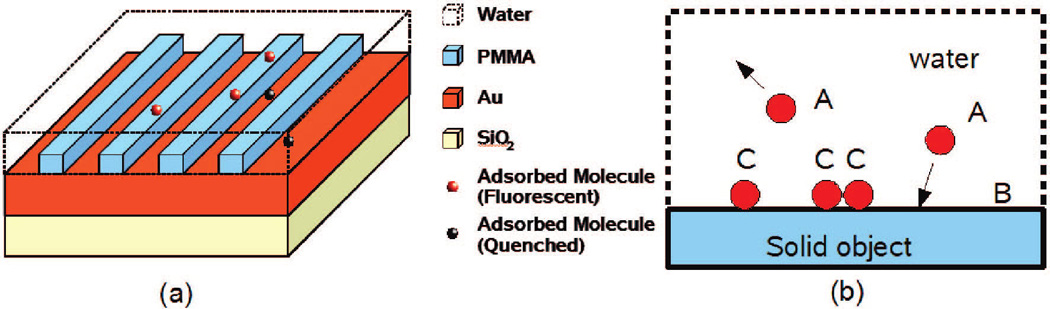
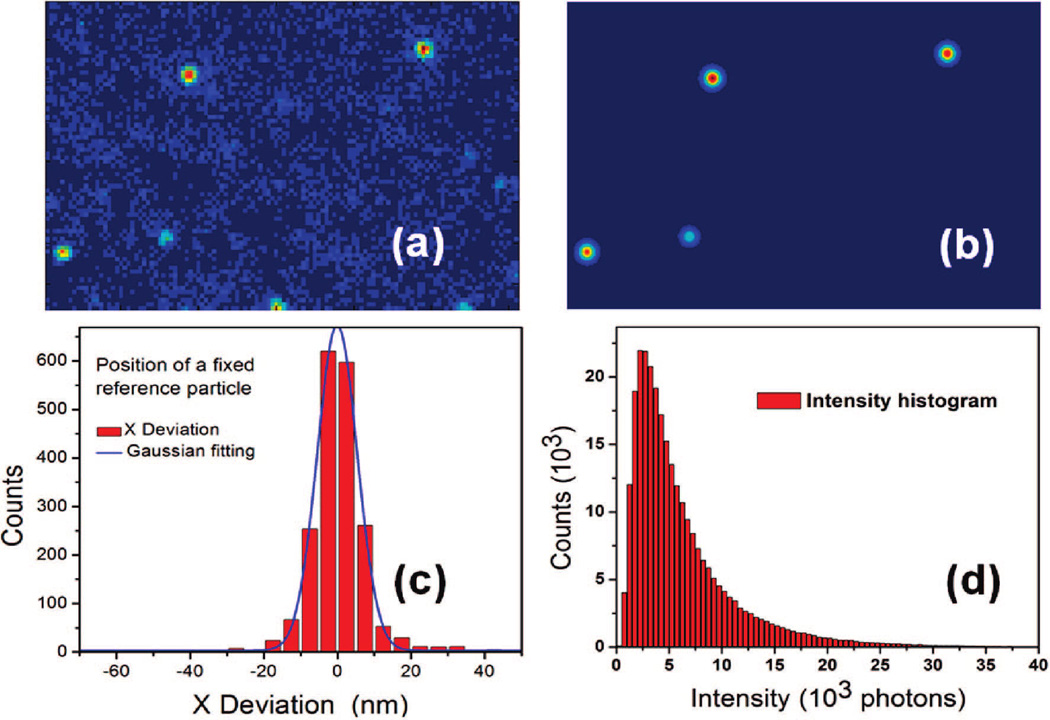
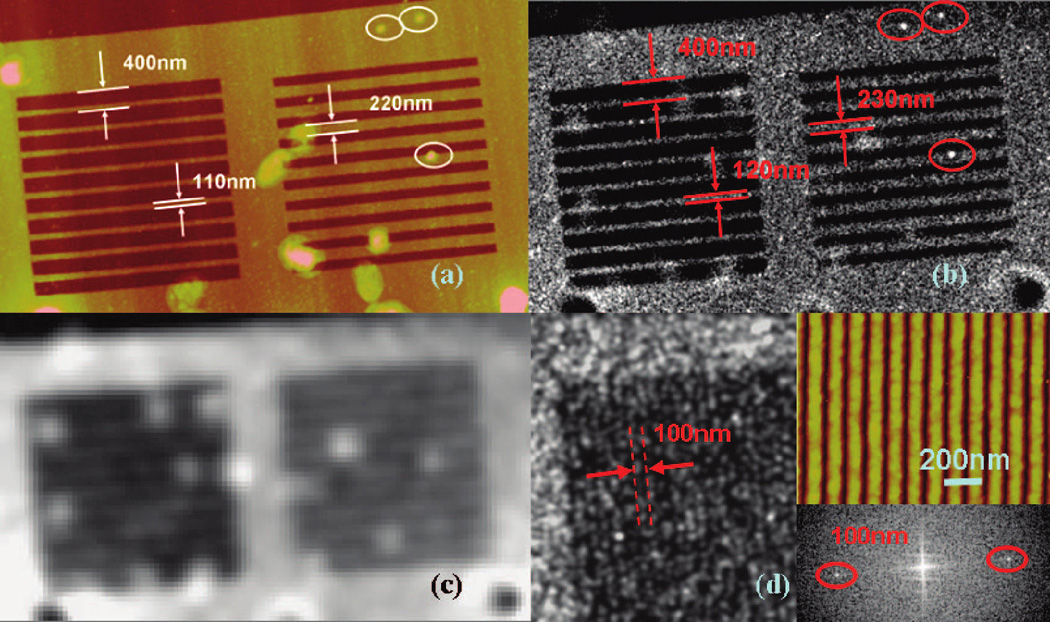
Single molecule localization (SML) is a powerful tool to measure the position and trajectory of molecules in numerous systems, with nanometer accuracy. This technique has been recently utilized to overcome the diffraction limit in optical imaging. So far, super-resolution imaging by SML was demonstrated using photoactivable or photoswitchable fluorophores, as well as diffusive fluorophore probes in solution. All these methods, however, rely on special fluorophore or object properties. In this Letter, we propose and demonstrate a new super-resolution technique attainable for a bio/dielectric structure on a metal substrate. A sub-diffraction-limited image is obtained by randomly adsorbed fluorescent probe molecules on a liquid-solid interface, while the metal substrate, quenching the unwanted fluorescent signal, provides a significantly enhanced imaging contrast. As this approach does not use specific stain techniques, it can be readily applied to general dielectric objects, such as nanopatterned photoresist, inorganic nanowires, subcellular structures, etc.
Figures
References
-
- Betzig E, Trautman JK. Science. 1992;257:189. - PubMed
-
- Pohl DW, Courjon D. Near Field Optics. Kluwer: Dordrecht; 1993.
-
- Hell SW, Wichmann J. Opt. Lett. 1994;19:780. - PubMed
-
- Westphal V, Seeger J, Salditt T, Hell SW. J. Phys. B: At., Mol. Opt. Phys. 2005;38:S695.
-
- Fang N, Lee H, Sun C, Zhang X. Science. 2005;308:534. - PubMed
Publication types
MeSH terms
Substances
Grants and funding
LinkOut - more resources
Full Text Sources
Other Literature Sources
Research Materials
