Role of cash in conditional cash transfer programmes for child health, growth, and development: an analysis of Mexico's Oportunidades
- PMID: 18328930
- PMCID: PMC2779574
- DOI: 10.1016/S0140-6736(08)60382-7
Role of cash in conditional cash transfer programmes for child health, growth, and development: an analysis of Mexico's Oportunidades
Abstract
Background: Many governments have implemented conditional cash transfer (CCT) programmes with the goal of improving options for poor families through interventions in health, nutrition, and education. Families enrolled in CCT programmes receive cash in exchange for complying with certain conditions: preventive health requirements and nutrition supplementation, education, and monitoring designed to improve health outcomes and promote positive behaviour change. Our aim was to disaggregate the effects of cash transfer from those of other programme components.
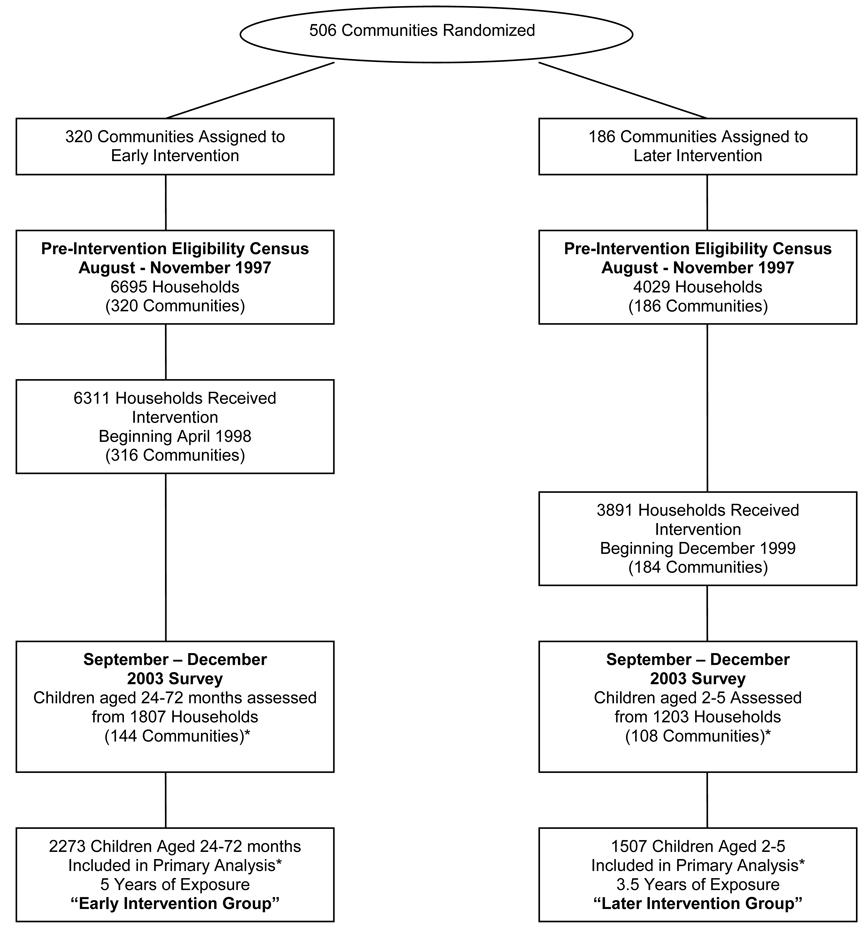
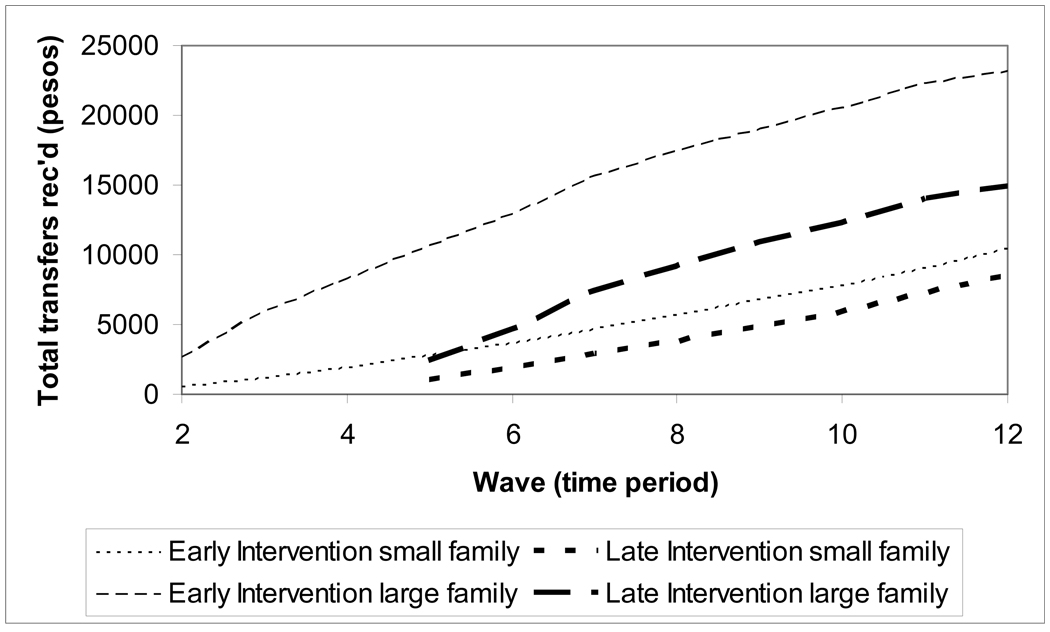
Methods: In an intervention that began in 1998 in Mexico, low-income communities (n=506) were randomly assigned to be enrolled in a CCT programme (Oportunidades, formerly Progresa) immediately or 18 months later. In 2003, children (n=2449) aged 24-68 months who had been enrolled in the programme their entire lives were assessed for a wide variety of outcomes. We used linear and logistic regression to determine the effect size for each outcome that is associated with a doubling of cash transfers while controlling for a wide range of covariates, including measures of household socioeconomic status.
Findings: A doubling of cash transfers was associated with higher height-for-age Z score (beta 0.20, 95% CI 0.09-0.30; p<0.0001), lower prevalence of stunting (-0.10, -0.16 to -0.05; p<0.0001), lower body-mass index for age percentile (-2.85, -5.54 to -0.15; p=0.04), and lower prevalence of being overweight (-0.08, -0.13 to -0.03; p=0.001). A doubling of cash transfers was also associated with children doing better on a scale of motor development, three scales of cognitive development, and with receptive language.
Interpretation: Our results suggest that the cash transfer component of Oportunidades is associated with better outcomes in child health, growth, and development.
Conflict of interest statement
None of the authors had a conflict of interest.
Figures
Comment in
-
Conditional cash transfer: a magic bullet for health?Lancet. 2008 Mar 8;371(9615):789-91. doi: 10.1016/S0140-6736(08)60356-6. Lancet. 2008. PMID: 18328910 No abstract available.
References
-
- Walker SP, Wachs TD, Gardner JM, et al. Child development: risk factors for adverse outcomes in developing countries. Lancet. 2007;369(9556):145–157. - PubMed
-
- Boissiere M, Knight JB, Sabot R. Earnings, schooling, ability and cognitive skills. American Economics Review. 1985;75:1016–1030.
-
- Sen A. Development as Freedom: Knopf. 1999
-
- Nelson CA. The neurobiological basis of early intervention. In: Shonkoff JP, Meisels SJ, editors. Handbook of early childhood intervention. 2nd ed. Cambridge: Cambridge University Press; 2000.