


Tumor-specific antibody-mediated targeted delivery of Doxil reduces the manifestation of auricular erythema side effect in mice
- PMID: 18329201
- PMCID: PMC2680692
- DOI: 10.1016/j.ijpharm.2008.01.041
Tumor-specific antibody-mediated targeted delivery of Doxil reduces the manifestation of auricular erythema side effect in mice
Abstract
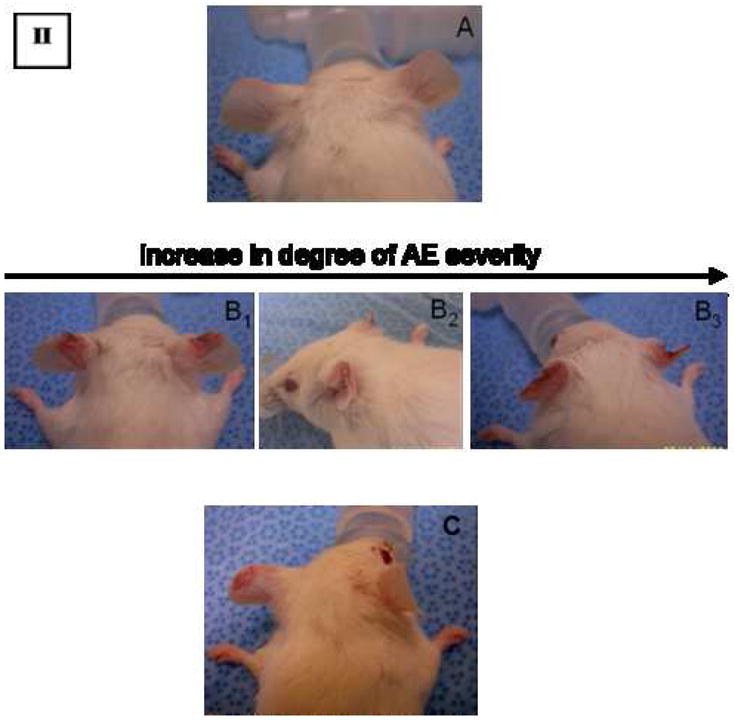
A mucocutaneous reaction in mice associated with Doxil treatment was identified as auricular erythema (AE). Given that the immuno-targeting of Doxil to tumors was found to influence also its systemic biodistribution pattern, the attempt was made to exploit a specific targeting of Doxil to reduce the manifestation of this adverse reaction. This problem is of general significance, since cutaneous reactions often lead to alterations of Doxil dosing regimen in patients and might subsequently compromise the therapeutic outcome of cancer treatment. Tumor-bearing mice were used to study the biodistribution and skin-tissue accumulation effects of the tumor-targeted Doxil (the clinically used anti-cancer formulation) coupled with the anti-cancer monoclonal 2C5 antibody (mAb 2C5) as well as AE caused by Doxil application. The modification of Doxil with mAb 2C5 resulted in a significant decrease in the normal skin accumulation of doxorubicin compared to original Doxil and substantially reduced AE. The frequency of AE was decreased by three to fourfold with the mAb 2C5-modified doxorubicin-loaded long-circulating liposomes. Thus, targeting of Doxil with the anti-cancer mAb 2C5 not only can increase the tumor-specific accumulation of the drug, but also diminishes the cutaneous side effect of the original Doxil therapy.
Figures
References
-
- Allen TM, Hansen C. Pharmacokinetics of stealth versus conventional liposomes: effect of dose. Biochim Biophys Acta. 1991;1068:133–141. - PubMed
-
- Allen TM, Hansen C, Martin F, Redemann C, Yau-Young A. Liposomes containing synthetic lipid derivatives of poly(ethylene glycol) show prolonged circulation half-lives in vivo. Biochim Biophys Acta. 1991;1066:29–36. - PubMed
-
- Allen TM, Mumbengegwi DR, Charrois GJ. Anti-CD19-targeted liposomal doxorubicin improves the therapeutic efficacy in murine B-cell lymphoma and ameliorates the toxicity of liposomes with varying drug release rates. Clin Cancer Res. 2005;11:3567–3573. - PubMed
-
- Batist G, Harris L, Azarnia N, Lee LW, Daza-Ramirez P. Improved anti-tumor response rate with decreased cardiotoxicity of non-pegylated liposomal doxorubicin compared with conventional doxorubicin in first-line treatment of metastatic breast cancer in patients who had received prior adjuvant doxorubicin: results of a retrospective analysis. Anticancer Drugs. 2006;17:587–595. - PubMed
-
- Berry G, Billingham M, Alderman E, Richardson P, Torti F, Lum B, Patek A, Martin FJ. The use of cardiac biopsy to demonstrate reduced cardiotoxicity in AIDS Kaposi’s sarcoma patients treated with pegylated liposomal doxorubicin. Ann Oncol. 1998;9:711–716. - PubMed
Publication types
MeSH terms
Substances
Grants and funding
LinkOut - more resources
Full Text Sources
