


Sleep-wake behavior and responses to sleep deprivation of mice lacking both interleukin-1 beta receptor 1 and tumor necrosis factor-alpha receptor 1
- PMID: 18329246
- PMCID: PMC4164115
- DOI: 10.1016/j.bbi.2008.02.001
Sleep-wake behavior and responses to sleep deprivation of mice lacking both interleukin-1 beta receptor 1 and tumor necrosis factor-alpha receptor 1
Abstract
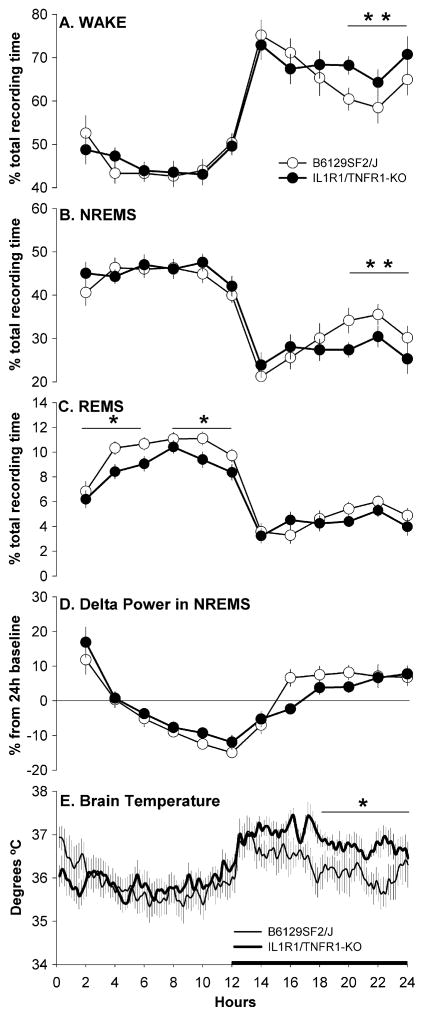
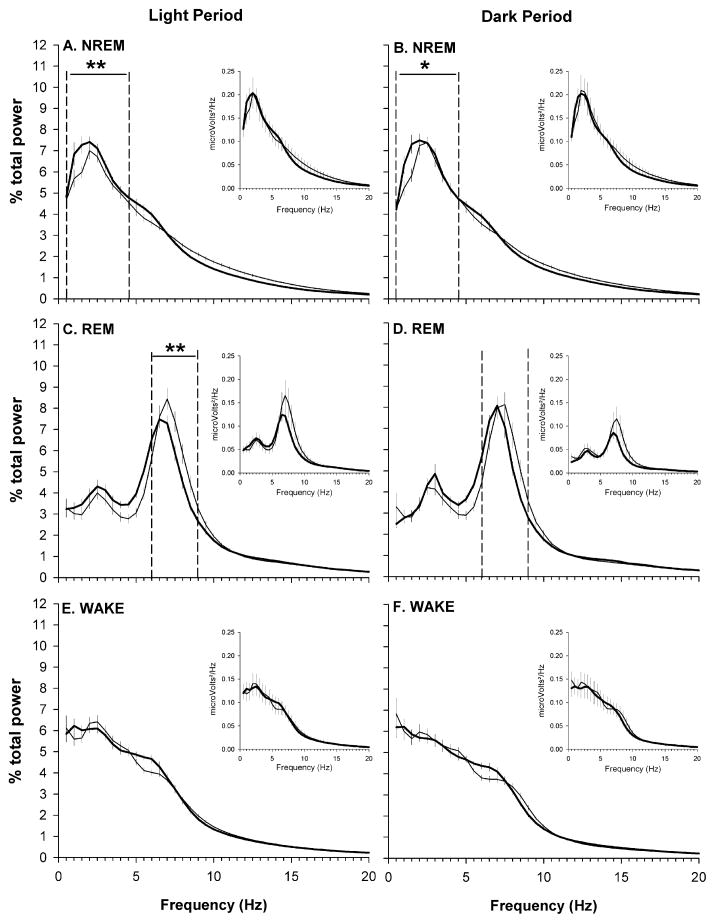
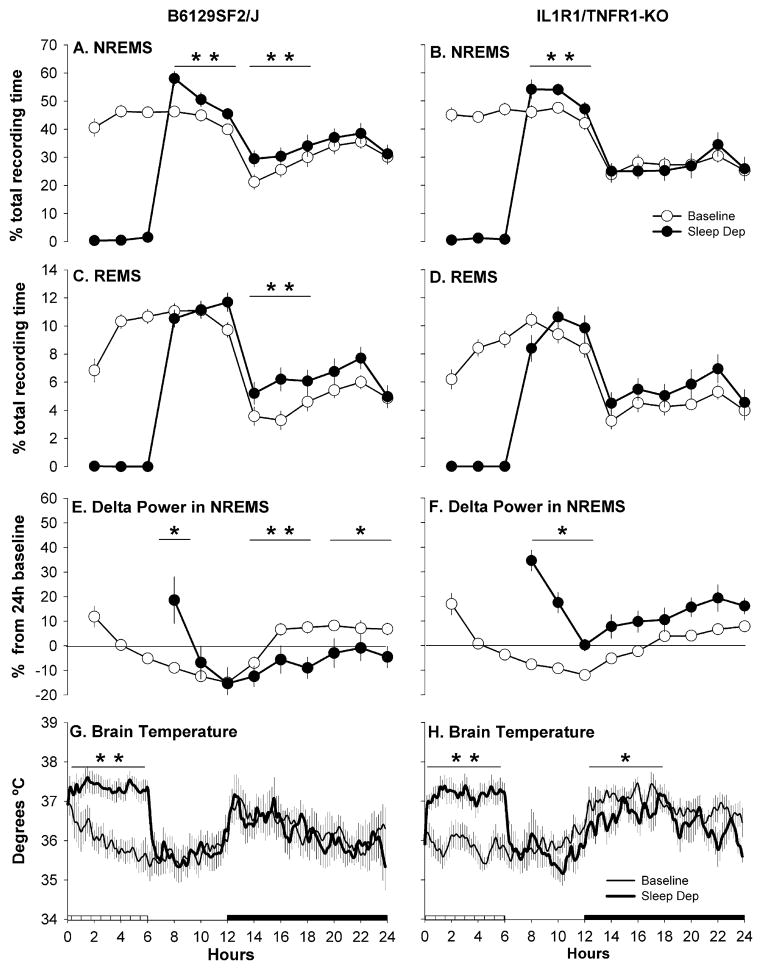
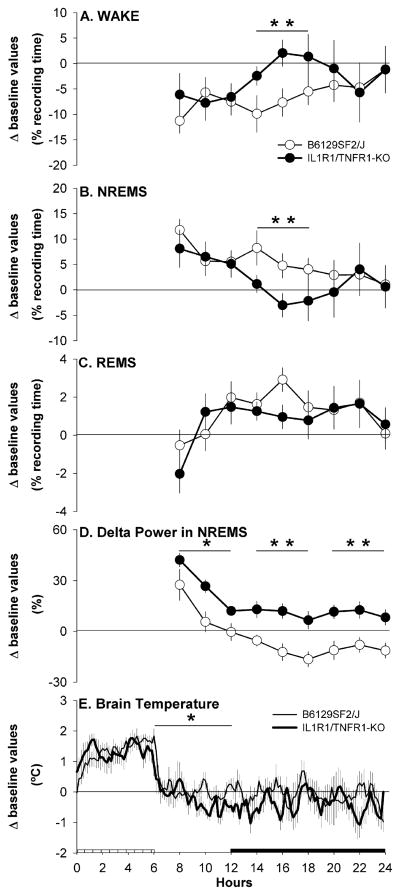
Data indicate that interleukin (IL)-1 beta and tumor necrosis factor-alpha (TNFalpha) are involved in the regulation of non-rapid eye movement sleep (NREMS). Previous studies demonstrate that mice lacking the IL-1 beta type 1 receptor spend less time in NREMS during the light period, whereas mice lacking the p55 (type 1) receptor for TNFalpha spend less time in NREMS during the dark period. To further investigate roles for IL-1 beta and TNFalpha in sleep regulation we phenotyped sleep and responses to sleep deprivation of mice lacking both the IL-1 beta receptor 1 and TNFalpha receptor 1 (IL-1R1/TNFR1 KO). Male adult mice (IL-1R1/TNFR1 KO, n=14; B6129SF2/J, n=14) were surgically instrumented with EEG electrodes and with a thermistor to measure brain temperature. After recovery and adaptation to the recording apparatus, 48 h of undisturbed baseline recordings were obtained. Mice were then subjected to 6h sleep deprivation at light onset by gentle handling. IL-1R1/TNFR1 KO mice spent less time in NREMS during the last 6h of the dark period and less time in rapid eye movement sleep (REMS) during the light period. There were no differences between strains in the diurnal timing of delta power during NREMS. However, there were strain differences in the relative power spectra of the NREMS EEG during both the light period and the dark period. In addition, during the light period relative power in the theta frequency band of the REMS EEG differed between strains. After sleep deprivation, control mice exhibited prolonged increases in NREMS and REMS, whereas the duration of the NREMS increase was shorter and there was no increase in REMS of IL-1R1/TNFR1 KO mice. Delta power during NREMS increased in both strains after sleep deprivation, but the increase in delta power during NREMS of IL-1R1/TNFR1 KO mice was of greater magnitude and of longer duration than that observed in control mice. These results provide additional evidence that the IL-1 beta and TNFalpha cytokine systems play a role in sleep regulation and in the alterations in sleep that follow prolonged wakefulness.
Figures
References
-
- Bazhenov M, Timofeev I, Steriade M, Sejnowski TJ. Self-sustained rhythmic activity in the thalamic reticular nucleus mediated by depolarizing GABAA receptor potentials. Nat Neurosci. 1999;2:168–174. - PubMed
-
- Beattie EC, Carroll RC, Yu X, Morishita W, Yasuda H, von Zastrow M, Malenka RC. Regulation of AMPA receptor endocytosis by a signaling mechanism shared with LTD. Nat Neurosci. 2000;3:1291–1300. - PubMed
-
- Benveniste EN. Inflammatory cytokines within the central nervous system: sources, function, and mechanisms of action. Am J Physiol. 1992;263:C1–C16. - PubMed
-
- Borbély AA. A two process model of sleep regulation. Hum Neurobiol. 1982;1:195–204. - PubMed
-
- Breder CD, Dinarello CA, Saper CB. Interleukin-1 immuno-reactive innervation of the human hypothalamus. Science. 1988;240:321–324. - PubMed
Publication types
MeSH terms
Substances
Grants and funding
LinkOut - more resources
Full Text Sources
Molecular Biology Databases
Research Materials
