


Evolution of a sensory novelty: tympanic ears and the associated neural processing
- PMID: 18331899
- PMCID: PMC3269633
- DOI: 10.1016/j.brainresbull.2007.10.044
Evolution of a sensory novelty: tympanic ears and the associated neural processing
Abstract
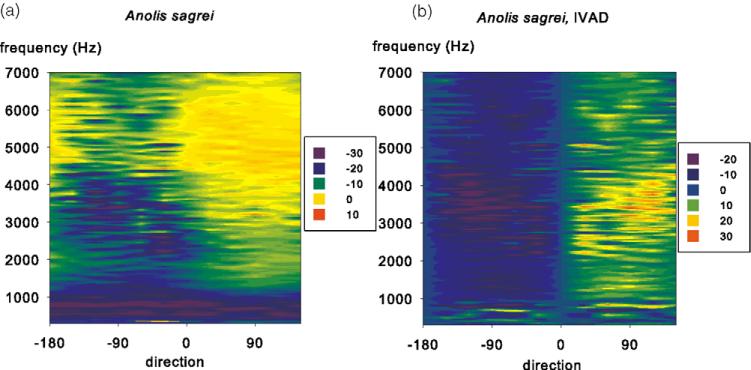
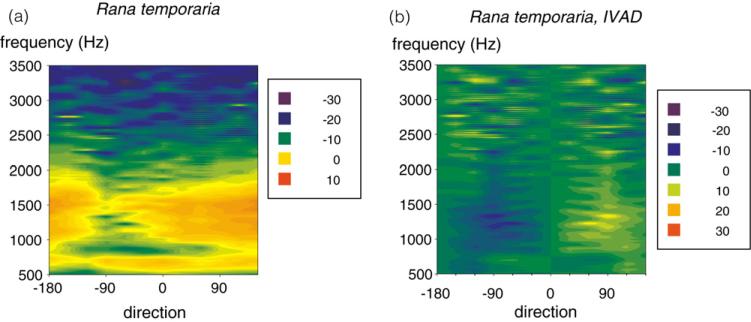
Tympanic hearing is a true evolutionary novelty that appears to have developed independently in at least five major tetrapod groups-the anurans, turtles, lepidosaurs, archosaurs and mammals. The emergence of a tympanic ear would have increased the frequency range and sensitivity of hearing. Furthermore, tympana were acoustically coupled through the mouth cavity and therefore inherently directional in a certain frequency range, acting as pressure difference receivers. In some lizard species, this acoustical coupling generates a 50-fold directional difference, usually at relatively high frequencies (2-4kHz). In ancestral atympanate tetrapods, we hypothesize that low-frequency sound may have been processed by non-tympanic mechanisms like those in extant amphibians. The subsequent emergence of tympanic hearing would have led to changes in the central auditory processing of both high-frequency sound and directional hearing. These changes should reflect the independent origin of the tympanic ears in the major tetrapod groups. The processing of low-frequency sound, however, may have been more conserved, since the acoustical coupling of the ancestral tympanate ear probably produced little sensitivity and directionality at low frequencies. Therefore, tetrapod auditory processing may originally have been organized into low- and high-frequency streams, where only the high-frequency processing was mediated by tympanic input. The closure of the middle ear cavity in mammals and some birds is a derived condition, and may have profoundly changed the operation of the ear by decoupling the tympana, improving the low-frequency response of the tympanum, and leading to a requirement for additional neural computation of directionality in the central nervous system. We propose that these specializations transformed the low- and high-frequency streams into time and intensity pathways, respectively.
Figures
References
-
- Báez AM, Basso NG. The earliest known frogs of the Jurassic of South America: review and cladistic appraisal of their relationships, Münchner Geowiss. Abh. A. 1996;30:131–158.
-
- Bolt JR, Lombard RE. Evolution of the amphibian tympanic ear and the origin of frogs. Biol. J. Linn. Soc. 1985;24:83–99.
-
- Brand A, Behrend O, Marquardt T, McAlpine D, Grothe B. Precise inhibition is essential for microsecond interaural time coding. Nature. 2002;417:543–547. - PubMed
-
- Brandt C, Christensen-Dalsgaard J. Responses to three-dimensional vibrations and sound stimuli in single fibers from the 8th cranial nerve of the grass frog, Rana temporaria. In: Elsner N, Kreuzberg GW, editors. Göttingen Neurobiology Report 2001. Georg Thieme; Stuttgart: 2001. p. 386.
-
- Carr C, Code RA. The central auditory system of reptiles and birds. In: Dooling RJ, Fay RR, Popper AN, editors. Comparative Hearing: Birds and Reptiles. Springer; New York: 2000. pp. 197–248.
Publication types
MeSH terms
Grants and funding
LinkOut - more resources
Full Text Sources
Other Literature Sources
