


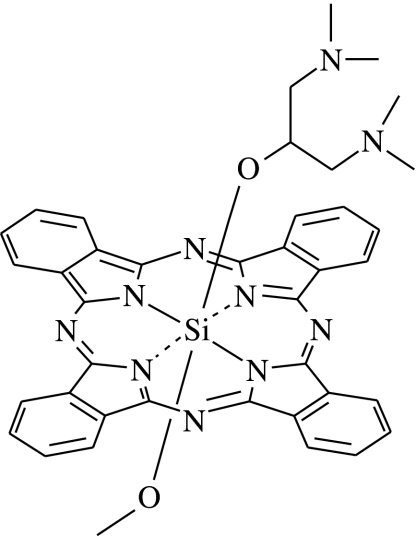
Photodynamic activity of BAM-SiPc, an unsymmetrical bisamino silicon(IV) phthalocyanine, in tumour-bearing nude mice
- PMID: 18332853
- PMCID: PMC2438983
- DOI: 10.1038/bjp.2008.82
Photodynamic activity of BAM-SiPc, an unsymmetrical bisamino silicon(IV) phthalocyanine, in tumour-bearing nude mice
Abstract
Background and purpose: Ever since the discovery of photodynamic therapy, there has been a continuous search for more potent photosensitizers. Towards that end, we have synthesized a number of novel phthalocyanine derivatives. The unsymmetrical bisamino silicon(IV) phthalocyanine BAM-SiPc is one of the most potent compounds. In in vitro cell culture, it exhibits high phototoxicity against a number of cancer cell lines.
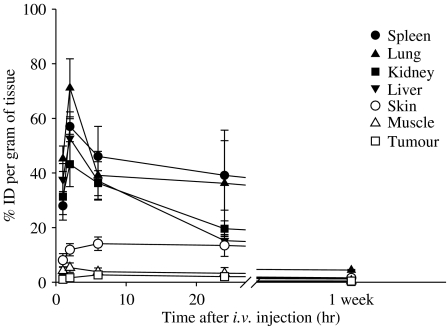
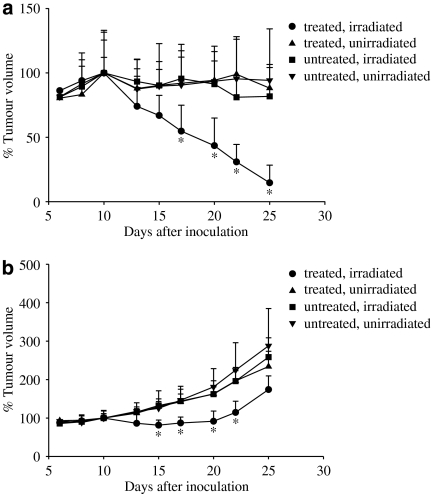
Experimental approach: In the present investigation, the in vivo effect of BAM-SiPc was studied in the tumour-bearing nude mice model. The biodistribution of BAM-SiPc was followed to evaluate its tumour selectivity and rate of clearance. The tumour volume in the hepatocarcinoma HepG2- and the colorectal adenocarcinoma HT29-bearing nude mice was measured after photodynamic therapy. The level of intrinsic toxicity induced was also investigated. Finally, the metabolism of BAM-SiPc in the 'normal' WRL68 liver cells and the hepatocarcinoma HepG2 cells was compared.
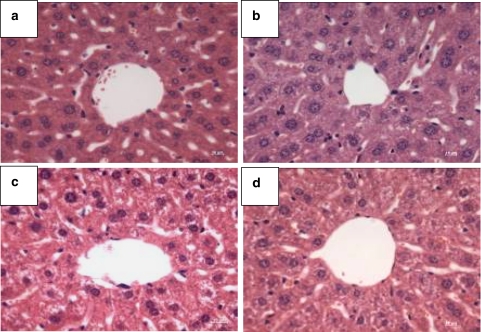
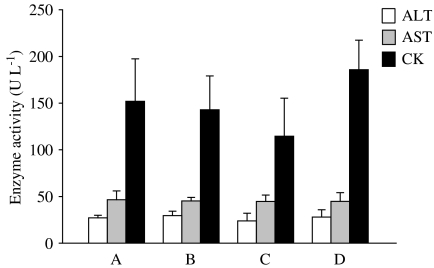
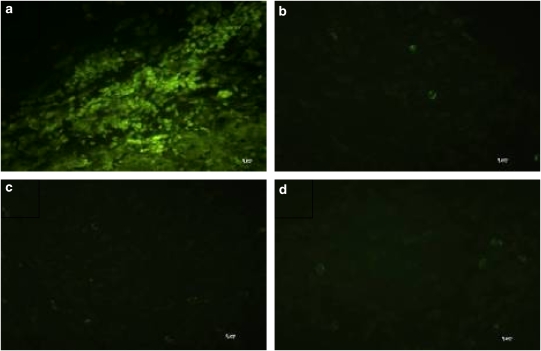
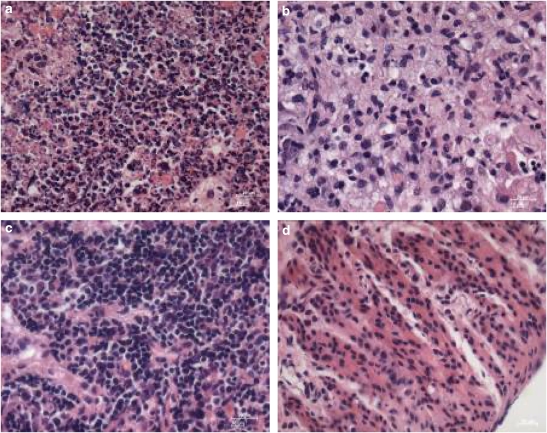
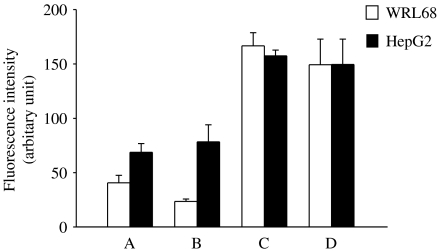
Key results: The results not only showed significant tumour regression of HepG2 and growth inhibition of HT29 in the tumour-bearing nude mice, but also no apparent hepatic or cardiac injury with the protocol used. Histological analyses showed that apoptosis was induced in the solid tumour. BAM-SiPc could be metabolized by WRL68 liver cells but not by the hepatocarcinoma HepG2 cells. Unfortunately, BAM-SiPc did not show any specific targeting towards the tumour tissue.
Conclusions and implications: The efficiency of BAM-SiPc in inhibiting tumour growth makes it a good candidate for further evaluation. Enhancement of its uptake in tumour tissue by conjugation with biomolecules is currently under investigation.
Figures
Comment in
-
Photodynamic therapy: novel third-generation photosensitizers one step closer?Br J Pharmacol. 2008 May;154(1):1-3. doi: 10.1038/bjp.2008.98. Epub 2008 Mar 24. Br J Pharmacol. 2008. PMID: 18362894 Free PMC article.
References
-
- Bellnier DA, Greco WR, Loewen GM, Nava H, Oseroff AR, Pandey RK, et al. Population pharmacokinetics of the photodynamic therapy agent 2-[1-hexyloxyethyl]-2-devinyl pyropheophorbide-a in cancer patients. Cancer Res. 2003;63:1806–1813. - PubMed
-
- Bourdon O, Laville I, Carrez D, Croisy A, Fedel P, Kasselouri A, et al. Biodistribution of meta-tetra(hydroxyphenyl)chlorin incorporated into surface-modified nanocapsules in tumor-bearing mice. Photochem Photobiol Sci. 2002;1:709–714. - PubMed
-
- Brasseur N, Nguyen TL, Langlois R, Ouellet R, Marengo S, Houde D, et al. Synthesis and photodynamic activities of silicon 2, 3- naphthalocyanine derivatives. J Med Chem. 1994;37:415–420. - PubMed
-
- Brown SB, Brown EA, Walker I. The present and future role of photodynamic therapy in cancer treatment. Lancet Oncol. 2004;5:497–508. - PubMed
Publication types
MeSH terms
Substances
LinkOut - more resources
Full Text Sources
Miscellaneous
