


Epidemiology and carcinogenesis of hepatocellular carcinoma
- PMID: 18333156
- PMCID: PMC2023917
- DOI: 10.1080/13651820410024021
Epidemiology and carcinogenesis of hepatocellular carcinoma
Abstract
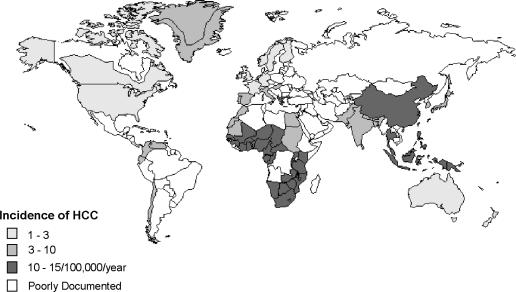
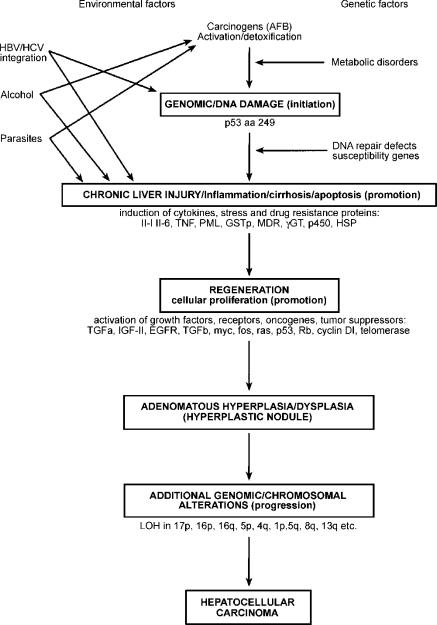
The incidence of hepatocellular carcinoma (HCC) shows marked variation worldwide but the magnitude of this tumor is reflected by the occurrence of at least 1 million new cases annually and the uniformly dismal outlook with median survivals of <25 months after resection and <6 months with symptomatic treatment. The strikingly uneven distribution of this tumor parallels the prevalence of hepatitis B infection with rising incidence in western countries attributed to hepatitis C infection. Chronic hepatitis and cirrhosis constitute the major preneoplastic conditions in the majority of HCCs and may be related to other etiologic agents such as environmental chemical carcinogens including nitrites, hydrocarbons, solvents, organochlorine pesticides, and the chemicals in processed foods, cleaning agents, cosmetics and pharmaceuticals, as well as plant toxins such as anatoxins produced by fungi that cause spoilage of grain and food in the tropics. Genetic diseases such as genetic hematochromatosis, Wilson's disease, alpha-1-antitrypsin deficiency, and the inborn errors of metabolism including hereditary tyrosinemia and hepatic porphyria, are known to be associated with HCC. Numerous genetic alterations and the modulation of DNA methylation are recognized in HCC and it is likely that these genetic and epigenetic changes combine with factors involved in chronic hepatocyte destruction and regeneration to result in neoplastic growth and multiple molecular pathways may be involved in the production of subsets of hepatocellular tumors.
Figures
References
-
- Leong AS-Y. Leong AS-Y, Liew CT, Lau JWY, Johnson PJ. Arnold; London: 1999. Epidemiology, risk factors, etiology, premalignant lesions and carcinogenesis, Hepatocellular carcinoma. Contemporary diagnosis, investigation and management; pp. 1–29.
-
- Rustgi VK. Epidemiology of hepatocellular carcinoma. Gastroenterol Clin North Am. 1987;16:545–51. - PubMed
-
- Munoz N, Bosch X. Okuda K, Ishak KG. Springer-Verlag; Berlin: 1988. Epidemiology of hepatocellular carcinoma, Neoplasms of the liver; pp. 3–19.
-
- Simonetti RG, Camma C, Fiorello F, Politi F, D'Amico G, Pagliaro L. Hepatocellular carcinoma. A worldwide problem and the major risk factors. Dig Dis Sci. 1991;36:962–72. - PubMed
-
- Okuda K, Kojiro M, Okuda H. Schiff L, Schiff ER. JB Lippincott; Philadelphia: 1993. Neoplasms of the liver, Diseases of the liver 7th ed; pp. 1236–96.
LinkOut - more resources
Full Text Sources
