


Fetuin-A induces cytokine expression and suppresses adiponectin production
- PMID: 18335040
- PMCID: PMC2258416
- DOI: 10.1371/journal.pone.0001765
Fetuin-A induces cytokine expression and suppresses adiponectin production
Abstract
Background: The secreted liver protein fetuin-A (AHSG) is up-regulated in hepatic steatosis and the metabolic syndrome. These states are strongly associated with low-grade inflammation and hypoadiponectinemia. We, therefore, hypothesized that fetuin-A may play a role in the regulation of cytokine expression, the modulation of adipose tissue expression and plasma concentration of the insulin-sensitizing and atheroprotective adipokine adiponectin.
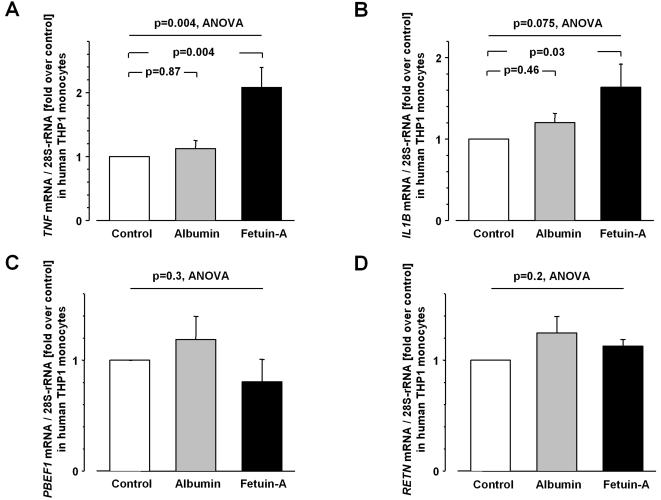
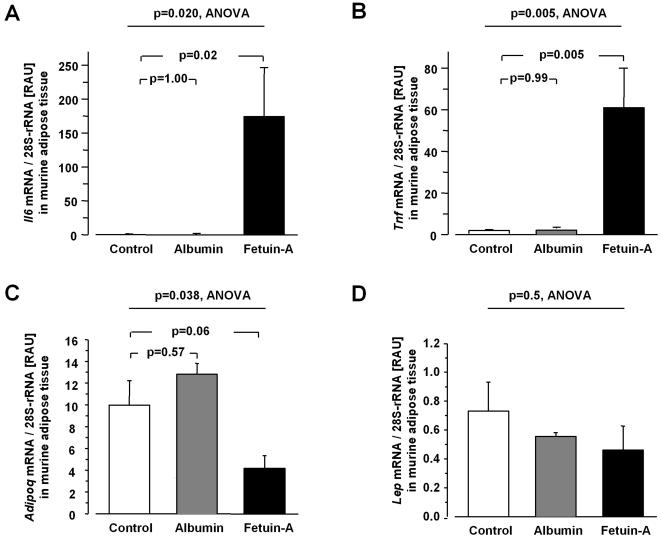
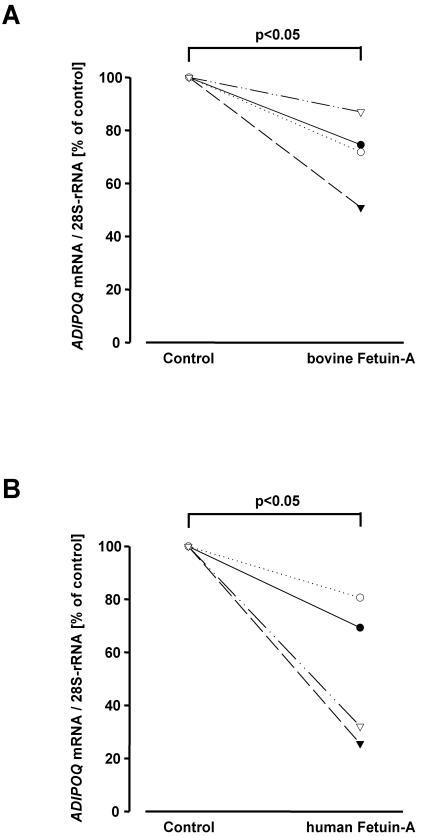
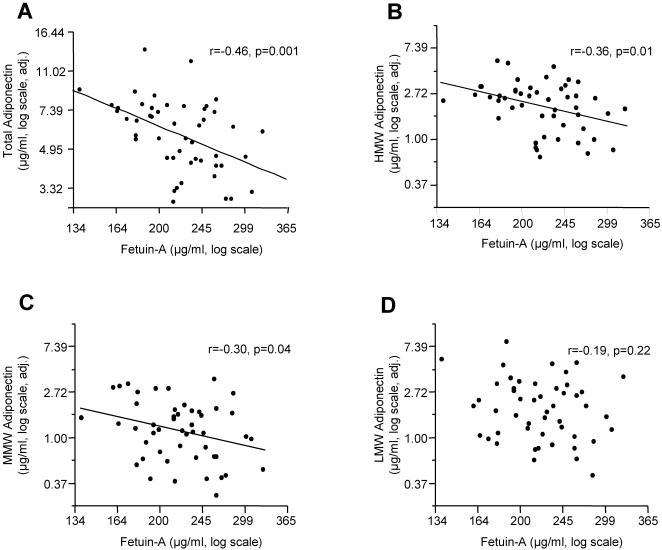
Methodology and principal findings: Human monocytic THP1 cells and human in vitro differenttiated adipocytes as well as C57BL/6 mice were treated with fetuin-A. mRNA expression of the genes encoding inflammatory cytokines and the adipokine adiponectin (ADIPOQ) was assessed by real-time RT-PCR. In 122 subjects, plasma levels of fetuin-A, adiponectin and, in a subgroup, the multimeric forms of adiponectin were determined. Fetuin-A treatment induced TNF and IL1B mRNA expression in THP1 cells (p<0.05). Treatment of mice with fetuin-A, analogously, resulted in a marked increase in adipose tissue Tnf mRNA as well as Il6 expression (27- and 174-fold, respectively). These effects were accompanied by a decrease in adipose tissue Adipoq mRNA expression and lower circulating adiponectin levels (p<0.05, both). Furthermore, fetuin-A repressed ADIPOQ mRNA expression of human in vitro differentiated adipocytes (p<0.02) and induced inflammatory cytokine expression. In humans in plasma, fetuin-A correlated positively with high-sensitivity C-reactive protein, a marker of subclinical inflammation (r = 0.26, p = 0.01), and negatively with total- (r = -0.28, p = 0.02) and, particularly, high molecular weight adiponectin (r = -0.36, p = 0.01).
Conclusions and significance: We provide novel evidence that the secreted liver protein fetuin-A induces low-grade inflammation and represses adiponectin production in animals and in humans. These data suggest an important role of fatty liver in the pathophysiology of insulin resistance and atherosclerosis.
Conflict of interest statement
Figures
References
-
- Dziegielewska KM, Brown WM, Casey SJ, Christie DL, Foreman RC, et al. The complete cDNA and amino acid sequence of bovine fetuin. Its homology with alpha 2HS glycoprotein and relation to other members of the cystatin superfamily. J Biol Chem. 1990;265:4354–4357. - PubMed
-
- Auberger P, Falquerho L, Contreres JO, Pages G, Le Cam G, et al. Characterization of a natural inhibitor of the insulin receptor tyrosine kinase: cDNA cloning, purification, and anti-mitogenic activity. Cell. 1989;58:631–640. - PubMed
-
- Rauth G, Poschke O, Fink E, Eulitz M, Tippmer S, et al. The nucleotide and partial amino acid sequences of rat fetuin. Identity with the natural tyrosine kinase inhibitor of the rat insulin receptor. Eur J Biochem. 1992;204:523–529. - PubMed
-
- Srinivas PR, Wagner AS, Reddy LV, Deutsch DD, Leon MA, et al. Serum alpha 2-HS-glycoprotein is an inhibitor of the human insulin receptor at the tyrosine kinase level. Mol Endocrinol. 1993;7:1445–1455. - PubMed
Publication types
MeSH terms
Substances
LinkOut - more resources
Full Text Sources
Research Materials
Miscellaneous
