


Developmental origins theory from prematurity to adult disease
- PMID: 18336439
- PMCID: PMC3390308
- DOI: 10.1111/j.1552-6909.2008.00216.x
Developmental origins theory from prematurity to adult disease
Abstract
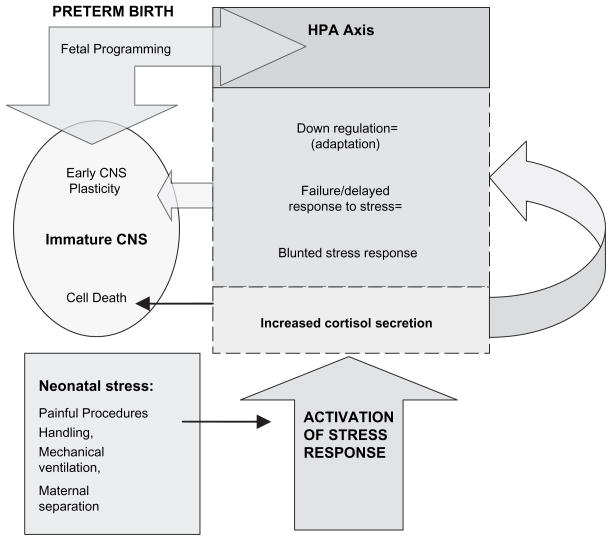
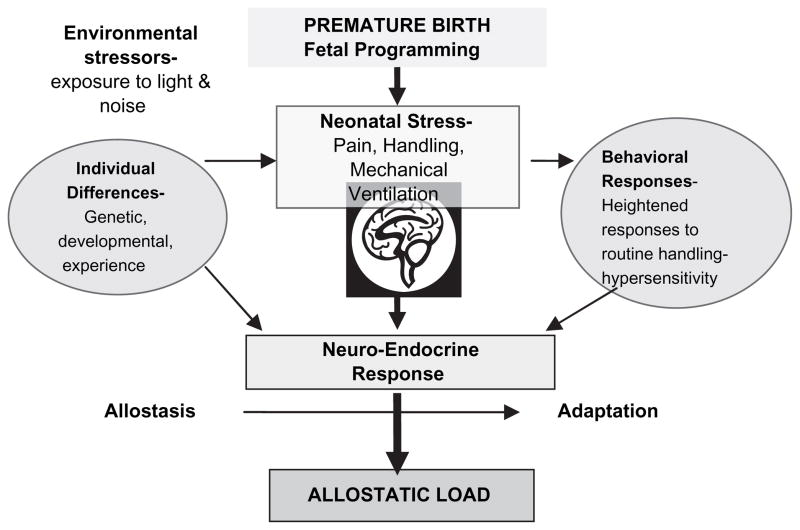
Developmental Origins Theory has received little coverage in the nursing literature, even though it has received much attention in other sciences. The theory proposes that prenatal stress provokes adaptive changes in endocrine and metabolic processes that become permanently programmed and impact later adult health. This paper reviews the theory and describes the primary neuroendocrine mechanism of hypothalamic-pituitary-adrenal axis function. Supporting research evidence in preterm infant and adult samples is presented. Through knowledge of the theory and the long-term sequelae for preterm infants, nurses will have a different theoretical perspective and growing evidence to consider in their care for pregnant women and infants.
Figures
References
-
- Als H, Lawhorn G, Duffy FH, McAnulty GB, Gibes-Grossman R, Blickman JG. Individualized developmental care for the very low-birth-weight preterm infant. Journal of the American Medical Association. 1994;272:853–858. - PubMed
-
- Aylward G. Methodological issues in outcomes studies of at-risk infants. Journal of Pediatric Psychology. 2002;27:37–45. - PubMed
-
- Aylward G. Cognitive function in preterm infants: No simple answers. Journal of the American Medical Association. 2003;289:752–753. - PubMed
-
- Barker DJ. Fetal programming of coronary heart disease. Trends in Endocrinology Metabolism. 2002;13:364–368. - PubMed
-
- Barker DJ. The origins of the developmental origins theory. Journal of Internal Medicine. 2007;261:412–417. - PubMed
Publication types
MeSH terms
Substances
Grants and funding
LinkOut - more resources
Full Text Sources
Medical
