


Dose-effect relationships for the submandibular salivary glands and implications for their sparing by intensity modulated radiotherapy
- PMID: 18337023
- PMCID: PMC3734803
- DOI: 10.1016/j.ijrobp.2007.12.033
Dose-effect relationships for the submandibular salivary glands and implications for their sparing by intensity modulated radiotherapy
Abstract
Purpose: Submandibular salivary glands (SMGs) dysfunction contributes to xerostomia after radiotherapy (RT) of head-and-neck (HN) cancer. We assessed SMG dose-response relationships and their implications for sparing these glands by intensity-modulated radiotherapy (IMRT).
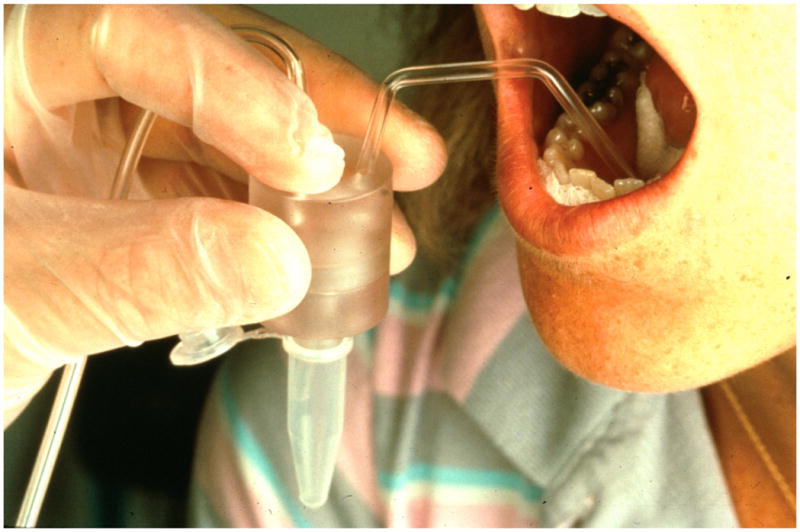
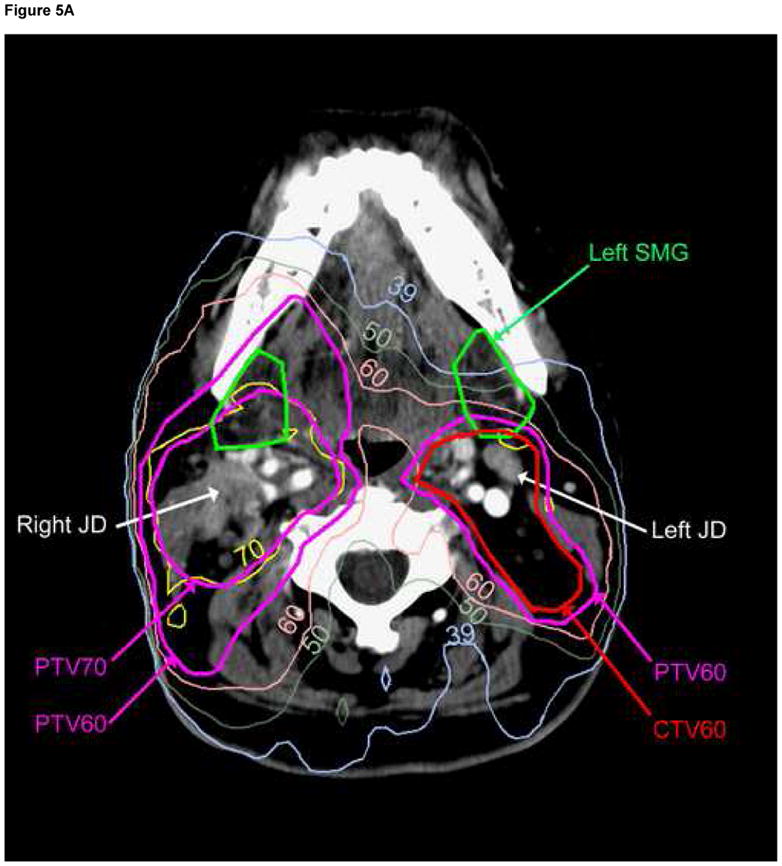
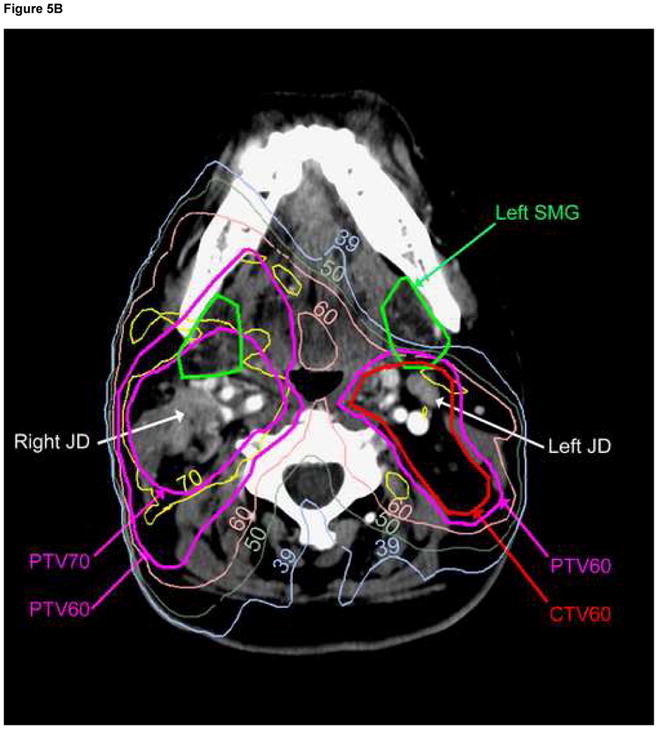
Methods and materials: A total of 148 HN cancer patients underwent unstimulated and stimulated SMG salivary flow rate measurements selectively from Wharton's duct orifices, before RT and periodically through 24 months after RT. Correlations of flow rates and mean SMG doses were modeled throughout all time points. IMRT replanning in 8 patients whose contralateral level I was not a target incorporated the results in a new cost function aiming to spare contralateral SMGs.
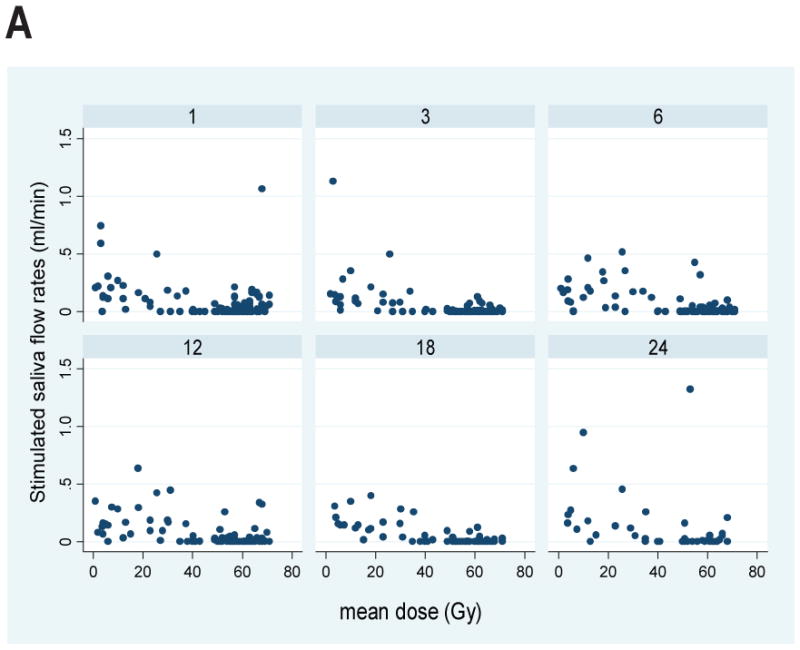
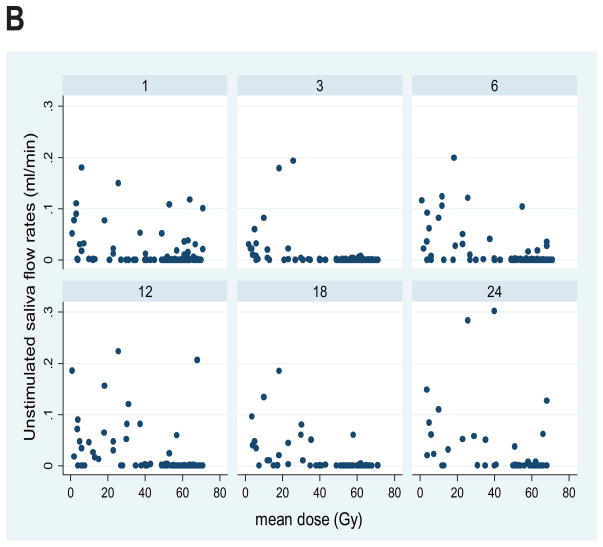
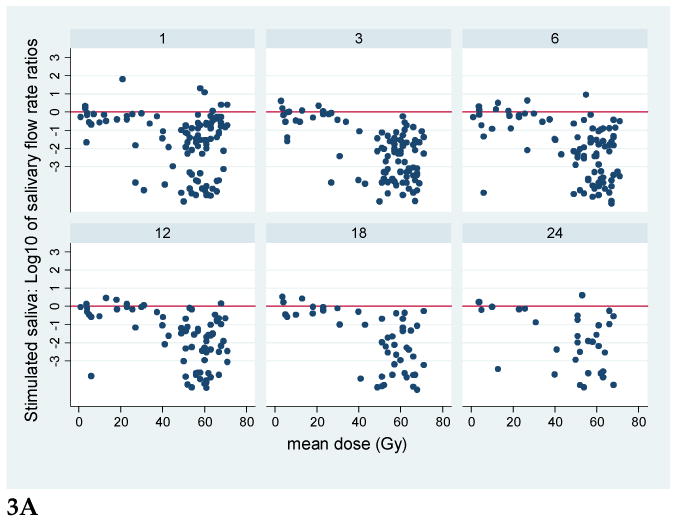
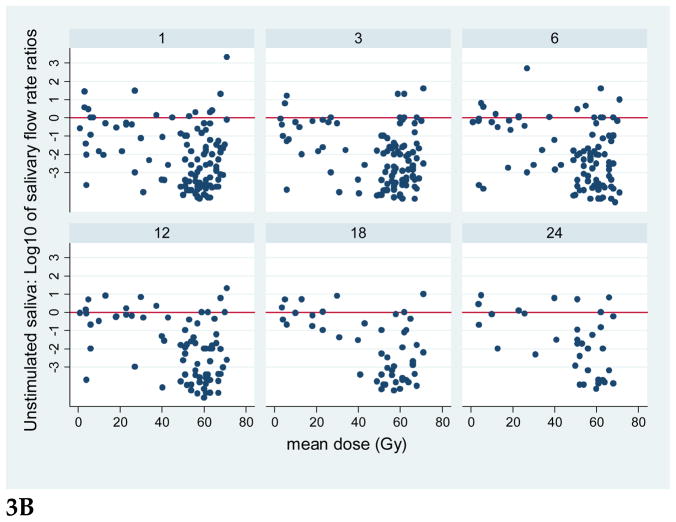
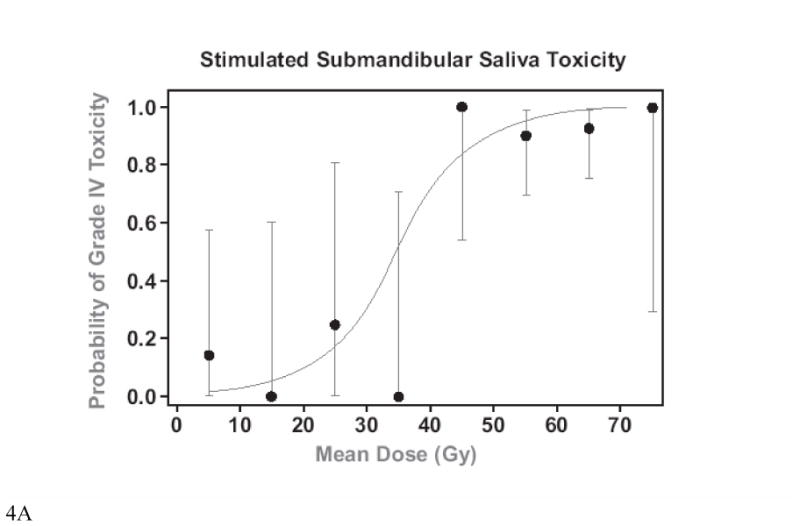
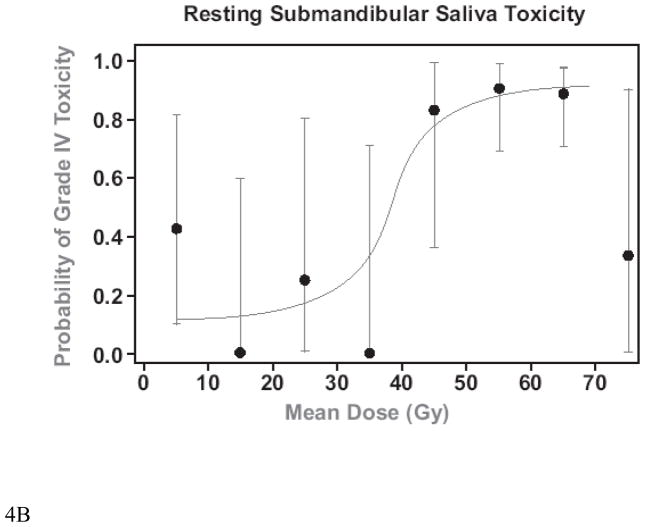
Results: Stimulated SMG flow rates decreased exponentially by (1.2%)(Gy) as mean doses increased up to 39 Gy threshold, and then plateaued near zero. At mean doses < or =39 Gy, but not higher, flow rates recovered over time at 2.2%/month. Similarly, the unstimulated salivary flow rates decreased exponentially by (3%)(Gy) as mean dose increased and recovered over time if mean dose was <39 Gy. IMRT replanning reduced mean contralateral SMG dose by average 12 Gy, achieving < or =39 Gy in 5 of 8 patients, without target underdosing, increasing the mean doses to the parotid glands and swallowing structures by average 2-3 Gy.
Conclusions: SMG salivary flow rates depended on mean dose with recovery over time up to a threshold of 39 Gy. Substantial SMG dose reduction to below this threshold and without target underdosing is feasible in some patients, at the expense of modestly higher doses to some other organs.
Conflict of interest statement
Conflict of Interest: None
Figures
References
-
- Bjordal K, Kaas S. Psychometric validation of the EORTC core quality of life questionnaire. Acta Oncol. 1992;31:311–321. - PubMed
-
- Eisbruch A. Reducing xerostomia by IMRT: What may, and may not, be achieved. J Clin Oncol. 2007:4863–4. - PubMed
-
- Eisbruch A, Kim HM, Terrell JE, et al. Xerostomia and its predictors following parotid-sparing irradiation of head and neck cancer. Int J Rad Onc Biol Phys. 2001;50:695–704. - PubMed
-
- Meirovitz A, Murdoch-Kinch CA, Scipper M, et al. Grading xerostomia by physicians or by patients after IMRT. Int J Rad Oncol Biol Phys. 2006;66:445–453. - PubMed
-
- Jensen K, Jensen AB, Grau C. The relationship between observer-based and patient assessed symptom severity after treatment for head and neck cancer. Radiother Oncol. 2006;78:298–305. - PubMed
Publication types
MeSH terms
Grants and funding
LinkOut - more resources
Full Text Sources
Medical
