


Electrophysiological and behavioral evidence demonstrating that predator detection alters adaptive behaviors in the snail Lymnaea
- PMID: 18337402
- PMCID: PMC6670673
- DOI: 10.1523/JNEUROSCI.5132-07.2008
Electrophysiological and behavioral evidence demonstrating that predator detection alters adaptive behaviors in the snail Lymnaea
Abstract
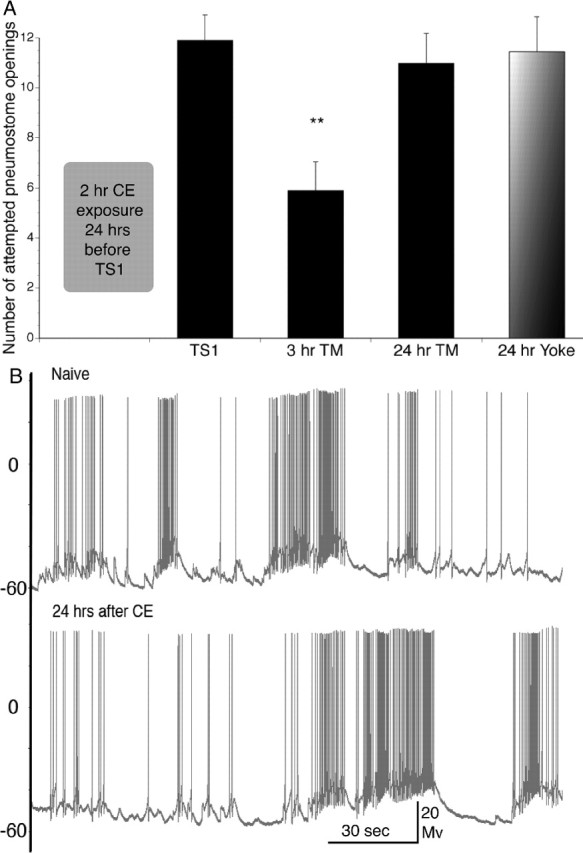
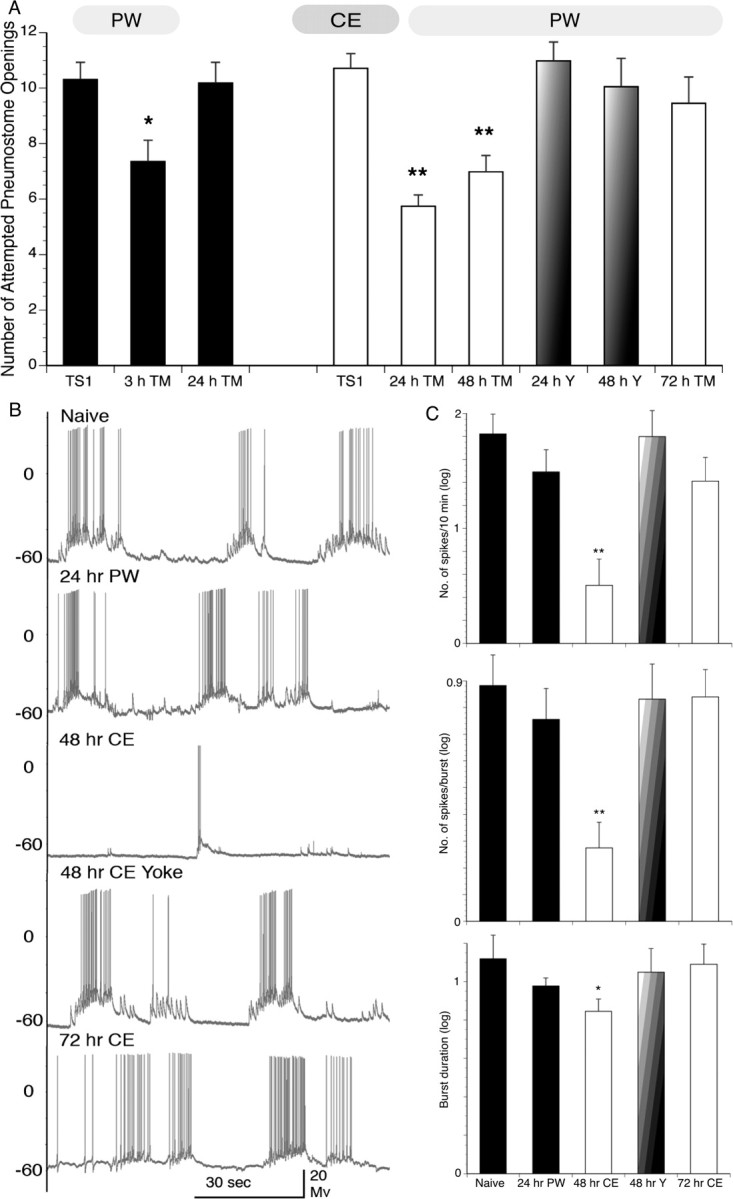
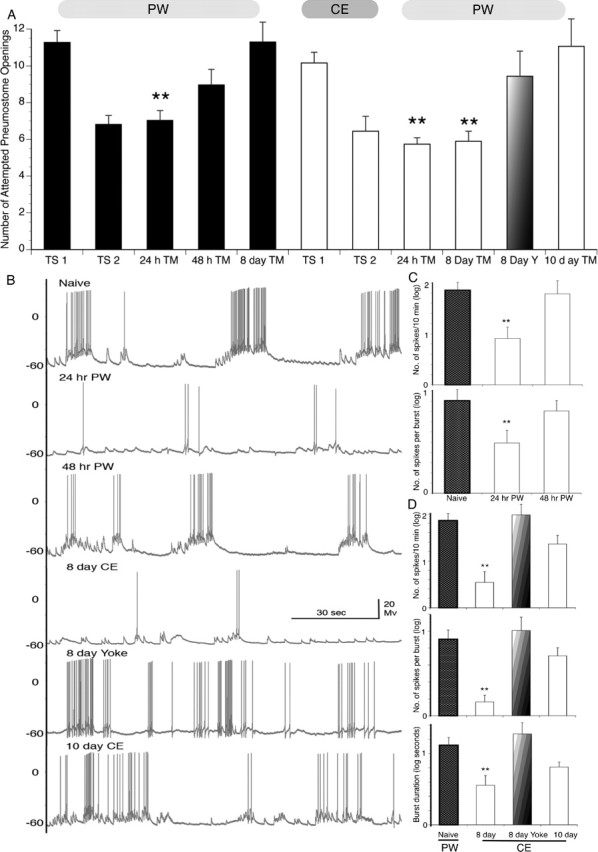
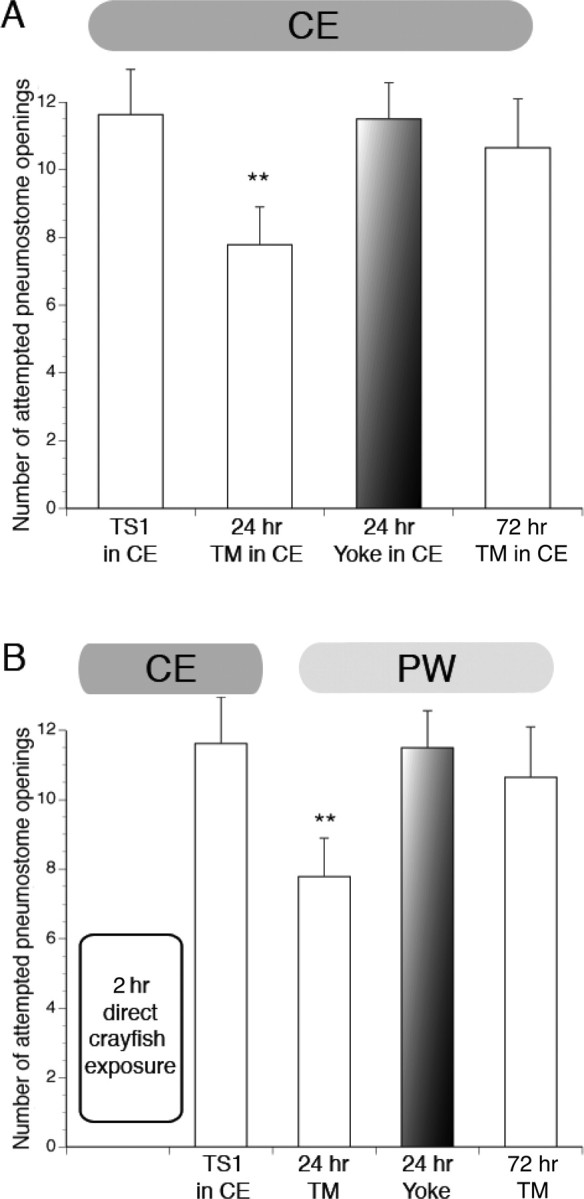
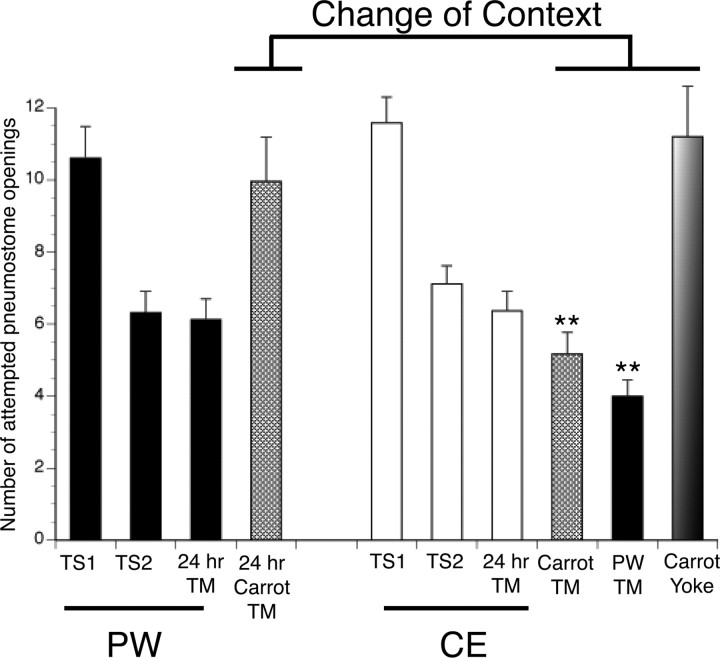
Stress has been shown to both impair and enhance learning, long-term memory (LTM) formation, and/or its recall. The pond snail, Lymnaea stagnalis, both detects and responds to the scent of a crayfish predator with multiple stress-related behavioral responses. Using both behavioral and electrophysiological evidence, this investigation is a first attempt to characterize how an environmentally relevant stressor (scent of a predator) enhances LTM formation in Lymnaea. Using a training procedure that, in "standard" pond water (PW), results in an intermediate-term memory that persists for only 3 h, we found that training snails in "crayfish effluent" (CE) induces a memory that persists for 48 h (i.e., its now an LTM). In addition, if we use a training procedure that in PW produces an LTM that persists for 1 d, we find that snails trained in CE have an LTM that persists for at least 8 d. Furthermore, we describe how a single neuron (RPeD1), which has been shown to be a necessary site for LTM formation, reflects the behavioral changes in its firing properties that persist for the duration of the LTM. Finally, Lymnaea exhibit context-specific memory, that is, when a memory is formed in a specific context (food odorant), it is only recalled in that context. Here, we found that snails trained in CE demonstrate context generalization, that is, memory is recalled in multiple contexts. All data are consistent with the hypothesis that learning in a stressful, yet biologically relevant, environment enhances LTM and prolongs its retention.
Figures
References
-
- Abrams P. Should prey overestimate the risk of predation. Am Naturalist. 1994;144:317–328.
-
- Apfelbach R, Blanchard CD, Blanchard RJ, Hayes RA, McGregor IS. The effects of predator odors in mammalian prey species: a review of field and laboratory studies. Neurosci Biobehav Rev. 2005;29:1123–1144. - PubMed
-
- Benjamin PR, Staras K, Kemenes G. A systems approach to the cellular analysis of associative learning in the pond snail Lymnaea . Learn Mem. 2000;7:124–131. - PubMed
-
- Bolhuis JJ, Macphail EM. A critique of the neuroecology of learning and memory. Trends Cogn Sci. 2001;5:426–433. - PubMed
-
- Bremner JD. Hypotheses and controversies related to effects of stress on the hippocampus: an argument for stress-induced damage to the hippocampus in patients with posttraumatic stress disorder. Hippocampus. 2001;11:75–81. discussion 82–74. - PubMed
Publication types
MeSH terms
LinkOut - more resources
Full Text Sources
Research Materials
