


Pulmonary function and the risk of functional limitation in chronic obstructive pulmonary disease
- PMID: 18343879
- PMCID: PMC2610529
- DOI: 10.1093/aje/kwn025
Pulmonary function and the risk of functional limitation in chronic obstructive pulmonary disease
Abstract
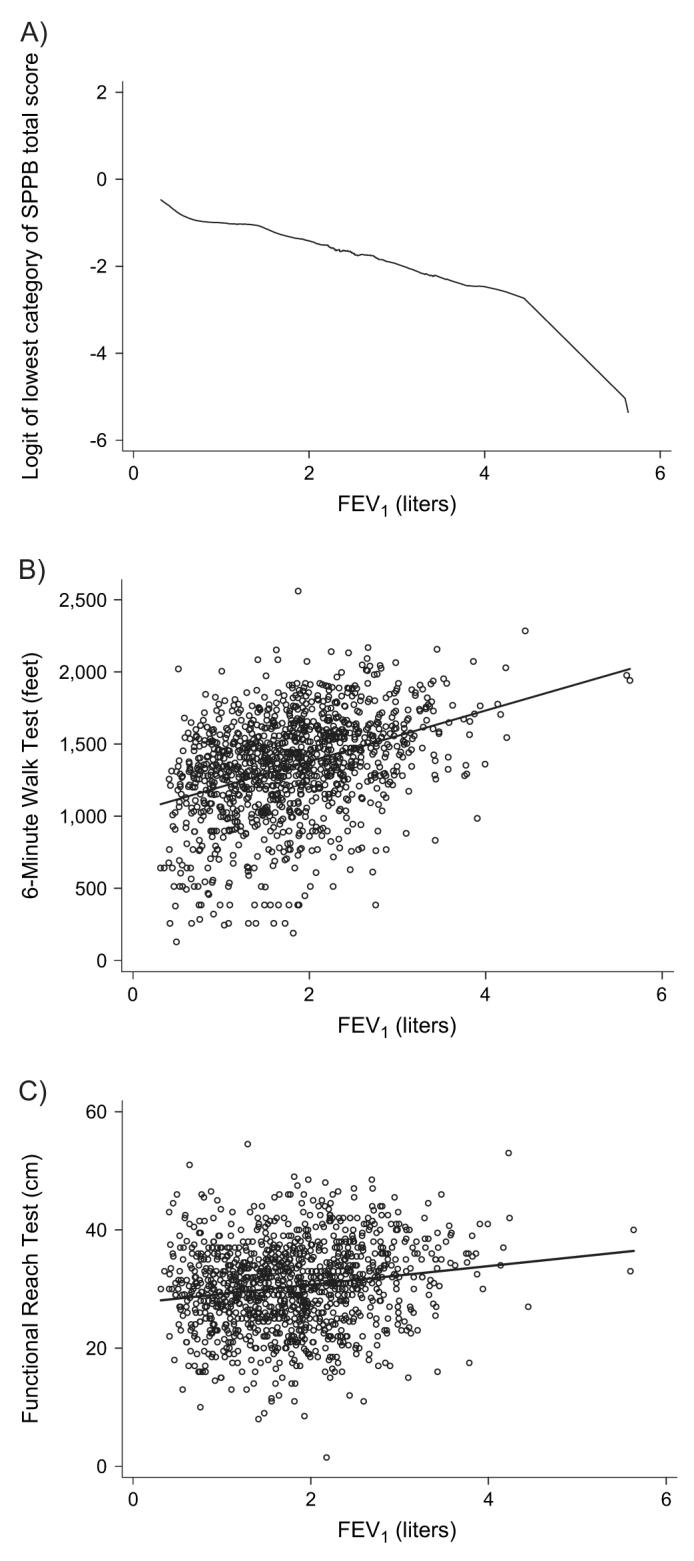
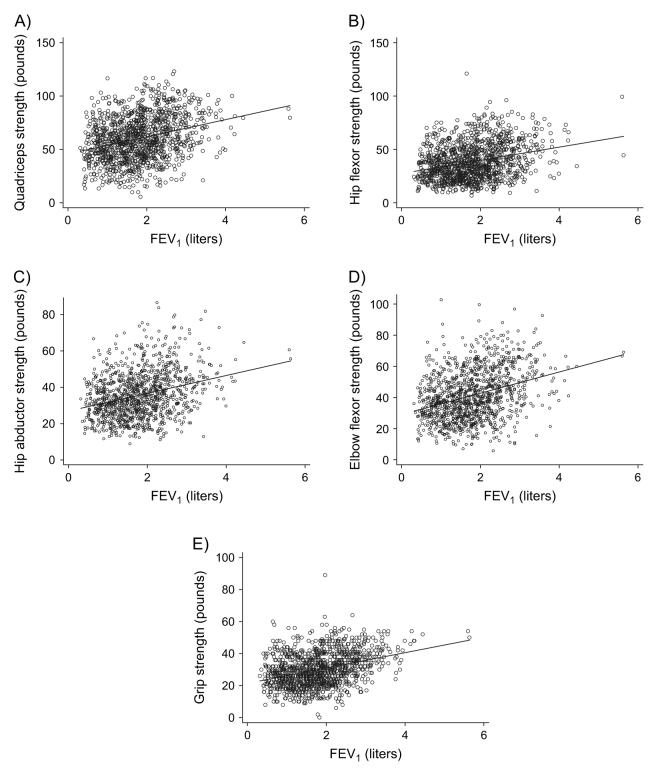
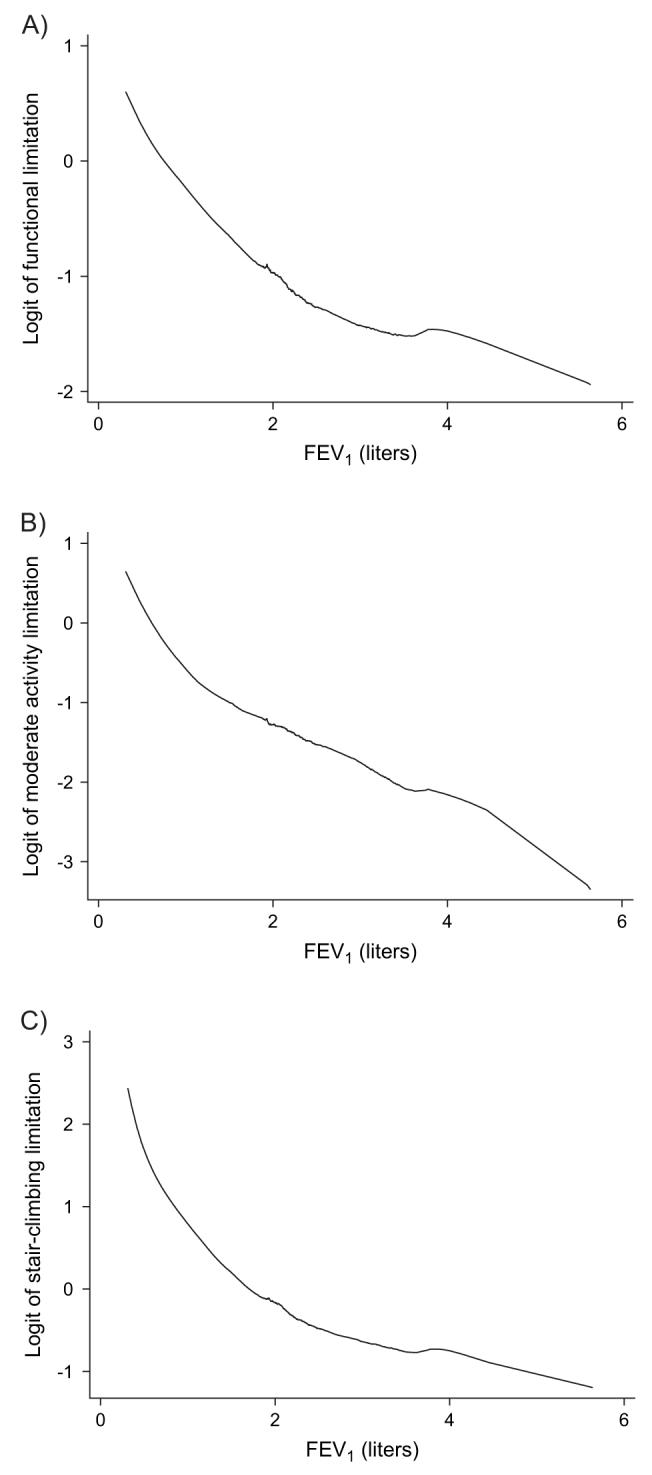
The authors' objective was to analyze the impact of respiratory impairment on the risk of physical functional limitations among adults with chronic obstructive pulmonary disease (COPD). They hypothesized that greater pulmonary function decrement would result in a broad array of physical functional limitations involving organ systems remote from the lung, a key step in the pathway leading to overall disability. The authors used baseline data from the Function, Living, Outcomes, and Work (FLOW) study, a prospective cohort study of adults with COPD recruited from northern California in 2005-2007. They studied the impact of pulmonary function impairment on the risk of functional limitations using validated measures: lower extremity function (Short Physical Performance Battery), submaximal exercise performance (6-Minute Walk Test), standing balance (Functional Reach Test), skeletal muscle strength (manual muscle testing with dynamometry), and self-reported functional limitation (standardized item battery). Multiple variable analysis was used to control for confounding by age, sex, race, height, educational attainment, and cigarette smoking. Greater pulmonary function impairment, as evidenced by lower forced expiratory volume in 1 second (FEV(1)), was associated with poorer Short Physical Performance Battery scores and less distance walked during the 6-Minute Walk Test. Lower forced expiratory volume in 1 second was also associated with weaker muscle strength and with a greater risk of self-reported functional limitation (p < 0.05). In conclusion, pulmonary function impairment is associated with multiple manifestations of physical functional limitation among COPD patients. Longitudinal follow-up can delineate the impact of these functional limitations on the prospective risk of disability, guiding preventive strategies that could attenuate the disablement process.
Figures
References
-
- Mannino DM, Homa DM, Akinbami LJ, et al. Chronic obstructive pulmonary disease surveillance—United States, 1971–2000. MMWR Surveill Summ. 2002;51:1–16. - PubMed
-
- Halbert RJ, Isonaka S, George D, et al. Interpreting COPD prevalence estimates: what is the true burden of disease? Chest. 2003;123:1684–92. - PubMed
-
- Murray CJ, Lopez AD. Alternative projections of mortality and disability by cause 1990–2020: Global Burden of Disease Study. Lancet. 1997;349:1498–504. - PubMed
-
- Continuous or nocturnal oxygen therapy in hypoxemic chronic obstructive lung disease: a clinical trial. Nocturnal Oxygen Therapy Trial Group. Ann Intern Med 198093391–8. - PubMed
-
- Anthonisen NR, Connett JE, Kiley JP, et al. Effects of smoking intervention and the use of an inhaled anticholinergic bronchodilator on the rate of decline of FEV1. The Lung Health Study. JAMA. 1994;272:1497–505. - PubMed
Publication types
MeSH terms
Grants and funding
LinkOut - more resources
Full Text Sources
Medical
