


Stress and quality of life in breast cancer recurrence: moderation or mediation of coping?
- PMID: 18347897
- PMCID: PMC2486834
- DOI: 10.1007/s12160-008-9016-0
Stress and quality of life in breast cancer recurrence: moderation or mediation of coping?
Abstract
Background/purpose: Diagnosis with breast cancer recurrence often brings high levels of stress. Successful coping to alleviate stress could improve patients' quality of life (QoL). The intervening role coping plays between stress and QoL may depend on the types of stress encountered and the types of coping strategies used. The present study investigates the longitudinal relationships between stress, coping, and mental health QoL.
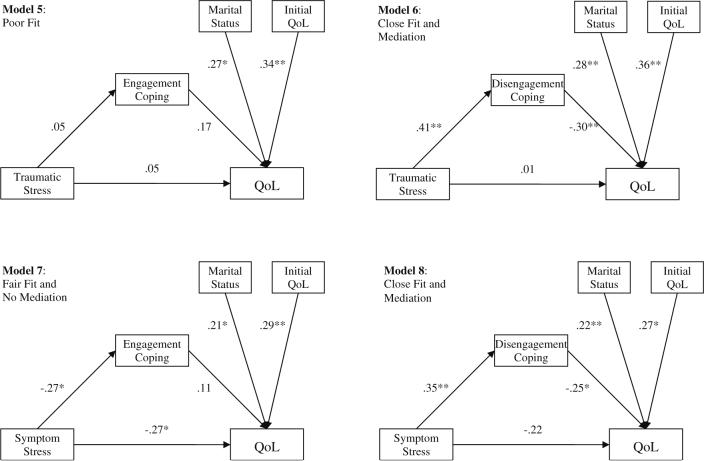
Methods: Breast cancer patients recently diagnosed with recurrence (N = 65) were assessed shortly after the diagnosis and 4 months later. Four moderation and four mediation models were tested using hierarchical multiple regressions and path analyses. In the models, either traumatic stress or symptom-related stress at recurrence diagnosis was a predictor of mental health QoL at follow-up. Both engagement and disengagement coping strategies were tested as moderators or mediators between stress and QoL.
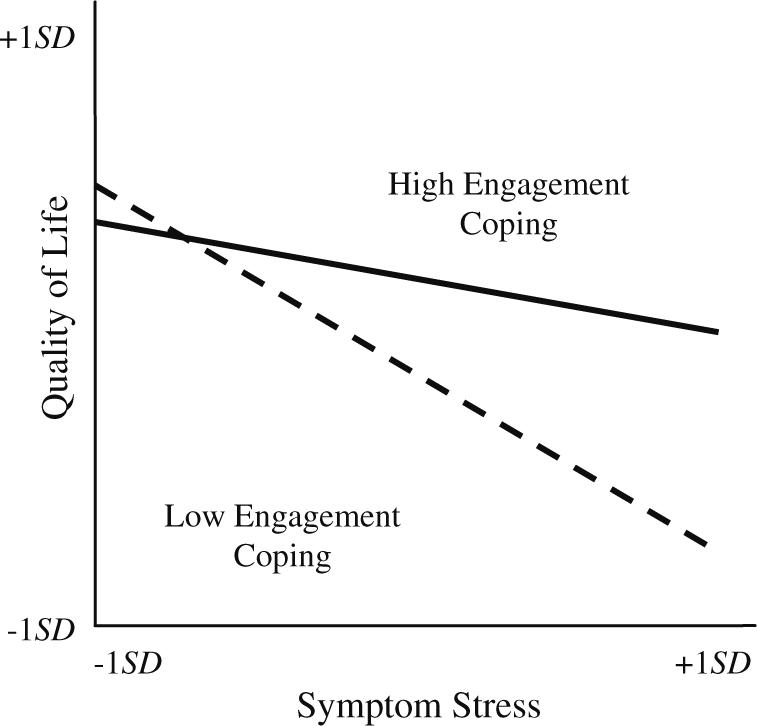
Results: Engagement coping moderated the effect of symptom stress on mental health QoL, whereas disengagement coping mediated the effects of both traumatic stress and symptom stress on mental health QoL.
Conclusion: The findings imply that interventions teaching engagement coping strategies would be important for patients experiencing high symptom stress, while discouraging the use of disengagement coping strategies would be important for all patients.
Figures
References
-
- Okamura M, Yamawaki S, Akechi T, Taniguchi K, Uchitomi Y. Psychiatric disorders following first breast cancer recurrence: Prevalence, associated factors and relationship to quality of life. Jpn J Clin Oncol. 2005;35:302–309. - PubMed
-
- Hotopf M, Chidgey J, Addington-Hall J, Ly KL. Depression in advanced disease: A systematic review. Part 1. Prevalence and case finding. Palliat Med. 2002;16:81–97. - PubMed
-
- Mahon SM, Cella DF, Donovan MI. Psychosocial adjustment to recurrent cancer. Oncol Nurs Forum. 1990;17:47–52. discussion 53−44. - PubMed
-
- Folkman S, Lazarus RS. Coping and Emotion. In: Monat A, Lazarus RS, editors. Stress and Coping: An Anthology. Columbia University Press; New York: 1991. pp. 207–227.
Publication types
MeSH terms
Grants and funding
LinkOut - more resources
Full Text Sources
Other Literature Sources
Medical
