


Therapeutic human papillomavirus vaccines: current clinical trials and future directions
- PMID: 18352847
- PMCID: PMC3074340
- DOI: 10.1517/14712598.8.4.421
Therapeutic human papillomavirus vaccines: current clinical trials and future directions
Abstract
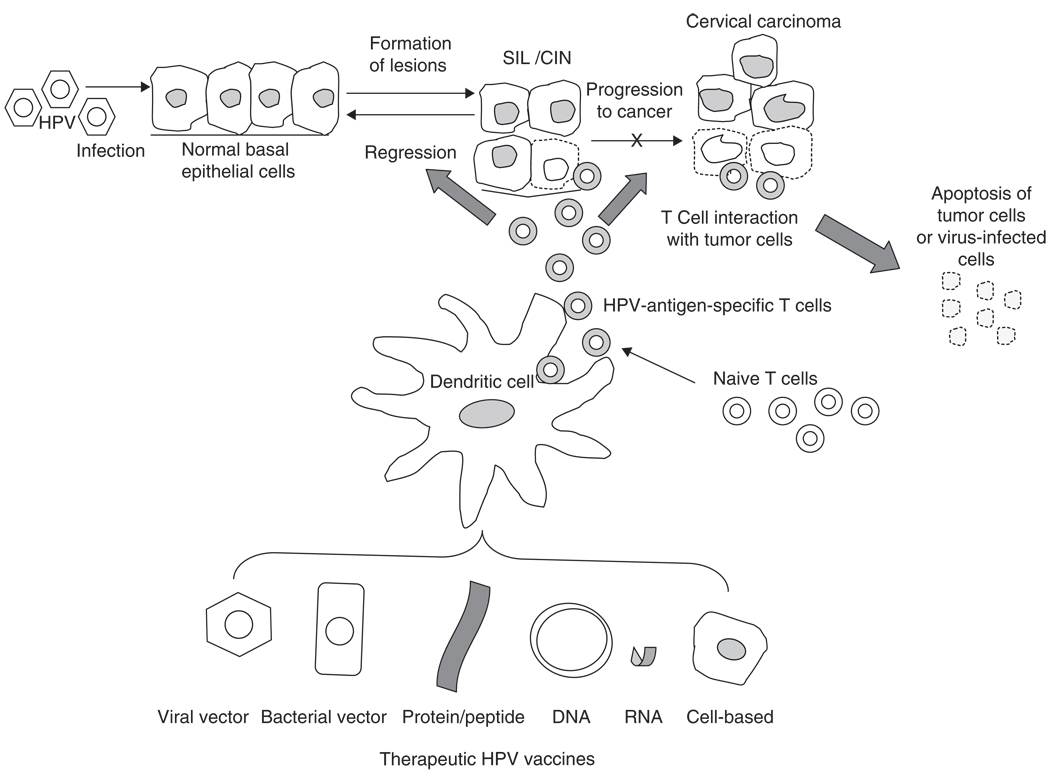
Background: Cervical cancer is the second largest cause of cancer deaths in women worldwide. It is now evident that persistent infection with high-risk human papillomavirus (HPV) is necessary for the development and maintenance of cervical cancer. Thus, effective vaccination against HPV represents an opportunity to restrain cervical cancer and other important cancers. The FDA recently approved the HPV vaccine Gardasil for the preventive control of HPV, using HPV virus-like particles (VLP) to generate neutralizing antibodies against major capsid protein, L1. However, prophylactic HPV vaccines do not have therapeutic effects against pre-existing HPV infections and HPV-associated lesions. Furthermore, due to the considerable burden of HPV infections worldwide, it would take decades for preventive vaccines to affect the prevalence of cervical cancer. Thus, in order to speed up the control of cervical cancer and treat current infections, the continued development of therapeutic vaccines against HPV is critical. Therapeutic HPV vaccines can potentially eliminate pre-existing lesions and malignant tumors by generating cellular immunity against HPV-infected cells that express early viral proteins such as E6 and E7.
Objective: This review discusses the future directions of therapeutic HPV vaccine approaches for the treatment of established HPV-associated malignancies, with emphasis on current progress of HPV vaccine clinical trials.
Methods: Relevant literature is discussed.
Results/conclusion: Though their development has been challenging, many therapeutic HPV vaccines have been shown to induce HPV-specific antitumor immune responses in preclinical animal models and several promising strategies have been applied in clinical trials. With continued progress in the field of vaccine development, HPV therapeutic vaccines may provide a potentially promising approach for the control of lethal HPV-associated malignancies.
Figures
References
-
-
Walboomers JM, Jacobs MV, Manos MM, et al. Human papillomavirus is a necessary cause of invasive cervical cancer worldwide. J Pathol. 1999;189:12–19. • This paper reports that, worldwide, more than 99% of cervical carcinomas are associated with HPV, suggesting that HPV maybe a cause of cervical cancer
-
-
- Devaraj K, Gillison ML, Wu TC. Development of HPV vaccines for HPV-associated head and neck squamous cell carcinoma. Crit Rev Oral Biol Med. 2003;14:345–362. - PubMed
-
- Parkin DM, Bray F, Ferlay J, Pisani P. Global cancer statistics, 2002. CA Cancer J Clin. 2005;55:74–108. - PubMed
-
- Munoz N, Bosch FX, de Sanjose S, et al. Epidemiologic classification of human papillomavirus types associated with cervical cancer. N Engl J Med. 2003;348:518–527. - PubMed
-
- Bosch FX, Manos MM, Munoz N, et al. Prevalence of human papillomavirus in cervical cancer: a worldwide perspective. International biological study on cervical cancer (IBSCC) Study Group. J Natl Cancer Inst. 1995;87:796–802. - PubMed
Publication types
MeSH terms
Substances
Grants and funding
LinkOut - more resources
Full Text Sources
Other Literature Sources
Medical
