


doi: 10.1111/j.1742-481X.2008.00439.x.
Wound exudate and the role of dressings. A consensus document
Collaborators
- PMID: 18353000
- PMCID: PMC7951234
- DOI: 10.1111/j.1742-481X.2008.00439.x
Item in Clipboard
Wound exudate and the role of dressings. A consensus document
Int Wound J.
2008 Mar.
No abstract available
Figures
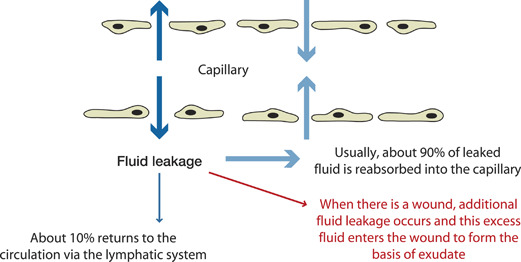
Mechanisms underlying exudates production.
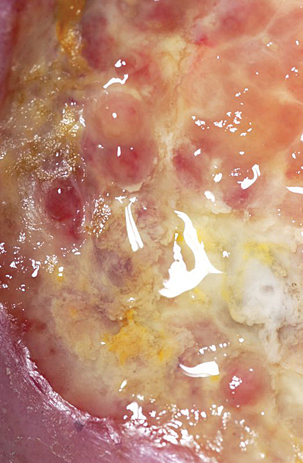
Mainly clear, serous, thin exudate with granulation tissue visible in the wound bed.

Thick haemopurulent exudate. Photos copyright of the Cardiff and Vale NHS Trust – Professor Keith Harding.
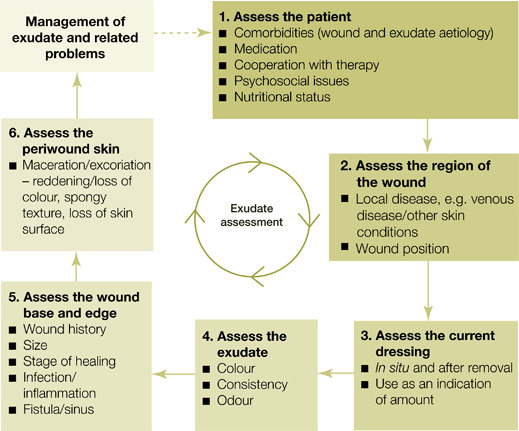
Integrated exudate assessment. At every stage, factors that may be influencing exudate formation should be sought and identified.
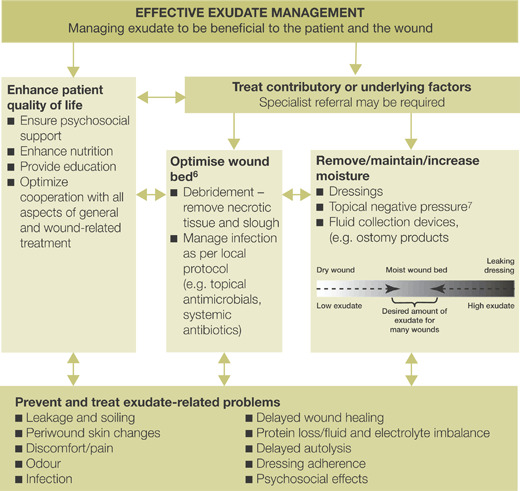
Effective exudate management. NB: For a patient with a malignant wound, the formation of a crust or scab and no exudate production may be appropriate goals. For an uninfected ischaemic non‐viable digit, mummification may be desirable to prevent wet gangrene.
References
-
- Thomas S, Fear M, Humphreys J, et al. The effect of dressings on the production of exudate from venous leg ulcers. Wounds 1996; 8(5): 145–50.
-
- Stotts NA, Rodeheaver GT, Thomas DR, et al. An instrument to measure healing in pressure ulcers: development and validation of the pressure ulcer scale for healing (PUSH). J Gerontol A Biol Sci Med Sci 2001; 56(12): M795–99. - PubMed
-
- Bates‐Jensen BM. The Pressure Sore Status Tool a few thousand assessments later. Adv Wound Care 1997; 10(5): 65–73. - PubMed
-
- Falanga V. Classifications for wound bed preparation and stimulation of chronic wounds. Wound Repair Regen 2000; 8(5): 347–52. - PubMed
-
- Browne N, Grocott P, Cowley S, et al. The TELER system in wound care research and post market surveillance. EWMA Journal 2004: 4(1): 26–32.
Publication types
MeSH terms
LinkOut - more resources
Full Text Sources
Medical
