


Callosal contributions to simultaneous bimanual finger movements
- PMID: 18354026
- PMCID: PMC6670695
- DOI: 10.1523/JNEUROSCI.4076-07.2008
Callosal contributions to simultaneous bimanual finger movements
Abstract
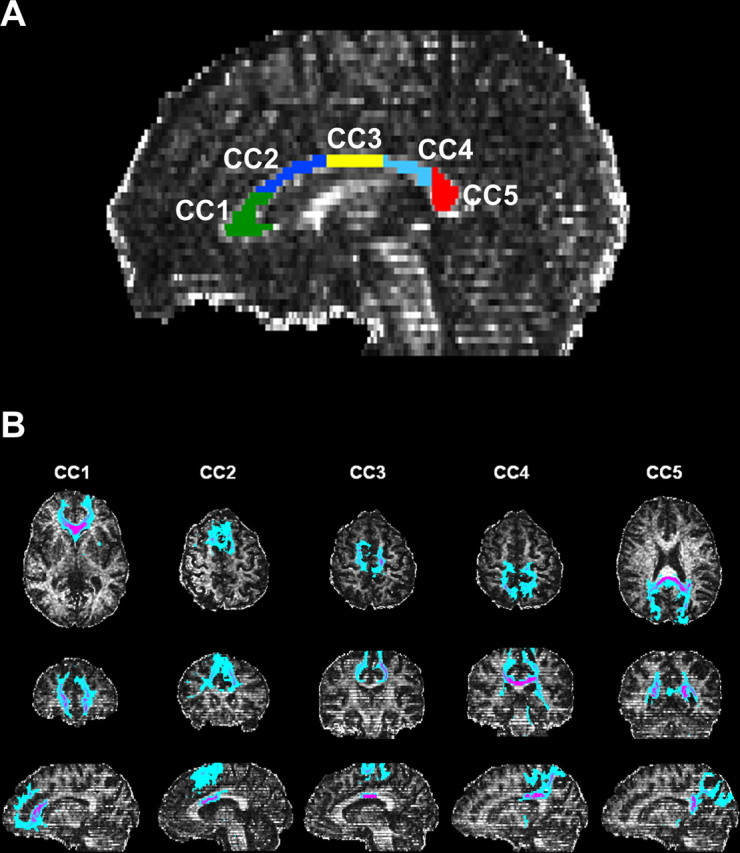
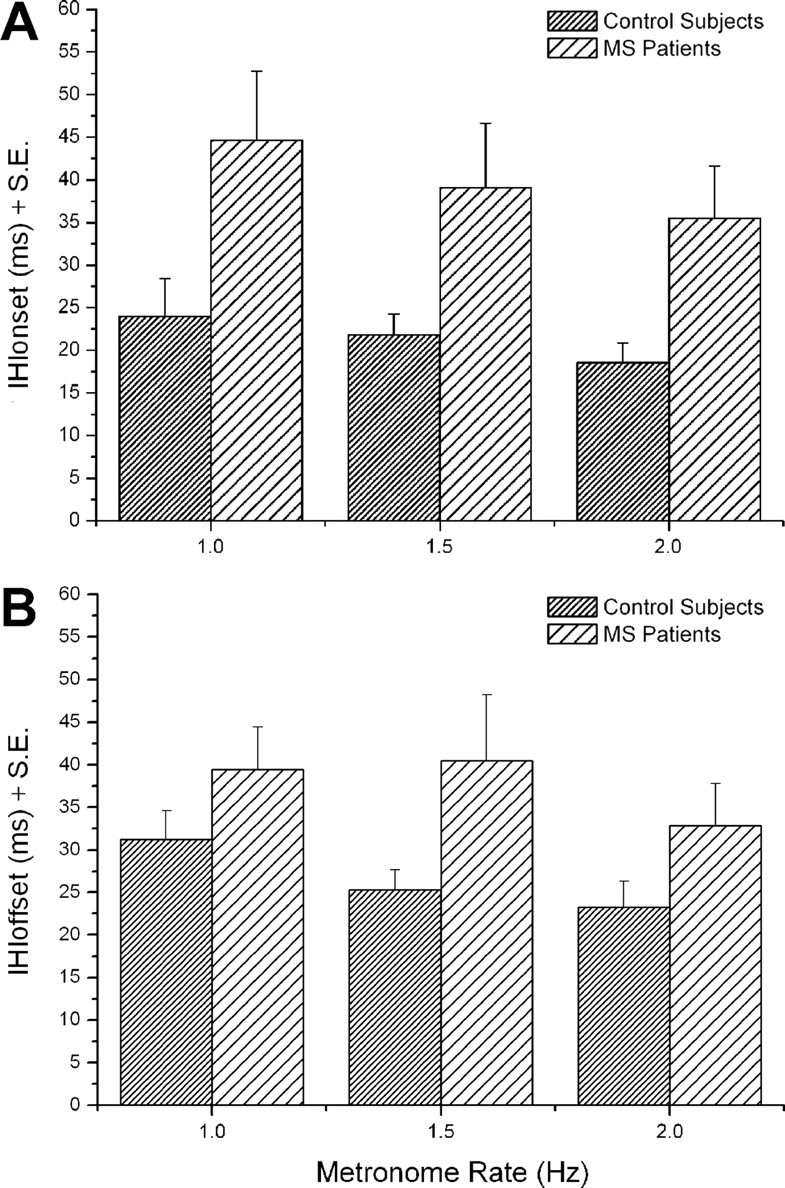
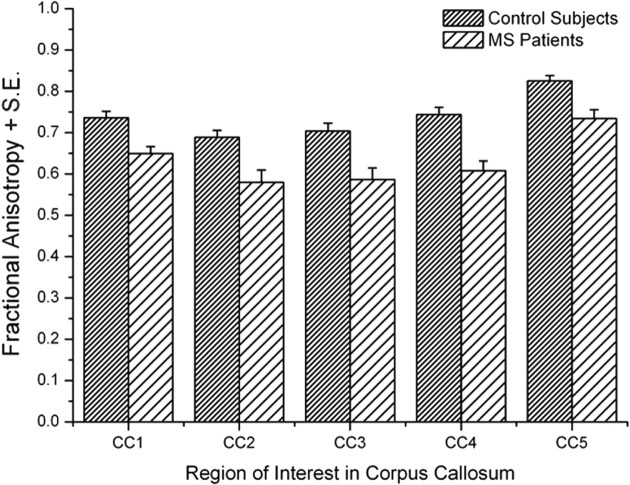
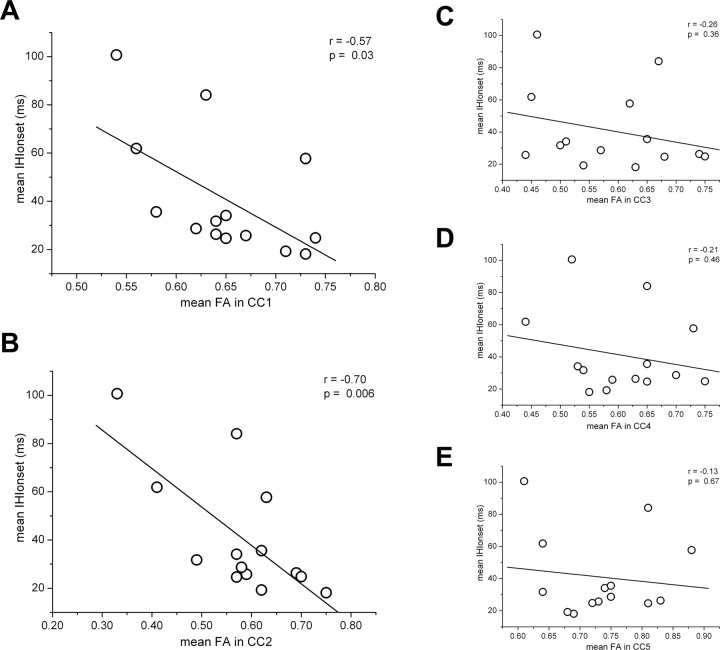
Corpus callosum (CC) is involved in the performance of bimanual motor tasks. We asked whether its functional role could be investigated by combining a motor behavioral study on bimanual movements in multiple sclerosis (MS) patients with a quantitative magnetic resonance diffusion tensor imaging (DTI) analysis of CC, which is shown to be damaged in this disease. MS patients and normal subjects were asked to perform sequences of bimanual finger opposition movements at different metronome rates; then we explored the structural integrity of CC by means of DTI. Significant differences in motor performance, mainly referred to timing accuracy, were observed between MS patients and control subjects. Bimanual motor coordination was impaired in MS patients as shown by the larger values of the interhand interval observed at all the tested metronome rates with respect to controls. Furthermore, DTI revealed a significant reduction of fractional anisotropy (FA), indicative of microstructural tissue damage, in the CC of MS patients. By correlating the mean FA values with the different motor behavior parameters, we found that the degree of damage in the anterior callosal portions mainly influences the bimanual coordination and, in particular, the movement phase preceding the finger touch. Finally, the described approach, which correlates quantitative measures of tissue damage obtained by advanced magnetic resonance imaging tools with appropriate behavioral measurements, may help the exploration of different aspects of motor performance impairment attributable to the disease.
Figures
Comment in
-
Corpus callosum and bimanual coordination in multiple sclerosis.J Neurosci. 2008 Jul 16;28(29):7248-9. doi: 10.1523/JNEUROSCI.2157-08.2008. J Neurosci. 2008. PMID: 18632928 Free PMC article. Review. No abstract available.
References
-
- Aboitiz F, Scheibel AB, Fisher RS, Zaidel E. Fiber composition of the human corpus callosum. Brain Res. 1992;598:143–153. - PubMed
-
- Aschersleben G. Temporal control of movements in sensorimotor synchronization. Brain Cogn. 2002;48:66–79. - PubMed
-
- Behrens TE, Woolrich MW, Jenkinson M, Johansen-Berg H, Nunes RG, Clare S, Matthews PM, Brady JM, Smith SM. Characterization and propagation of uncertainty in diffusion-weighted MR imaging. Magn Reson Med. 2003;50:1077–1088. - PubMed
-
- Bove M, Tacchino A, Novellino A, Trompetto C, Abbruzzese G, Ghilardi MF. The effects of rate and sequence complexity on repetitive finger movements. Brain Res. 2007;1153:84–91. - PubMed
-
- Brinkman J, Kuypers HG. Splitbrain monkeys: cerebral control of ipsilateral and contralateral arm, hand, and finger movements. Science. 1972;176:536–539. - PubMed
Publication types
MeSH terms
LinkOut - more resources
Full Text Sources
Medical
