


Regulation of Lymphocyte Function by PPARgamma: Relevance to Thyroid Eye Disease-Related Inflammation
- PMID: 18354731
- PMCID: PMC2266979
- DOI: 10.1155/2008/895901
Regulation of Lymphocyte Function by PPARgamma: Relevance to Thyroid Eye Disease-Related Inflammation
Abstract
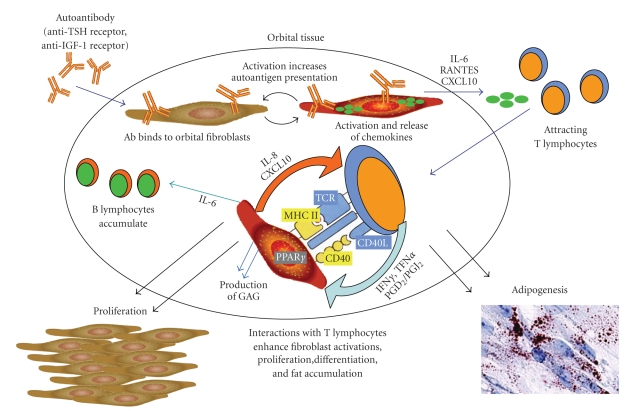
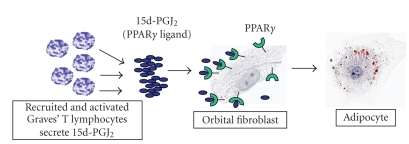
Thyroid eye disease (TED) is an autoimmune condition in which intense inflammation leads to orbital tissue remodeling, including the accumulation of extracellular macromolecules and fat. Disease progression depends upon interactions between lymphocytes and orbital fibroblasts. These cells engage in a cycle of reciprocal activation which produces the tissue characteristics of TED. Peroxisome proliferator-activated receptor-gamma (PPARgamma) may play divergent roles in this process, both attenuating and promoting disease progression. PPARgamma has anti-inflammatory activity, suggesting that it could interrupt intercellular communication. However, PPARgamma activation is also critical to adipogenesis, making it a potential culprit in the pathological fat accumulation associated with TED. This review explores the role of PPARgamma in TED, as it pertains to crosstalk between lymphocytes and fibroblasts and the development of therapeutics targeting cell-cell interactions mediated through this signaling pathway.
Figures
References
-
- Glass CK, Ogawa S. Combinatorial roles of nuclear receptors in inflammation and immunity. Nature Reviews Immunology. 2006;6(1):44–55. - PubMed
-
- Duez H, Fruchart J-C, Staels B. PPARs in inflammation, atherosclerosis and thrombosis. Journal of Cardiovascular Risk. 2001;8(4):187–194. - PubMed
-
- Ray DM, Spinelli SL, O'Brien JJ, Blumberg N, Phipps RP. Platelets as a novel target for PPARγ ligands: implications for inflammation, diabetes, and cardiovascular disease. BioDrugs. 2006;20(4):231–241. - PubMed
-
- Braissant O, Foufelle F, Scotto C, Dauça M, Wahli W. Differential expression of peroxisome proliferator-activated receptors (PPARs): tissue distribution of PPAR-α, -β, and -γ in the adult rat. Endocrinology. 1996;137(1):354–366. - PubMed
-
- Harris SG, Phipps RP. The nuclear receptor PPAR γ is expressed by mouse T lymphocytes and PPAR γ agonists induce apoptosis. European Journal of Immunology. 2001;31(4):1098–1105. - PubMed
Grants and funding
LinkOut - more resources
Full Text Sources
Other Literature Sources
