


Endogenous kappa-opioid receptor systems inhibit hyperalgesia associated with localized peripheral inflammation
- PMID: 18355964
- PMCID: PMC2553515
- DOI: 10.1016/j.pain.2008.01.023
Endogenous kappa-opioid receptor systems inhibit hyperalgesia associated with localized peripheral inflammation
Abstract
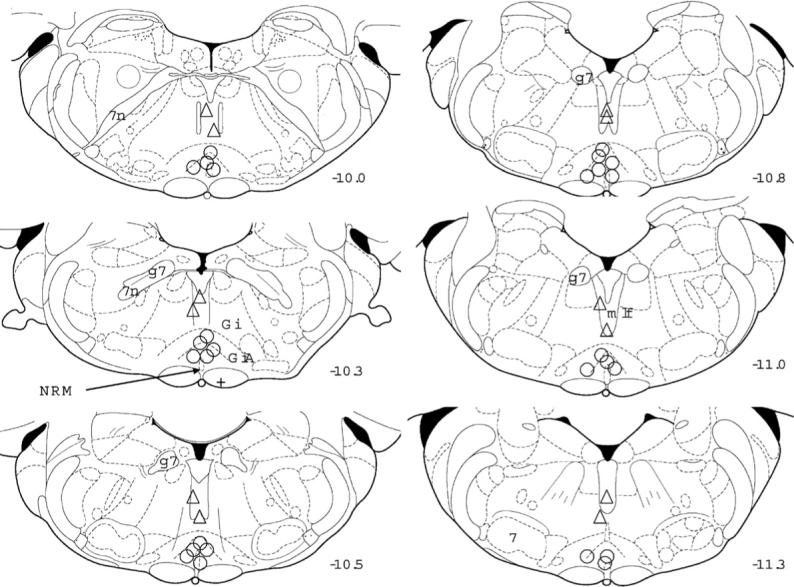
Peripheral inflammation evokes functional and biochemical changes in the periphery and spinal cord which result in central sensitization and hypersensitivity. Inhibitory control systems from the rostral ventromedial medulla (RVM) are also activated. The present study investigates whether endogenous kappa-opioid receptor (KOPr) systems contribute to these neuroadaptations. Inflammation was induced by intraplantar injection of complete Freund's adjuvant (CFA) into one hindpaw. Mechanical and thermal thresholds were determined using the Von Frey and radiant heat tests, respectively. KOPr gene deletion in mice or systemic administration of the long-acting KOPr antagonist, norbinaltorphimine (norBNI) significantly exacerbated mechanical and thermal hypersensitivity of the ipsilateral, inflamed paw. Thermal and mechanical thresholds of the non-inflamed, contralateral hindpaw were unaffected by CFA treatment. However, gene deletion as well as norBNI treatment resulted in mechanical, but not thermal hypersensitivity of the non-inflamed paw. Similar results were obtained when norBNI was administered intrathecally or into the RVM in rats. These data demonstrate a previously unrecognized role of endogenous KOPr systems in inhibiting hyperalgesia during inflammation. Furthermore, they demonstrate that decreased KOPr activity in either the spinal cord or RVM not only enhances mechanical and thermal hyperalgesia of the inflamed limb but also leads to an unmasking of mechanical hyperalgesia at a site remote from inflammation. The differential effects of KOPr antagonism on mechanical versus thermal thresholds for the non-inflamed paw support the notion that distinct neuroanatomical or neurochemical mechanisms modulate the processing of thermal versus mechanical stimuli.
Figures



References
-
- Antic J, Vasiljevic T, Stanojevic S, Vujic V, Kovacevic-Jovanovic V, Djergovic D, et al. Suppression of adjuvant arthritis by kappa-opioid receptor agonist: effect of route of administration and strain differences. Immunopharmacology. 1996;34:105–12. - PubMed
-
- Bennett AD, Everhart AW, Hulsebosch CE. Intrathecal administration of an NMDA or a non-NMDA receptor antagonist reduces mechanical but not thermal allodynia in a rodent model of chronic central pain after spinal cord injury. Brain Res. 2000;859:72–82. - PubMed
-
- Bilsky EJ, Wang T, Lai J, Porreca F. Selective blockade of peripheral delta opioid agonist induced antinociception by intrathecal administration of delta receptor antisense oligodeoxynucleotide. Neurosci Lett. 1996;220:155–8. - PubMed
-
- Broadbear JH, Negus SS, Butelman ER, de Costa BR, Woods JH. Differential effects of systemically administered nor-binaltorphi-mine (nor-BNI) on kappa-opioid agonists in the mouse writhing assay. Psychopharmacology (Berl) 1994;115:311–9. - PubMed
-
- Butelman ER, Negus SS, Ai Y, de Costa BR, Woods JH. Kappa opioid antagonist effects of systemically administered nor-binaltorphimine in a thermal antinociception assay in rhesus monkeys. J Pharmacol Exp Ther. 1993;267:1269–76. - PubMed
Publication types
MeSH terms
Substances
Grants and funding
LinkOut - more resources
Full Text Sources
Medical
