


Reprogramming mRNA translation during stress
- PMID: 18356035
- PMCID: PMC2841789
- DOI: 10.1016/j.ceb.2008.01.013
Reprogramming mRNA translation during stress
Abstract
The survival of mammalian cells exposed to adverse environmental conditions requires a radical reprogramming of protein translation. Stress-activated kinases target components of the initiation machinery (e.g. eIF2alpha, eIF4E-BP, eIF4B, and ribosomal protein S6) to inhibit the translation of 'housekeeping' proteins and promote the translation of repair enzymes. Accumulating untranslated mRNA is concentrated at stress granules where it is sorted and triaged to sites of storage, reinitiation, or decay. At the same time, the translation of mRNAs encoding repair enzymes is selectively preserved by both internal ribosome entry site-dependent and -independent mechanisms. In combination, these stress-activated processes coordinately reprogram mRNA translation and decay in a way that conserves anabolic energy, preserves essential mRNAs, and promotes the repair of stress-induced molecular damage.
Figures
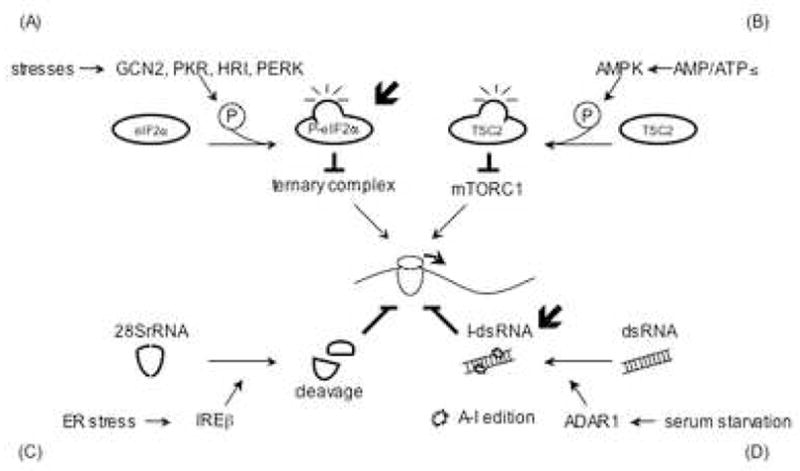
 indicates the possible SG-related mechanism.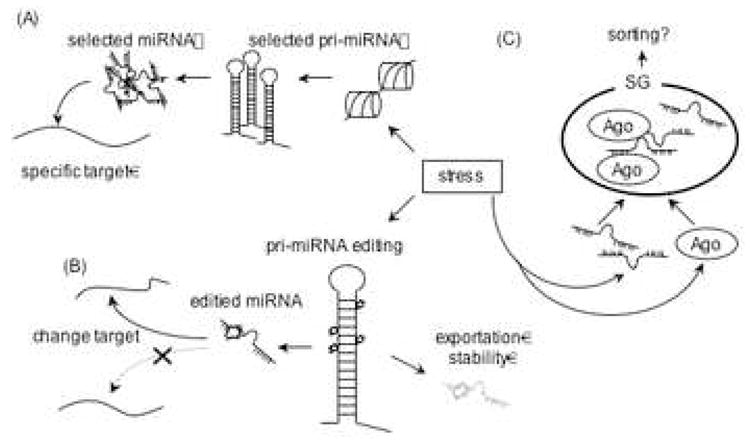
References
-
- Sorensen JG, Loeschcke V. Studying stress responses in the post-genomic era: its ecological and evolutionary role. J Biosci. 2007;32:447–456. - PubMed
-
- Brostrom CO, Brostrom MA. Regulation of translational initiation during cellular responses to stress. Prog Nucleic Acid Res Mol Biol. 1998;58:79–125. - PubMed
-
- Keene JD. RNA regulons: coordination of post-transcriptional events. Nat Rev Genet. 2007;8:533–543. A comprehensive review about mRNA regulation by RNA binding proteins. The author describes their roles in splicing, nuclear export, stability, localization and translation of mRNA. - PubMed
-
- Moore MJ. From birth to death: the complex lives of eukaryotic mRNAs. Science. 2005;309:1514–1518. - PubMed
Publication types
MeSH terms
Substances
Grants and funding
LinkOut - more resources
Full Text Sources
Miscellaneous
