Microarray-based analysis of stress-regulated microRNAs in Arabidopsis thaliana
- PMID: 18356539
- PMCID: PMC2327369
- DOI: 10.1261/rna.895308
Microarray-based analysis of stress-regulated microRNAs in Arabidopsis thaliana
Abstract
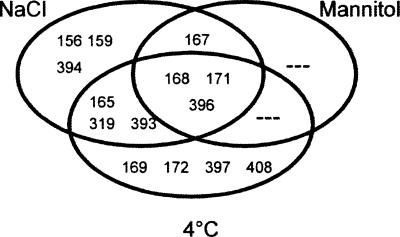
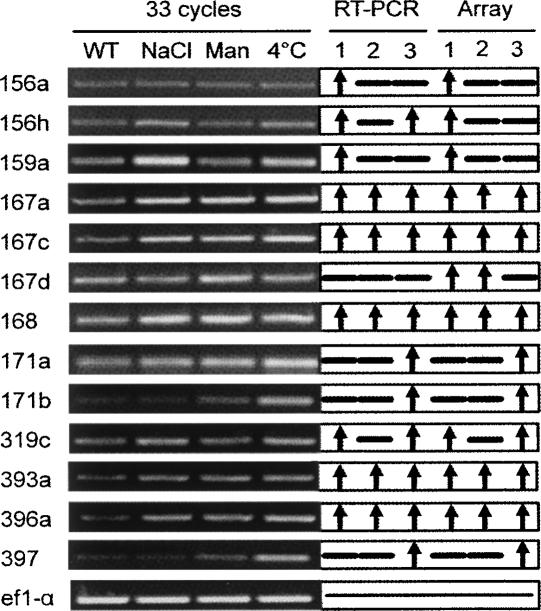
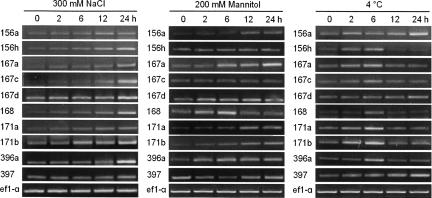
High-salinity, drought, and low temperature are three common environmental stress factors that seriously influence plant growth and development worldwide. Recently, microRNAs (miRNAs) have emerged as a class of gene expression regulators that have also been linked to stress responses. However, the relationship between miRNA expression and stress responses is just beginning to be explored. Here, we identified 14 stress-inducible miRNAs using microarray data in which the effects of three abiotic stresses were surveyed in Arabidopsis thaliana. Among them, 10 high-salinity-, four drought-, and 10 cold-regulated miRNAs were detected, respectively. miR168, miR171, and miR396 responded to all of the stresses. Expression profiling by RT-PCR analysis showed great cross-talk among the high-salinity, drought, and cold stress signaling pathways. The existence of stress-related elements in miRNA promoter regions provided further evidence supporting our results. These findings extend the current view about miRNA as ubiquitous regulators under stress conditions.
Figures
References
-
- Achard, P., Cheng, H., De Grauwe, L., Decat, J., Schoutteten, H., Moritz, T., Van Der Straeten, D., Peng, J., Harberd, N.P. Integration of plant responses to environmentally activated phytohormonal signals. Science. 2006;311:91–94. - PubMed
-
- Ambros, V. The functions of animal microRNAs. Nature. 2004;431:350–355. - PubMed
-
- Apel, K., Hirt, H. Reactive oxygen species: Metabolism, oxidative stress, and signal transduction. Annu. Rev. Plant Biol. 2004;55:373–399. - PubMed
-
- Bartel, D.P. MicroRNAs: Genomics, biogenesis, mechanism, and function. Cell. 2004;116:281–297. - PubMed
Publication types
MeSH terms
Substances
LinkOut - more resources
Full Text Sources
Other Literature Sources
Molecular Biology Databases