


Biomarkers of inflammation, coagulation and fibrinolysis predict mortality in acute lung injury
- PMID: 18358078
- PMCID: PMC2447583
- DOI: 10.1186/cc6846
Biomarkers of inflammation, coagulation and fibrinolysis predict mortality in acute lung injury
Abstract
Background: Acute lung injury (ALI) is a major cause of acute respiratory failure with high mortality despite lung-protective ventilation. Prior work has shown disordered inflammation and coagulation in ALI, with strong correlations between biomarker abnormalities and worse clinical outcomes. We measured plasma markers of inflammation, coagulation and fibrinolysis simultaneously to assess whether these markers remain predictive in the era of lung-protective ventilation.
Methods: Plasma samples and ventilator data were prospectively collected from 50 patients with early ALI. Plasma biomarkers of inflammation (IL-6, IL-8, intercellular adhesion molecule 1), of coagulation (thrombomodulin, protein C) and of fibrinolysis (plasminogen activator inhibitor 1) were measured by ELISA. Biomarker levels were compared between survivors (n = 29) and non-survivors (n = 21) using Mann-Whitney analysis.
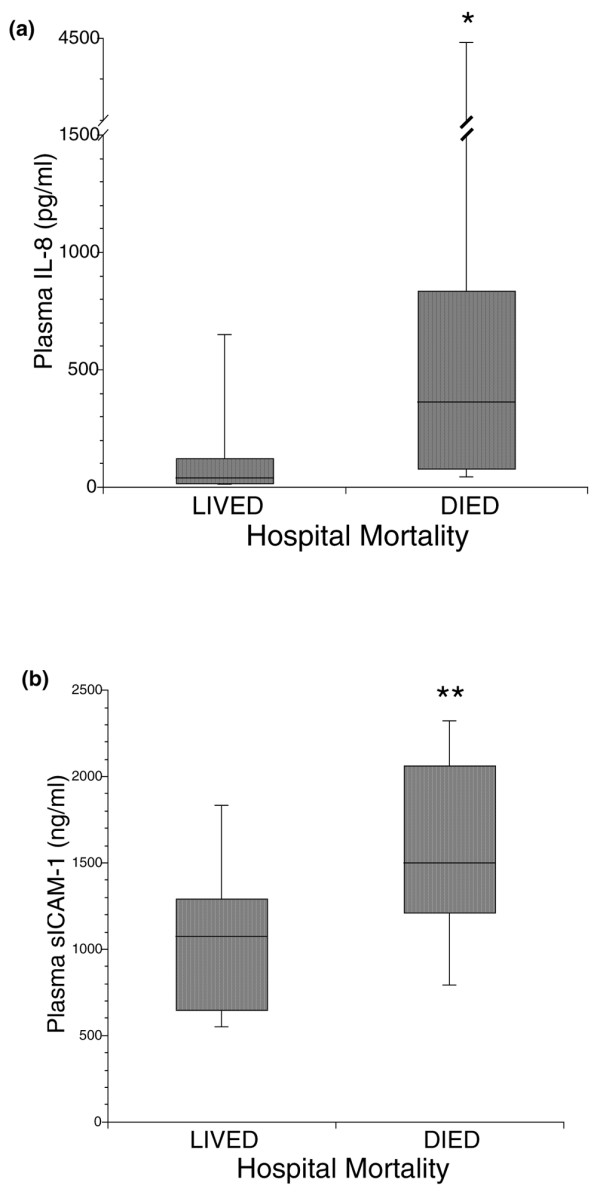
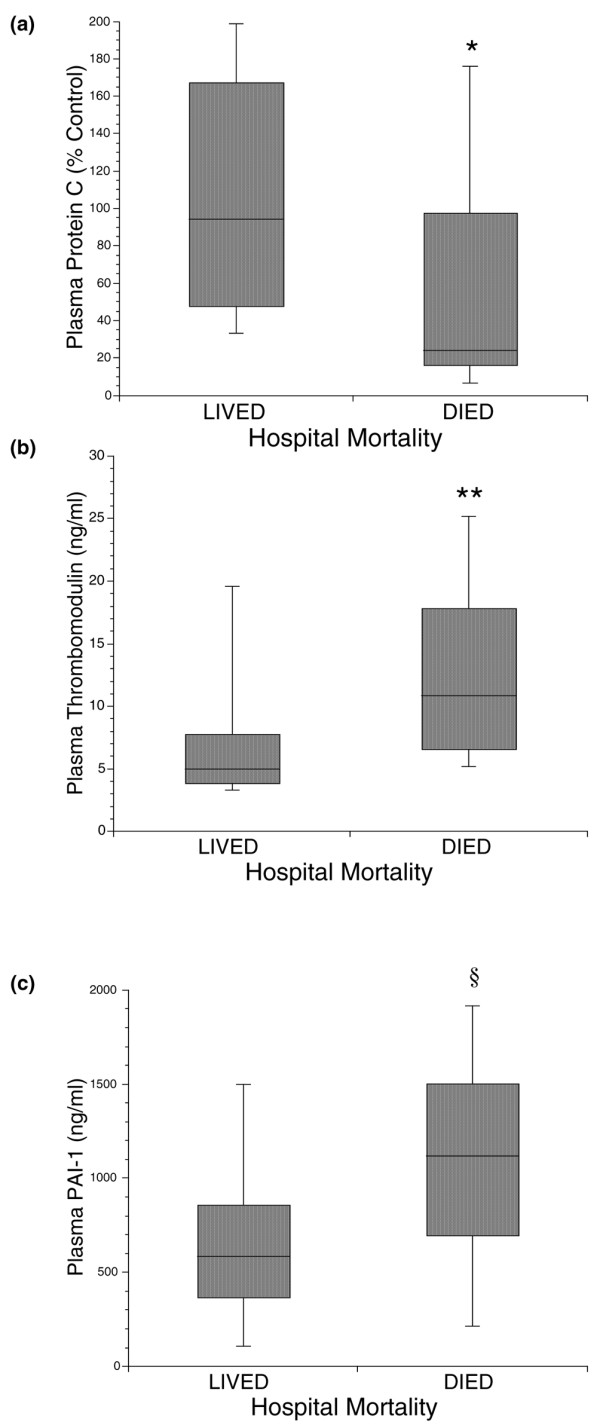
Results: The tidal volume for the study group was 6.6 +/- 1.1 ml/kg predicted body weight and the plateau pressure was 25 +/- 7 cmH2O (mean +/- standard deviation), consistent with lung-protective ventilation. All markers except IL-6 were significantly different between survivors and nonsurvivors. Nonsurvivors had more abnormal values. Three biomarkers - IL-8, intercellular adhesion molecule 1 and protein C - remained significantly different by multivariate analysis that included age, gender, Simplified Acute Physiology Score II and all biomarkers that were significant on bivariate analysis. Higher levels of IL-8 and intercellular adhesion molecule 1 were independently predictive of worse outcomes (odds ratio = 2.0 and 5.8, respectively; P = 0.04 for both). Lower levels of protein C were independently associated with an increased risk of death (odds ratio = 0.5), a result that nearly reached statistical significance (P = 0.06).
Conclusion: Despite lung-protective ventilation, abnormalities in plasma levels of markers of inflammation, coagulation and fibrinolysis predict mortality in ALI patients, indicating more severe activation of these biologic pathways in nonsurvivors.
Figures
Comment in
-
The inflammation-coagulation axis as an important intermediate pathway in acute lung injury.Crit Care. 2008;12(2):144. doi: 10.1186/cc6866. Epub 2008 Apr 30. Crit Care. 2008. PMID: 18466641 Free PMC article.
References
-
- Flori HR, Ware LB, Glidden D, Matthay MA. Early elevation of plasma soluble intercellular adhesion molecule-1 in pediatric acute lung injury identifies patients at increased risk of death and prolonged mechanical ventilation. Pediatr Crit Care Med. 2003;4:315–321. doi: 10.1097/01.PCC.0000074583.27727.8E. - DOI - PubMed
MeSH terms
Substances
LinkOut - more resources
Full Text Sources
