


An extended transcriptional network for pluripotency of embryonic stem cells
- PMID: 18358816
- PMCID: PMC3837340
- DOI: 10.1016/j.cell.2008.02.039
An extended transcriptional network for pluripotency of embryonic stem cells
Erratum in
- Cell. 2008 Jun 27;133(7):1290
Abstract
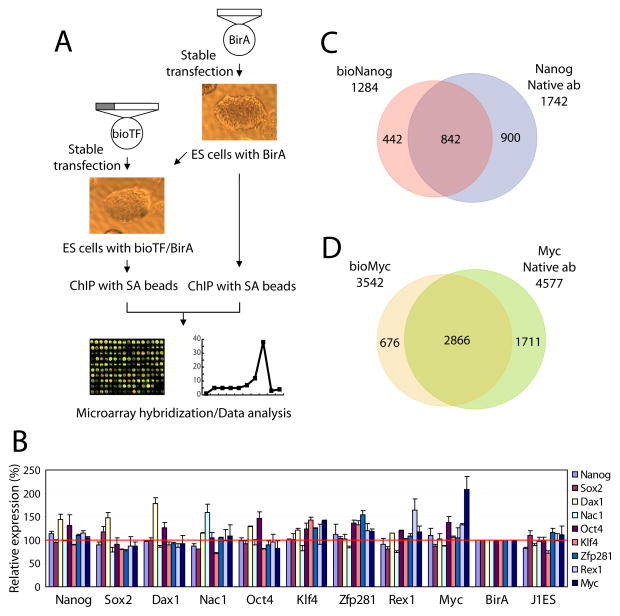
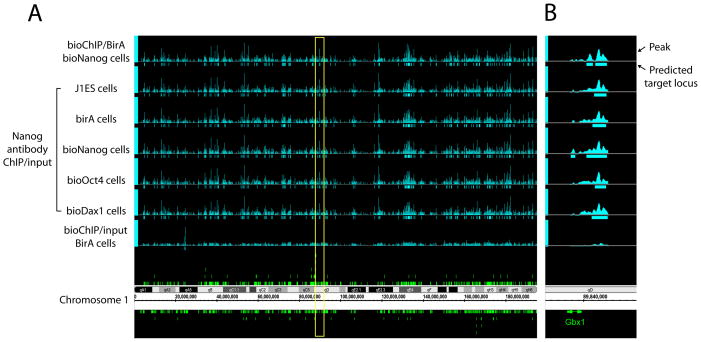
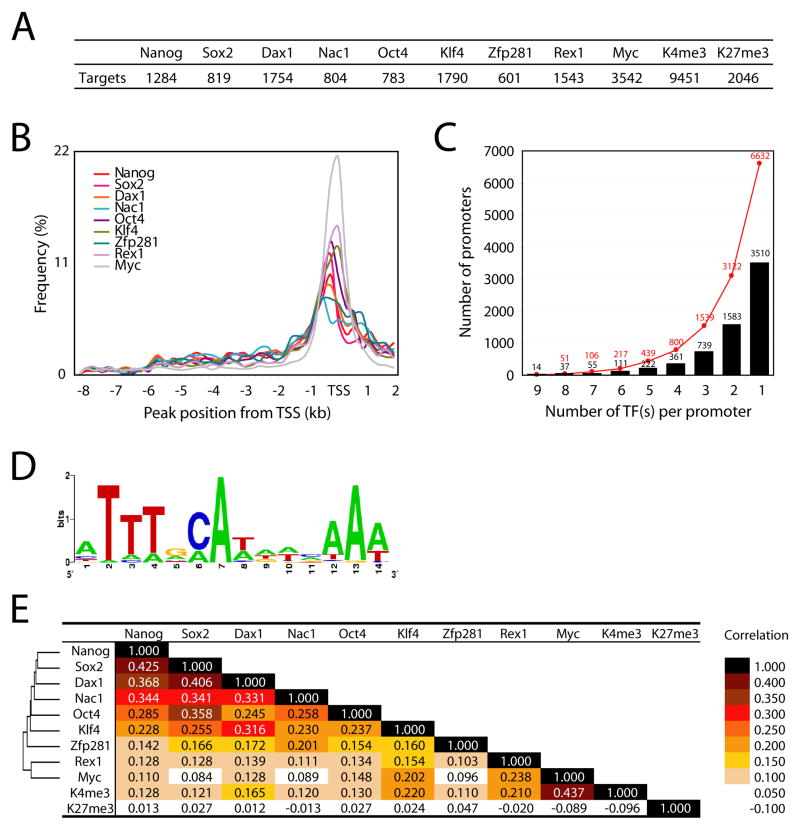
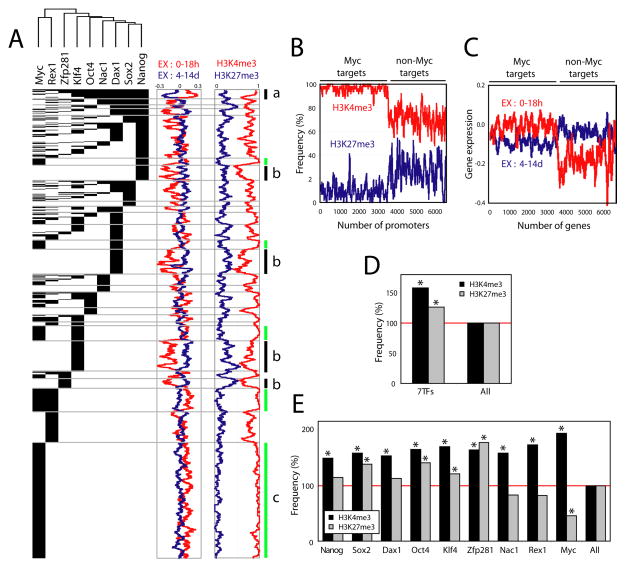
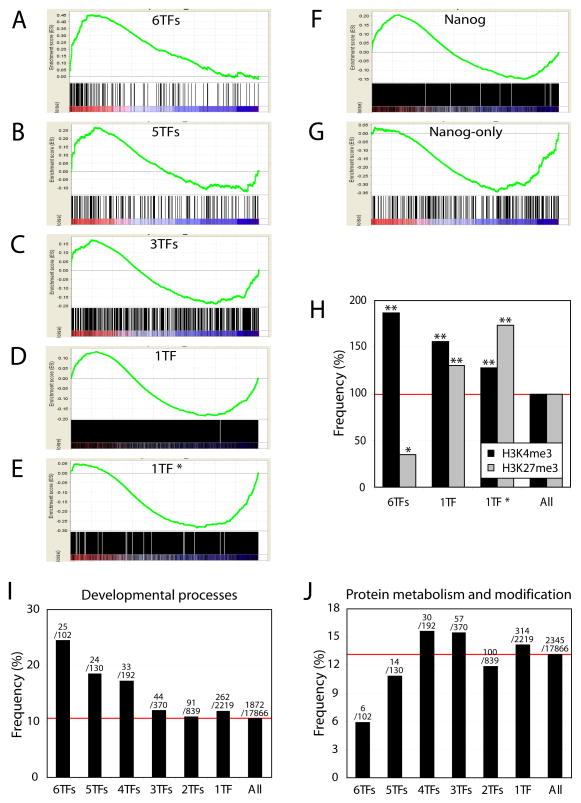
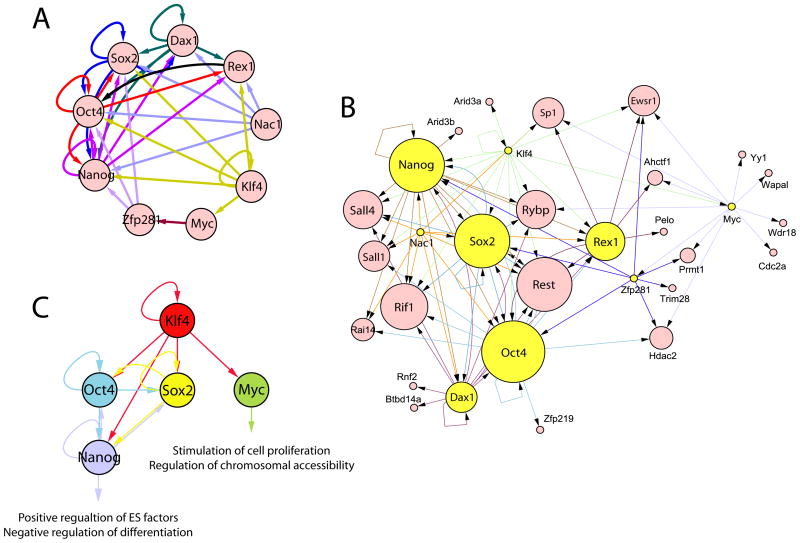
Much attention has focused on a small set of transcription factors that maintain human or mouse embryonic stem (ES) cells in a pluripotent state. To gain a more complete understanding of the regulatory network that maintains this state, we identified target promoters of nine transcription factors, including somatic cell reprogramming factors (Oct4, Sox2, Klf4, and c-Myc) and others (Nanog, Dax1, Rex1, Zpf281, and Nac1), on a global scale in mouse ES cells. We found that target genes fall into two classes: promoters bound by few factors tend to be inactive or repressed, whereas promoters bound by more than four factors are largely active in the pluripotent state and become repressed upon differentiation. Furthermore, we propose a transcriptional hierarchy for reprogramming factors and broadly distinguish targets of c-Myc versus other factors. Our data provide a resource for exploration of the complex network maintaining pluripotency.
Figures
References
-
- Bernstein BE, Mikkelsen TS, Xie X, Kamal M, Huebert DJ, Cuff J, Fry B, Meissner A, Wernig M, Plath K, et al. A bivalent chromatin structure marks key developmental genes in embryonic stem cells. Cell. 2006;125:315–326. - PubMed
-
- Boyer LA, Plath K, Zeitlinger J, Brambrink T, Medeiros LA, Lee TI, Levine SS, Wernig M, Tajonar A, Ray MK, et al. Polycomb complexes repress developmental regulators in murine embryonic stem cells. Nature. 2006;441:349–353. - PubMed
Publication types
MeSH terms
Substances
Associated data
- Actions
Grants and funding
LinkOut - more resources
Full Text Sources
Other Literature Sources
Molecular Biology Databases
Research Materials
