


doi: 10.2147/tcrm.2006.2.4.355.
In vitro fertilization (IVF): a review of 3 decades of clinical innovation and technological advancement
Affiliations
- PMID: 18360648
- PMCID: PMC1936357
- DOI: 10.2147/tcrm.2006.2.4.355
Item in Clipboard
In vitro fertilization (IVF): a review of 3 decades of clinical innovation and technological advancement
Ther Clin Risk Manag.
2006 Dec.
Abstract
In vitro fertilization, popularly referred to as IVF, has captured the attention of the public since its sensational introduction in 1978. Today assisted reproductive technology is available throughout most of the civilized world, and the practice is largely different from that used during the early days. Refinements in laboratory technology and clinical practice have allowed IVF to evolve into a medical procedure that is efficient, safe, readily accessible, and relatively affordable. More than 2 million IVF children have been born to date, and it is likely that continued enhancements will widen its appeal and applicability.
Figures
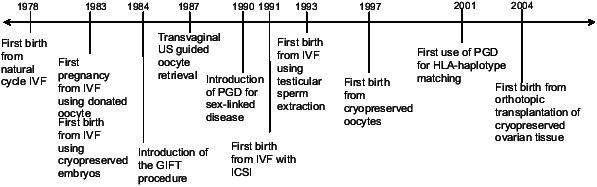
Timeline of major milestones in assisted reproductive technologies. Abbreviations: GIFT, gamete intrafallopian transfer; HLA, human leukocyte antigen; ICSI, intracytoplasmic sperm injection; IVF, in virto fertilizations; PGD, preimplantation genetic diagnosis.
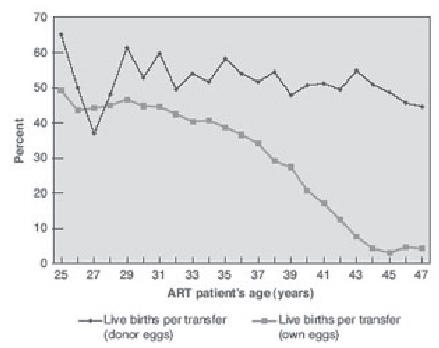
Live births per transfer for assisted reproductive technology (ART) cycles using fresh embryos from own and donor eggs, by ART patient’s age. Copyright © 2005. Reproduced with permission from National Center for Chronic Disease Prevention and Health Promotion. 2005. 2003 Assisted reproductive technology success rates: National summary and fertility clinic reports.
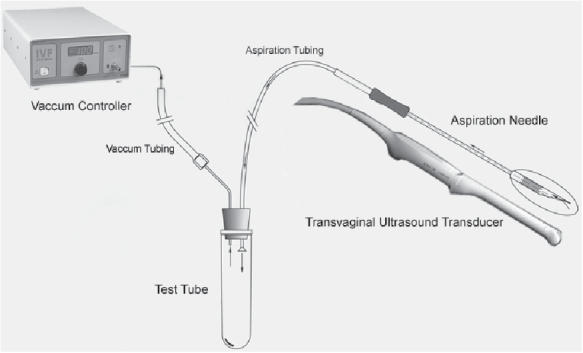
Schematic of modern outpatient in vitro fertilization setup. Copyright © 2006. Reproduced with permission from Cook Group Incorporated. 2006. Ovum aspiration diagram [online]. Accessed on 2 January 2006. URL:
References
-
- Antinori S, Versaci C, Panci C, et al. Fetal and maternal morbidity and mortality in menopausal women aged 45–63 years. Hum Reprod. 1995;10:464–9. - PubMed
-
- Asch RH, Ellsworth LR, Balmaceda JP, et al. Pregnancy after translaparoscopic gamete intrafallopian transfer. Lancet. 1984;2:1034–5. - PubMed
-
- Boiso I, Marti M, Santalo J, et al. A confocal microscopy analysis of the spindle and chromosome configurations of human oocytes cryopreserved at the germinal vesicle and metaphase II stage. Hum Reprod. 2002;17:1885–91. - PubMed
-
- Bonduelle M, Ponjaert I, Steirteghem AV, et al. Developmental outcome at 2 years of age for children born after ICSI compared with children born after IVF. Hum Reprod. 2003;18:342–50. - PubMed
LinkOut - more resources
Full Text Sources
Other Literature Sources
