


Extreme resistance of bdelloid rotifers to ionizing radiation
- PMID: 18362355
- PMCID: PMC2278216
- DOI: 10.1073/pnas.0800966105
Extreme resistance of bdelloid rotifers to ionizing radiation
Abstract
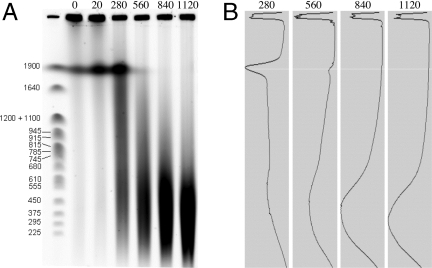
Rotifers of class Bdelloidea are common invertebrate animals with highly unusual characteristics, including apparently obligate asexuality, the ability to resume reproduction after desiccation at any life stage, and a paucity of transposable genetic elements of types not prone to horizontal transmission. We find that bdelloids are also extraordinarily resistant to ionizing radiation (IR). Reproduction of the bdelloids Adineta vaga and Philodina roseola is much more resistant to IR than that of Euchlanis dilatata, a rotifer belonging to the desiccation-intolerant and facultatively sexual class Monogononta, and all other animals for which we have found relevant data. By analogy with the desiccation- and radiation-resistant bacterium Deinococcus radiodurans, we suggest that the extraordinary radiation resistance of bdelloid rotifers is a consequence of their evolutionary adaptation to survive episodes of desiccation encountered in their characteristic habitats and that the damage incurred in such episodes includes DNA breakage that is repaired upon rehydration. Such breakage and repair may have maintained bdelloid chromosomes as colinear pairs and kept the load of transposable genetic elements low and may also have contributed to the success of bdelloid rotifers in avoiding the early extinction suffered by most asexuals.
Conflict of interest statement
The authors declare no conflict of interest.
Figures

References
-
- Ricci C. Ecology of bdelloids: How to be successful. Hydrobiologia. 1987;147:117–127.
-
- Ricci C. Anhydrobiotic capabilities of bdelloid rotifers. Hydrobiologia. 1998;387/388:321–326.
-
- Kikawada T, Minakawa N, Watanabe M, Okuda T. Factors inducing successful anhydrobiosis in the African chironomid Polypedilum vanderplanki: Significance of the larval tubular nest. Integr Comp Biol. 2005;45:710–714. - PubMed
-
- Clegg JS. Cryptobiosis: A peculiar state of biological organization. Comp Biochem Phys B. 2001;128:613–624. - PubMed
-
- Wallace RL, Snell TW, Ricci C, Nogrady T. Rotifera: Biology, Ecology, and Systematics. Vol 1. Leiden, The Netherlands: Backhuys; 2006.
Publication types
MeSH terms
LinkOut - more resources
Full Text Sources
Other Literature Sources
