


Biochemical and structural analysis of alpha-catenin in cell-cell contacts
- PMID: 18363554
- PMCID: PMC3369830
- DOI: 10.1042/BST0360141
Biochemical and structural analysis of alpha-catenin in cell-cell contacts
Abstract
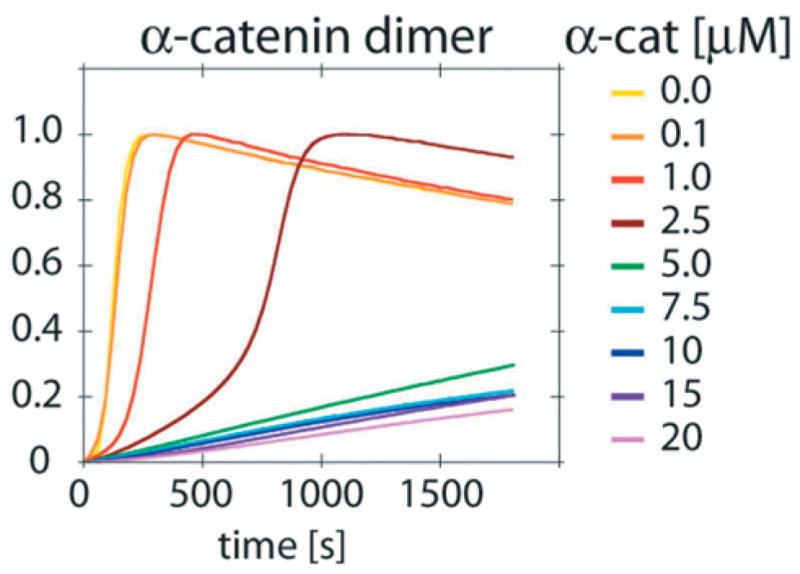
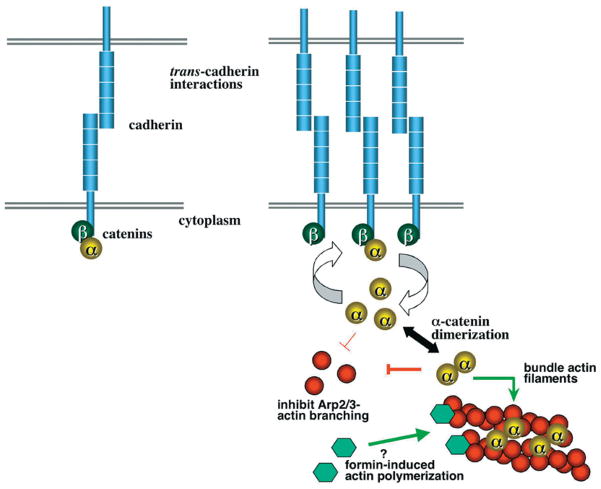
Cadherins are transmembrane adhesion molecules that mediate homotypic cell-cell contact. In adherens junctions, the cytoplasmic domain of cadherins is functionally linked to the actin cytoskeleton through a series of proteins known as catenins. E-cadherin binds to beta-catenin, which in turn binds to alpha-catenin to form a ternary complex. alpha-Catenin also binds to actin, and it was assumed previously that alpha-catenin links the cadherin-catenin complex to actin. However, biochemical, structural and live-cell imaging studies of the cadherin-catenin complex and its interaction with actin show that binding of beta-catenin to alpha-catenin prevents the latter from binding to actin. Biochemical and structural data indicate that alpha-catenin acts as an allosteric protein whose conformation and activity changes depending on whether or not it is bound to beta-catenin. Initial contacts between cells occur on dynamic lamellipodia formed by polymerization of branched actin networks, a process controlled by the Arp2/3 (actin-related protein 2/3) complex. alpha-Catenin can suppress the activity of Arp2/3 by competing for actin filaments. These findings lead to a model for adherens junction formation in which clustering of the cadherin-beta-catenin complex recruits high levels of alpha-catenin that can suppress the Arp2/3 complex, leading to cessation of lamellipodial movement and formation of a stable contact. Thus alpha-catenin appears to play a central role in cell-cell contact formation.
Figures


References
-
- Lubarsky B, Krasnow MA. Making and shaping biological tubes. Cell. 2002;112:19–28. - PubMed
Publication types
MeSH terms
Substances
Grants and funding
LinkOut - more resources
Full Text Sources
