The dynamics of human body weight change
- PMID: 18369435
- PMCID: PMC2266991
- DOI: 10.1371/journal.pcbi.1000045
The dynamics of human body weight change
Abstract
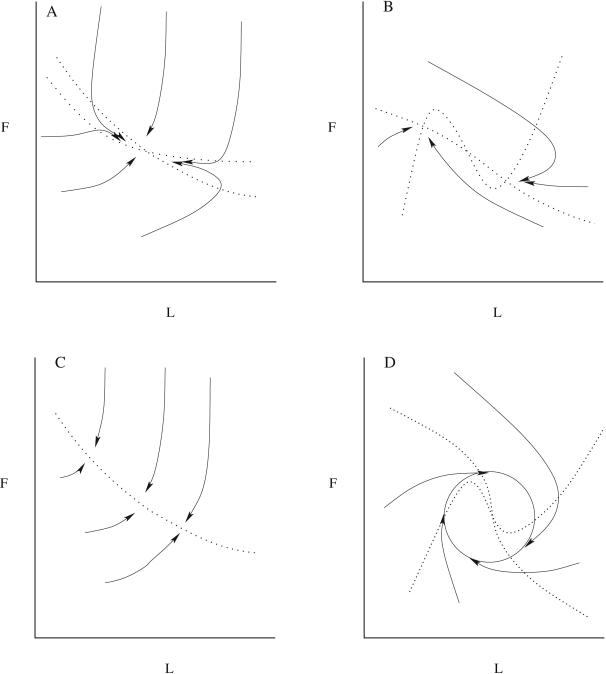
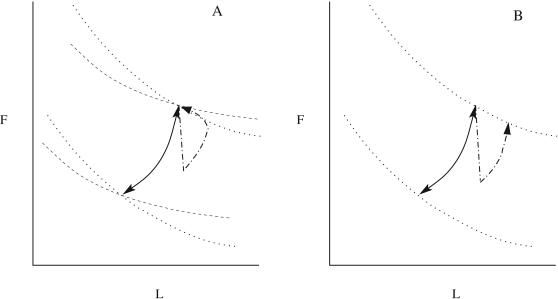
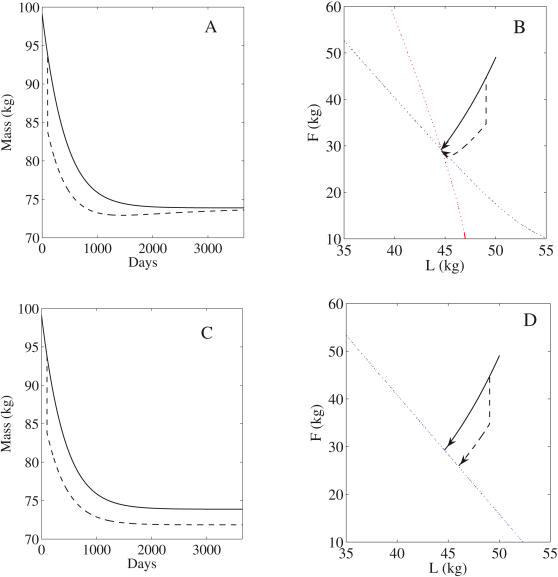
An imbalance between energy intake and energy expenditure will lead to a change in body weight (mass) and body composition (fat and lean masses). A quantitative understanding of the processes involved, which currently remains lacking, will be useful in determining the etiology and treatment of obesity and other conditions resulting from prolonged energy imbalance. Here, we show that a mathematical model of the macronutrient flux balances can capture the long-term dynamics of human weight change; all previous models are special cases of this model. We show that the generic dynamic behavior of body composition for a clamped diet can be divided into two classes. In the first class, the body composition and mass are determined uniquely. In the second class, the body composition can exist at an infinite number of possible states. Surprisingly, perturbations of dietary energy intake or energy expenditure can give identical responses in both model classes, and existing data are insufficient to distinguish between these two possibilities. Nevertheless, this distinction has important implications for the efficacy of clinical interventions that alter body composition and mass.
Conflict of interest statement
The authors have declared that no competing interests exist.
Figures
References
-
- Hill JO, Wyatt HR, Reed GW, Peters JC. Obesity and the environment: where do we go from here? Science. 2003;299:853–855. - PubMed
-
- Hill JO. Understanding and addressing the epidemic of obesity: an energy balance perspective. Endocr Rev. 2006;27:750–761. - PubMed
-
- Hall K, Polidori D. Can a temporary high fat diet cause persistent obesity via acquired leptin resistance? Insights from a mathematical model. Diabetes. 2002;51(S2):A607.
-
- Alpert SS. A two-reservoir energy model of the human body. Am J Clin Nutr. 1979;32:1710–1718. - PubMed
Publication types
MeSH terms
Grants and funding
LinkOut - more resources
Full Text Sources
Other Literature Sources
Medical
Molecular Biology Databases