


IFN-lambda (IFN-lambda) is expressed in a tissue-dependent fashion and primarily acts on epithelial cells in vivo
- PMID: 18369468
- PMCID: PMC2265414
- DOI: 10.1371/journal.ppat.1000017
IFN-lambda (IFN-lambda) is expressed in a tissue-dependent fashion and primarily acts on epithelial cells in vivo
Abstract
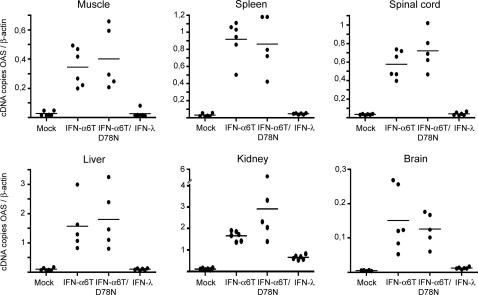
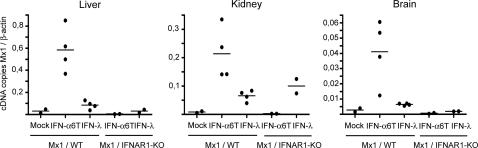
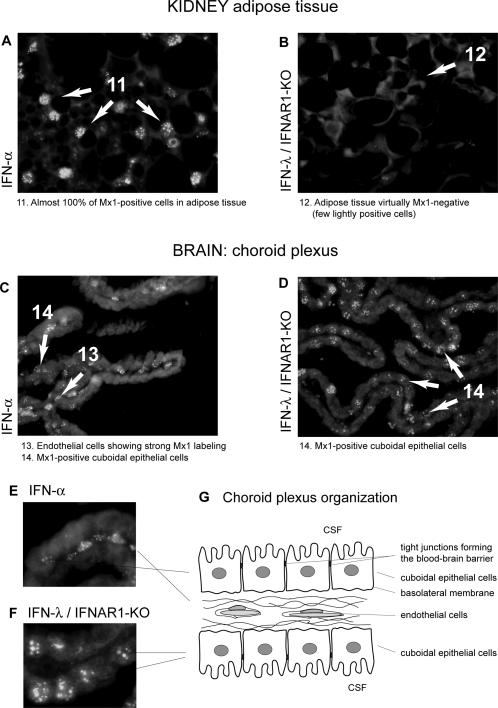
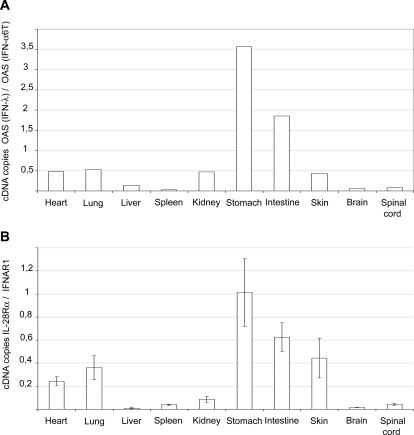
Interferons (IFN) exert antiviral, immunomodulatory and cytostatic activities. IFN-alpha/beta (type I IFN) and IFN-lambda (type III IFN) bind distinct receptors, but regulate similar sets of genes and exhibit strikingly similar biological activities. We analyzed to what extent the IFN-alpha/beta and IFN-lambda systems overlap in vivo in terms of expression and response. We observed a certain degree of tissue specificity in the production of IFN-lambda. In the brain, IFN-alpha/beta was readily produced after infection with various RNA viruses, whereas expression of IFN-lambda was low in this organ. In the liver, virus infection induced the expression of both IFN-alpha/beta and IFN-lambda genes. Plasmid electrotransfer-mediated in vivo expression of individual IFN genes allowed the tissue and cell specificities of the responses to systemic IFN-alpha/beta and IFN-lambda to be compared. The response to IFN-lambda correlated with expression of the alpha subunit of the IFN-lambda receptor (IL-28R alpha). The IFN-lambda response was prominent in the stomach, intestine and lungs, but very low in the central nervous system and spleen. At the cellular level, the response to IFN-lambda in kidney and brain was restricted to epithelial cells. In contrast, the response to IFN-alpha/beta was observed in various cell types in these organs, and was most prominent in endothelial cells. Thus, the IFN-lambda system probably evolved to specifically protect epithelia. IFN-lambda might contribute to the prevention of viral invasion through skin and mucosal surfaces.
Conflict of interest statement
The authors have declared that no competing interests exist.
Figures



References
-
- Isaacs A, Lindenmann J. Virus interference. I. The interferon. Proc R Soc Lond B Biol Sci. 1957;147:258–267. - PubMed
-
- Goodbourn S, Didcock L, Randall RE. Interferons: cell signalling, immune modulation, antiviral response and virus countermeasures. J Gen Virol. 2000;81:2341–2364. - PubMed
-
- Pestka S, Krause CD, Walter MR. Interferons, interferon-like cytokines, and their receptors. Immunol Rev. 2004;202:8–32. - PubMed
Publication types
MeSH terms
Substances
LinkOut - more resources
Full Text Sources
Other Literature Sources
