


Development of secondary lymphoid organs
- PMID: 18370924
- PMCID: PMC2590644
- DOI: 10.1146/annurev.immunol.26.021607.090257
Development of secondary lymphoid organs
Abstract
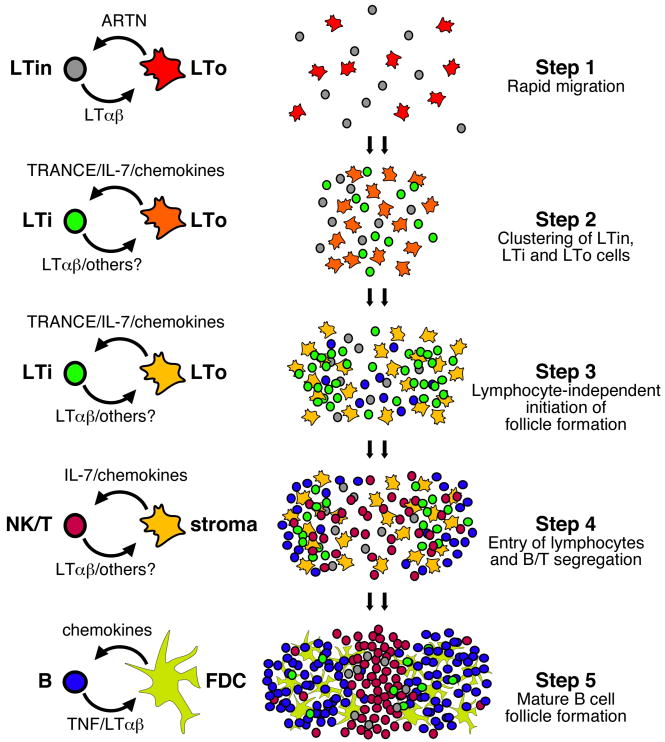
Secondary lymphoid organs develop during embryogenesis or in the first few weeks after birth according to a highly coordinated series of interactions between newly emerging hematopoietic cells and immature mesenchymal or stromal cells. These interactions are orchestrated by homeostatic chemokines, cytokines, and growth factors that attract hematopoietic cells to sites of future lymphoid organ development and promote their survival and differentiation. In turn, lymphotoxin-expressing hematopoietic cells trigger the differentiation of stromal and endothelial cells that make up the scaffolding of secondary lymphoid organs. Lymphotoxin signaling also maintains the expression of adhesion molecules and chemokines that govern the ultimate structure and function of secondary lymphoid organs. Here we describe the current paradigm of secondary lymphoid organ development and discuss the subtle differences in the timing, molecular interactions, and cell types involved in the development of each secondary lymphoid organ.
Figures
References
-
- Goodnow CC. Chance encounters and organized rendezvous. Immunol Rev. 1997;156:5–10. - PubMed
-
- Kunisawa J, Fukuyama S, Kiyono H. Mucosa-associated lymphoid tissues in the aerodigestive tract: their shared and divergent traits and their importance to the orchestration of the mucosal immune system. Curr Mol Med. 2005;5:557–72. - PubMed
-
- Butcher EC, Williams M, Youngman K, Rott L, Briskin M. Lymphocyte trafficking and regional immunity. Adv Immunol. 1999;72:209–53. - PubMed
-
- Butcher EC, Picker LJ. Lymphocyte homing and homeostasis. Science. 1996;272:60–2. - PubMed
Publication types
MeSH terms
Substances
Grants and funding
LinkOut - more resources
Full Text Sources
