


Amoeboid microglia in the periventricular white matter induce oligodendrocyte damage through expression of proinflammatory cytokines via MAP kinase signaling pathway in hypoxic neonatal rats
- PMID: 18371179
- PMCID: PMC8095524
- DOI: 10.1111/j.1750-3639.2008.00138.x
Amoeboid microglia in the periventricular white matter induce oligodendrocyte damage through expression of proinflammatory cytokines via MAP kinase signaling pathway in hypoxic neonatal rats
Abstract
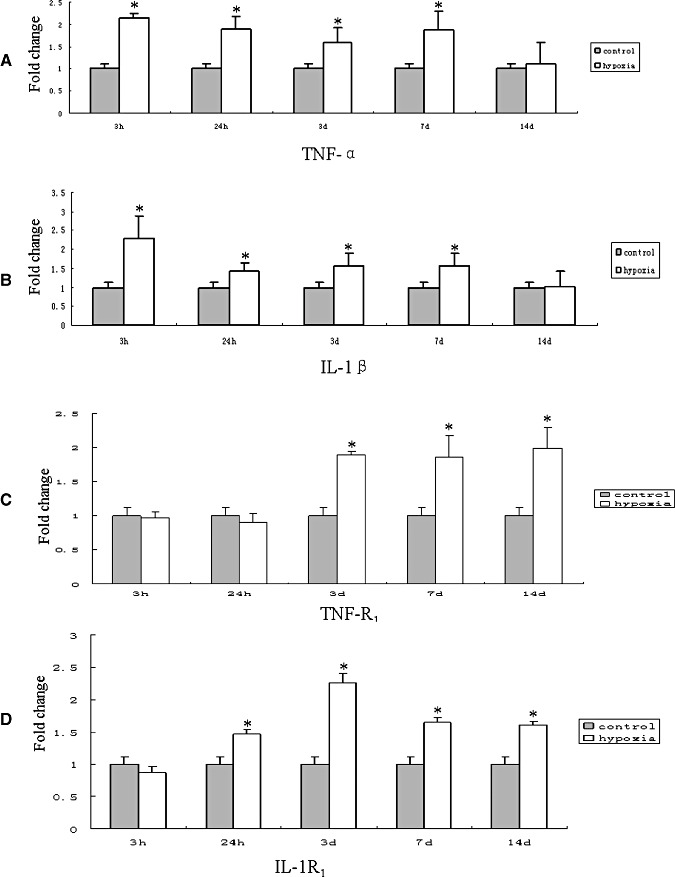
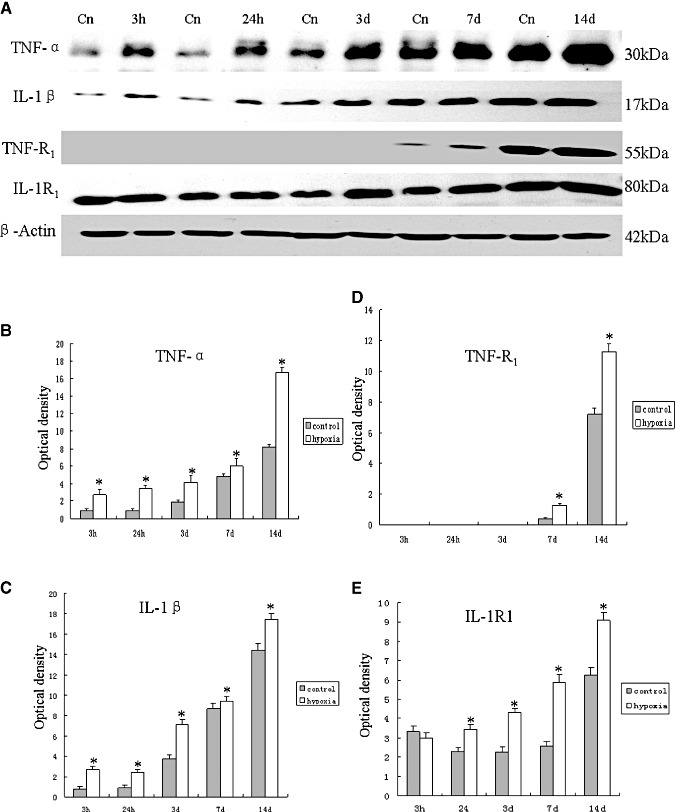
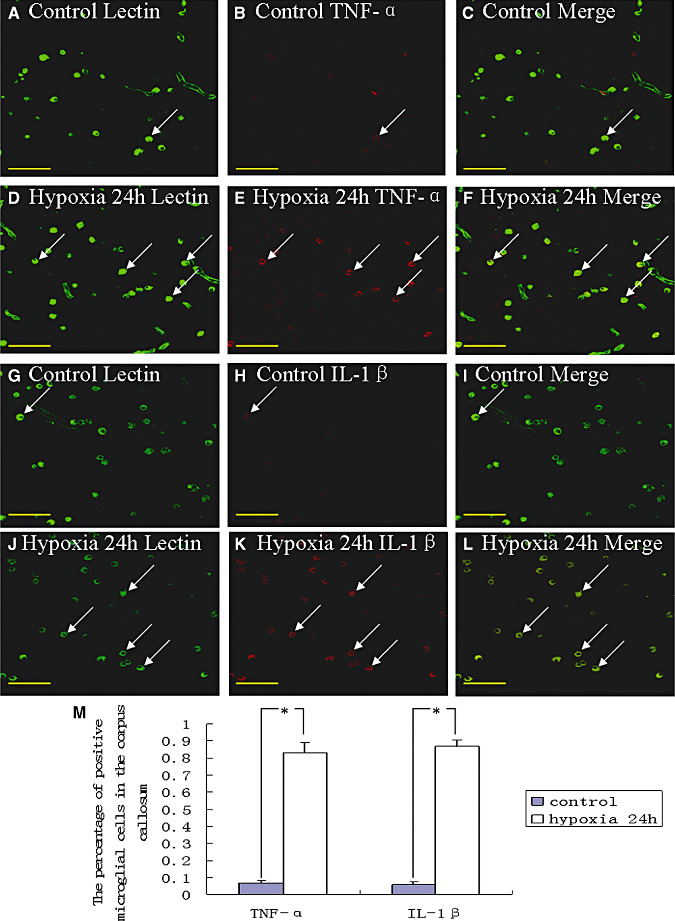
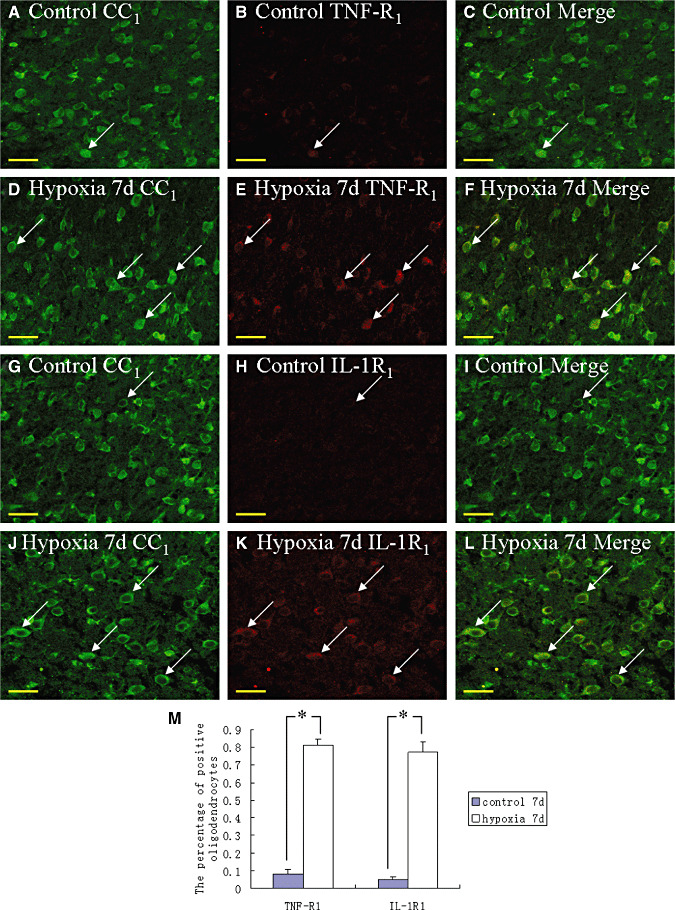
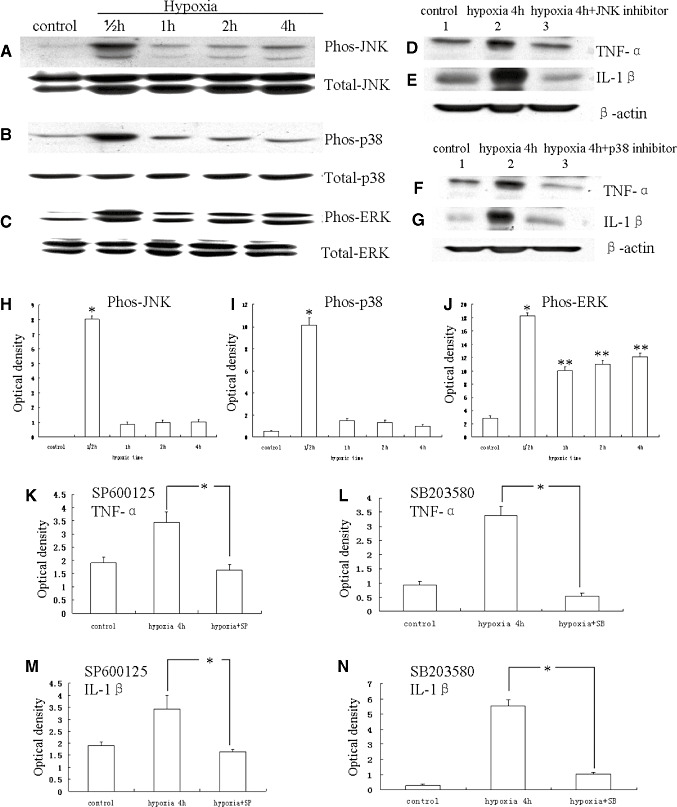
Hypoxic injury in the perinatal period results in periventricular white matter (PWM) lesions with axonal damage and oligodendroglial loss. It also alters macrophage function by perpetuating expression of inflammatory mediators. Relevant to this is the preponderance of amoeboid microglial cells (AMC) characterized as active macrophages in the developing PWM. This study aimed to determine if AMC produce proinflammatory cytokines that may be linked to the oligodendroglial loss observed in hypoxic PWM damage (PWMD). Wistar rats (1 day old) were subjected to hypoxia, following which upregulated expression of tumor necrosis factor-alpha (TNF-alpha), interleukin-1beta (IL-1beta), TNF receptor 1 (TNF-R(1)) and IL-1 receptor 1 (IL-1R(1)) was observed. This was coupled with apoptosis and expression of TNF-R(1) and IL-1R(1) in oligodendrocytes. Primary cultured microglial cells subjected to hypoxia (3% oxygen, 5% CO(2) and 92% nitrogen) showed enhanced expression of TNF-alpha and IL-1beta. Furthermore, mitogen-activated protein (MAP) kinase signaling pathway was involved in the expression of TNF-alpha and IL-1beta in microglia subjected to hypoxia. Our results suggest that following a hypoxic insult, microglial cells in the neonatal rats produce inflammatory cytokines such as TNF-alpha and IL-1beta via MAP kinase signaling pathway. These cytokines are detrimental to oligodendrocytes resulting in PWM lesion.
Figures
References
-
- Arnett HA, Mason J, Marino M, Suzuki K, Matsushima GK, Ting JP (2001) TNF alpha promotes proliferation of oligodendrocyte progenitors and remyelination. Nat Neurosci 4:1116–1122. - PubMed
-
- Bhat NR, Zhang P, Lee JC, Hogan EL (1998) Extracellular signal‐regulated kinase and p38 subgroups of mitogen‐activated protein kinases regulate inducible nitric oxide synthase and tumor necrosis factor‐alpha gene expression in endotoxin‐stimulated primary glial cultures. J Neurosci 18:1633–1641. - PMC - PubMed
-
- Bohatschek M, Kloss CU, Hristova M, Pfeffer K, Raivich G (2004) Microglial major histocompatibility complex glycoprotein‐1 in the axotomized facial motor nucleus: regulation and role of tumor necrosis factor receptors 1 and 2. J Comp Neurol 470:382–399. - PubMed
-
- Bradford MM (1976) A rapid and sensitive method for the quantitation of microgram quantities of protein utilizing the principle of protein‐dye binding. Anal Biochem 72:248–254. - PubMed
-
- Carloni S, Mazzoni E, Cimino M, De Simoni MG, Perego C, Scopa C, Balduini W (2006) Simvastatin reduces caspase‐3 activation and inflammatory markers induced by hypoxia‐ischemia in the newborn rat. Neurobiol Dis 21:119–126. - PubMed
Publication types
MeSH terms
Substances
LinkOut - more resources
Full Text Sources
