. 2008 Jun;294(6):L1158-65.
doi: 10.1152/ajplung.00298.2007. Epub 2008 Mar 28.

Cellular kinetics and modeling of bronchioalveolar stem cell response during lung regeneration

Affiliations

Cellular kinetics and modeling of bronchioalveolar stem cell response during lung regeneration

R D Nolen-Walston et al. Am J Physiol Lung Cell Mol Physiol. 2008 Jun.

Abstract

Organ regeneration in mammals is hypothesized to require a functional pool of stem or progenitor cells, but the role of these cells in lung regeneration is unknown. Whereas postnatal regeneration of alveolar tissue has been attributed to type II alveolar epithelial cells (AECII), we reasoned that bronchioalveolar stem cells (BASCs) have the potential to contribute substantially to this process. To test this hypothesis, unilateral pneumonectomy (PNX) was performed on adult female C57/BL6 mice to stimulate compensatory lung regrowth. The density of BASCs and AECII, and morphometric and physiological measurements, were recorded on days 1, 3, 7, 14, 28, and 45 after surgery. Vital capacity was restored by day 7 after PNX. BASC numbers increased by day 3, peaked to 220% of controls (P<0.05) by day 14, and then returned to baseline after active lung regrowth was complete, whereas AECII cell densities increased to 124% of baseline (N/S). Proliferation studies revealed significant BrdU uptake in BASCs and AECII within the first 7 days after PNX. Quantitative analysis using a systems biology model was used to evaluate the potential contribution of BASCs and AECII. The model demonstrated that BASC proliferation and differentiation contributes between 0 and 25% of compensatory alveolar epithelial (type I and II cell) regrowth, demonstrating that regeneration requires a substantial contribution from AECII. The observed cell kinetic profiles can be reconciled using a dual-compartment (BASC and AECII) proliferation model assuming a linear hierarchy of BASCs, AECII, and AECI cells to achieve lung regrowth.


Figures
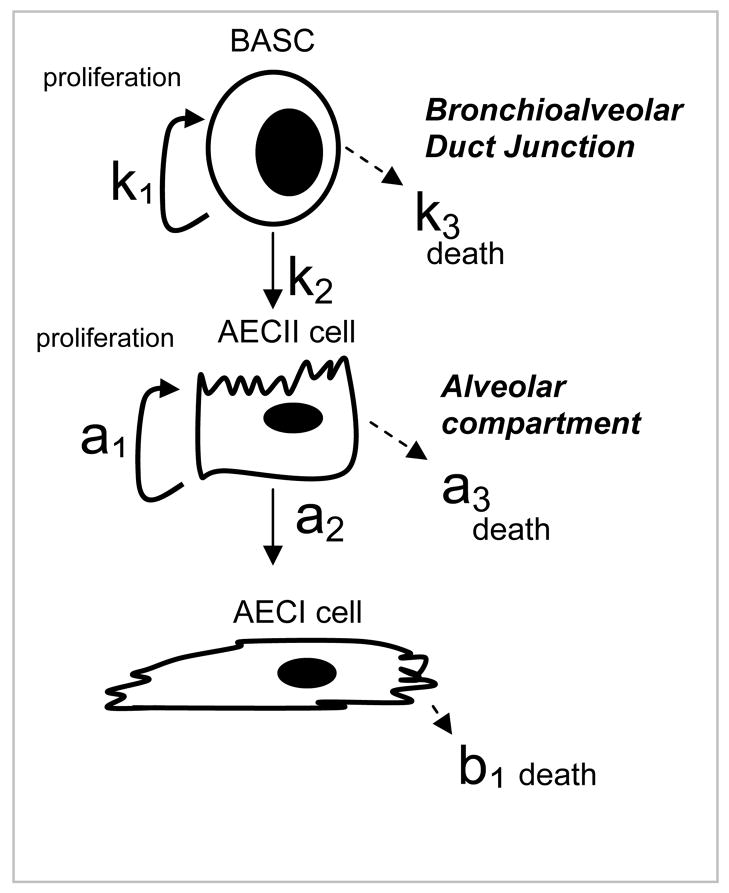
Figure 1
Figure 1
Lineage hierarchy and schematic representation of rate constants employed to model cellular contributions to alveogenesis during compensatory lung regrowth. The model tests the hypothesis that BASCs give rise to AECII which in turn produce AECI; BASCs and AECII have proliferative capacity whereas AECI are terminally differentiated.
Figure 2
Figure 2
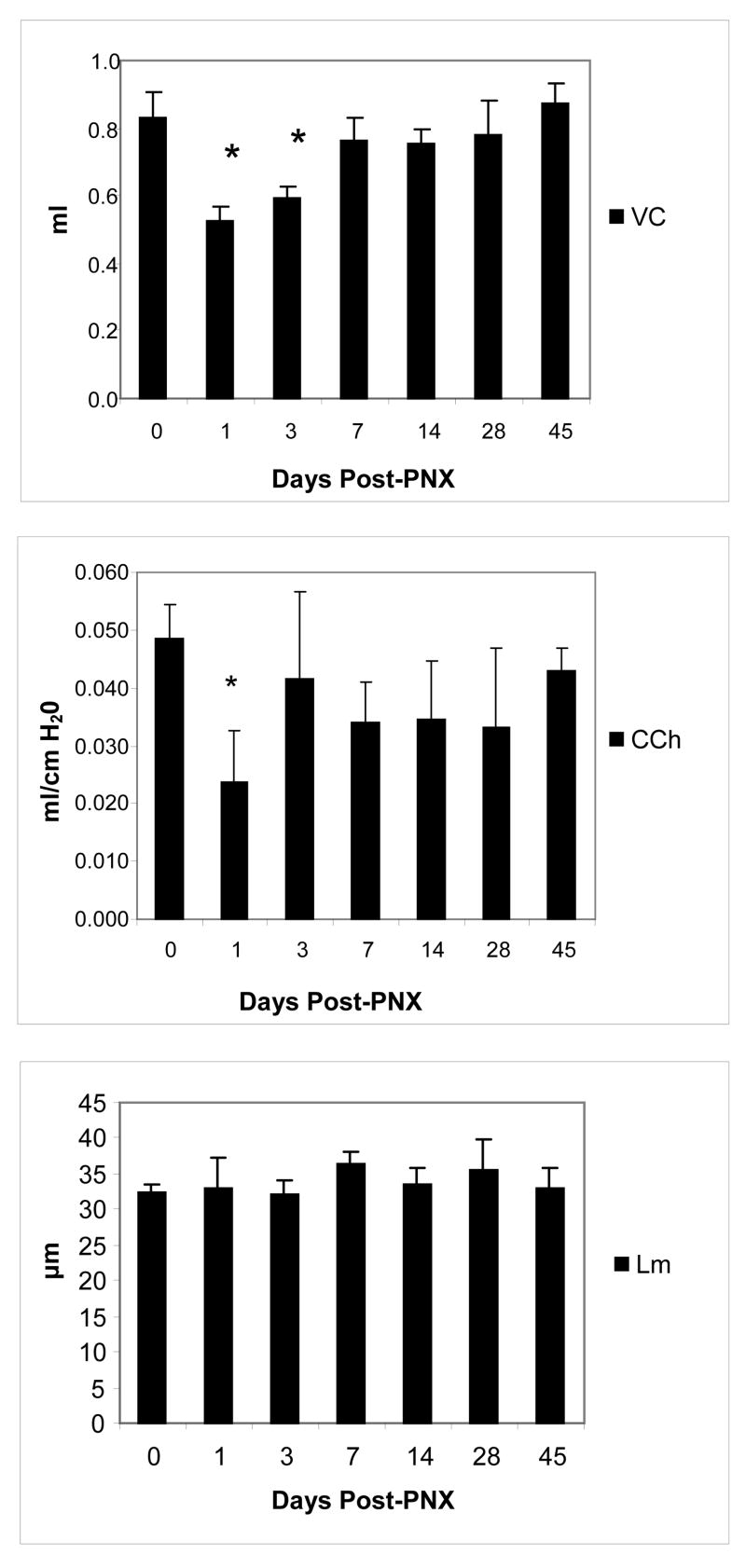
Measurements of vital capacity and quasistatic lung compliance following left-sided pneumonectomy in adult mice. Vital capacity (top) was significantly lower (P=<0.001) at day 1 and 3 post-PNX. Chord compliance (center) was significantly lower (P=0.001) on day 1 only. There were no significant changes from baseline in mean linear intercept (Lm, bottom); n=5 mice/time point. Data are mean values +/− SEM.
Figure 3
Figure 3
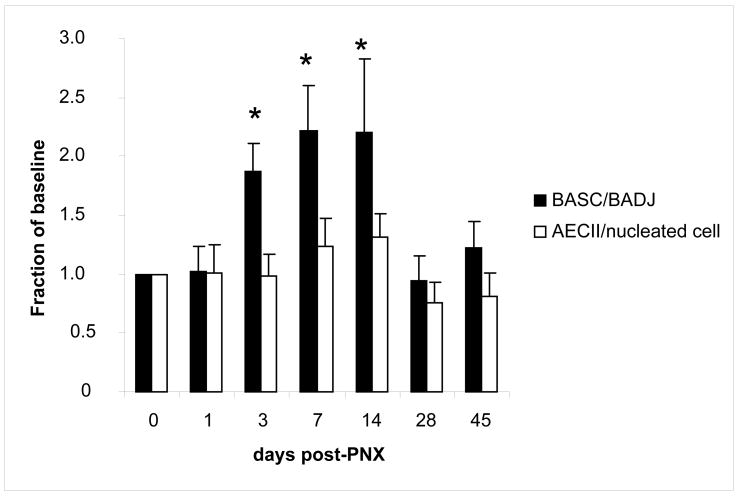
Analysis of cell density after pneumonectomy. Number of BASC per bronchioalveolar junction (BADJ) show 2.2 fold increase from controls (0 days post-PNX) by day 7 post-PNX (n=5/group), while the number of AECII per nucleated cell show a trend towards increase in cell density (1.3 fold) on days 7–14. Data are expressed as mean +/− SEM, * demonstrates significant increases over baseline (P<0.05).
Figure 4
Figure 4
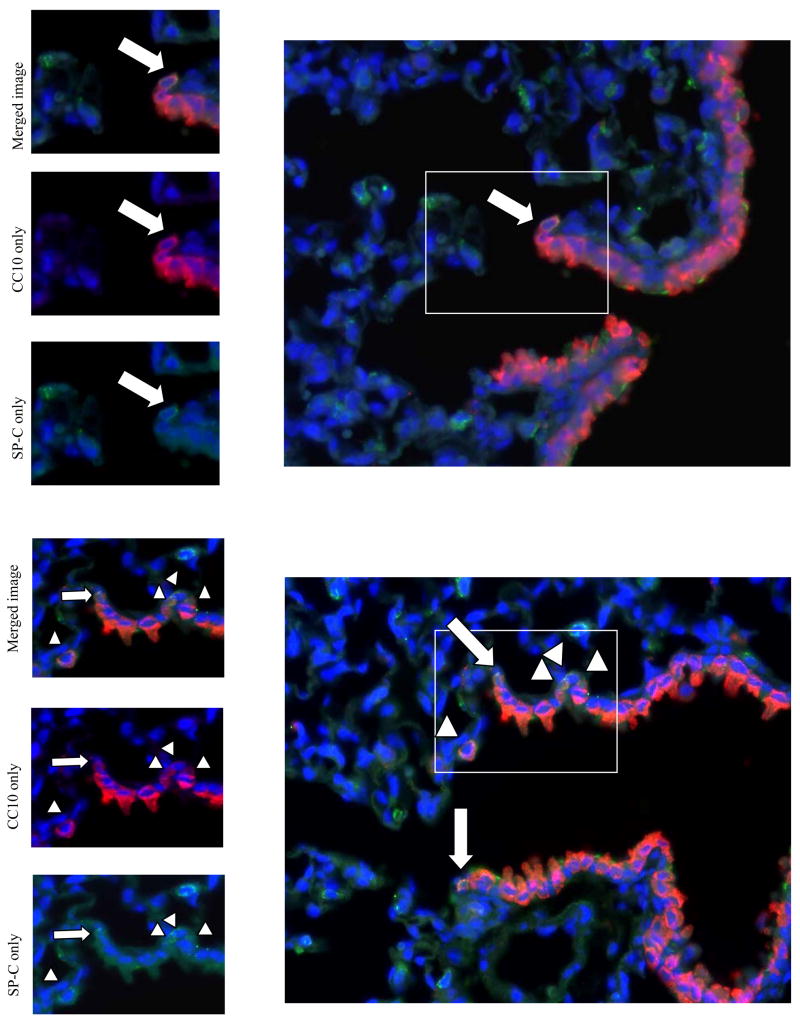
Immunofluorescence analysis of lung cells after pneumonectomy. (Top) Day 3 post-pneumonectomy. 1 normal BASC (arrow) found at the bronchio-alveolar junction. (Bottom) Day 14 post-pneumonectomy. Terminal bronchiole with 6 BASCs. In contrast to controls, BASCs were increased in number at the bronchioalveolar junction (arrows) and found in ectopic locations, including the alveolar space and sub-bronchiolar regions (arrowheads) red=CC10; green=proSP-C ; blue=DAPI.
Figure 5
Figure 5
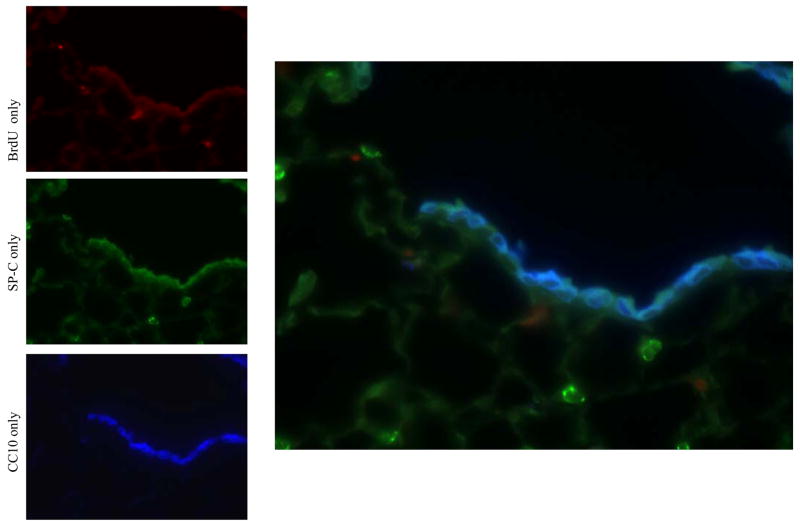
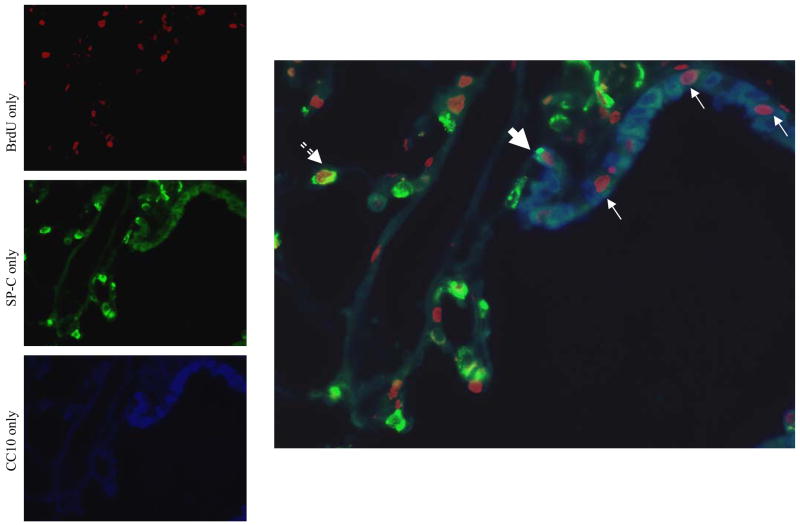
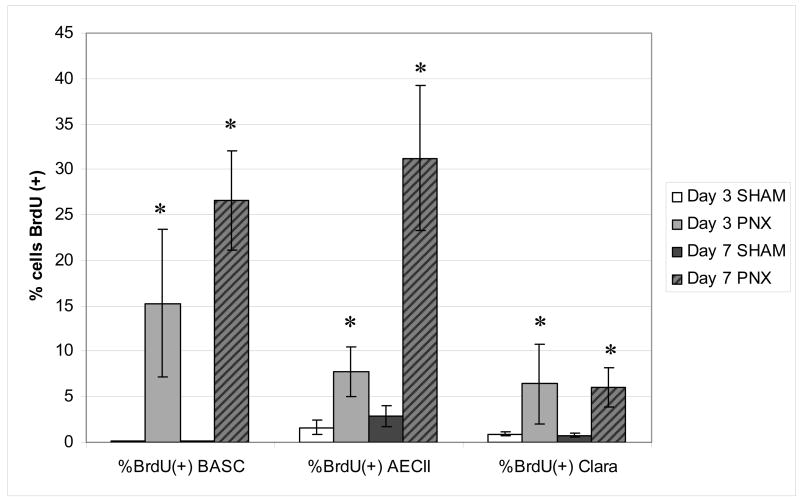
Analysis of BrdU incorporation after pneumonectomy. (A) Photomicrograph (400x mag) of bronchioalveolar duct junction in SHAM operated mouse (day 7) with nuclear BrdU (red), cytoplasmic immunostaining for Clara cells (blue), AECII (punctate green). Note the relative absence of BrdU-positive cells in the airways and parenchyma compared to PNX image; (B) PNX operated mouse (day 7) with a BrdU-positive BASC (large arrow), BrdU-positive Clara cells (small arrow) and a BrdU-positive AECII (dashed arrow). C) The percentage of BASCs, AECII and Clara cells identified by immunofluorescence that incorporated BrdU label administered in drinking water on days 0–3 or 4–7 post-pneumonectomy. Note that BASCs show no BrdU uptake after the sham procedure, but proliferate during lung regrowth. AECII also proliferate after PNX. Clara cells show a muted mitotic response to PNX that is stable between days 0–3 and 4–7. Data are mean values +/− SEM; * indicates P<0.05 between PNX and SHAM.
Figure 5
Figure 5
Analysis of BrdU incorporation after pneumonectomy. (A) Photomicrograph (400x mag) of bronchioalveolar duct junction in SHAM operated mouse (day 7) with nuclear BrdU (red), cytoplasmic immunostaining for Clara cells (blue), AECII (punctate green). Note the relative absence of BrdU-positive cells in the airways and parenchyma compared to PNX image; (B) PNX operated mouse (day 7) with a BrdU-positive BASC (large arrow), BrdU-positive Clara cells (small arrow) and a BrdU-positive AECII (dashed arrow). C) The percentage of BASCs, AECII and Clara cells identified by immunofluorescence that incorporated BrdU label administered in drinking water on days 0–3 or 4–7 post-pneumonectomy. Note that BASCs show no BrdU uptake after the sham procedure, but proliferate during lung regrowth. AECII also proliferate after PNX. Clara cells show a muted mitotic response to PNX that is stable between days 0–3 and 4–7. Data are mean values +/− SEM; * indicates P<0.05 between PNX and SHAM.
Figure 5
Figure 5
Analysis of BrdU incorporation after pneumonectomy. (A) Photomicrograph (400x mag) of bronchioalveolar duct junction in SHAM operated mouse (day 7) with nuclear BrdU (red), cytoplasmic immunostaining for Clara cells (blue), AECII (punctate green). Note the relative absence of BrdU-positive cells in the airways and parenchyma compared to PNX image; (B) PNX operated mouse (day 7) with a BrdU-positive BASC (large arrow), BrdU-positive Clara cells (small arrow) and a BrdU-positive AECII (dashed arrow). C) The percentage of BASCs, AECII and Clara cells identified by immunofluorescence that incorporated BrdU label administered in drinking water on days 0–3 or 4–7 post-pneumonectomy. Note that BASCs show no BrdU uptake after the sham procedure, but proliferate during lung regrowth. AECII also proliferate after PNX. Clara cells show a muted mitotic response to PNX that is stable between days 0–3 and 4–7. Data are mean values +/− SEM; * indicates P<0.05 between PNX and SHAM.
Figure 6
Figure 6
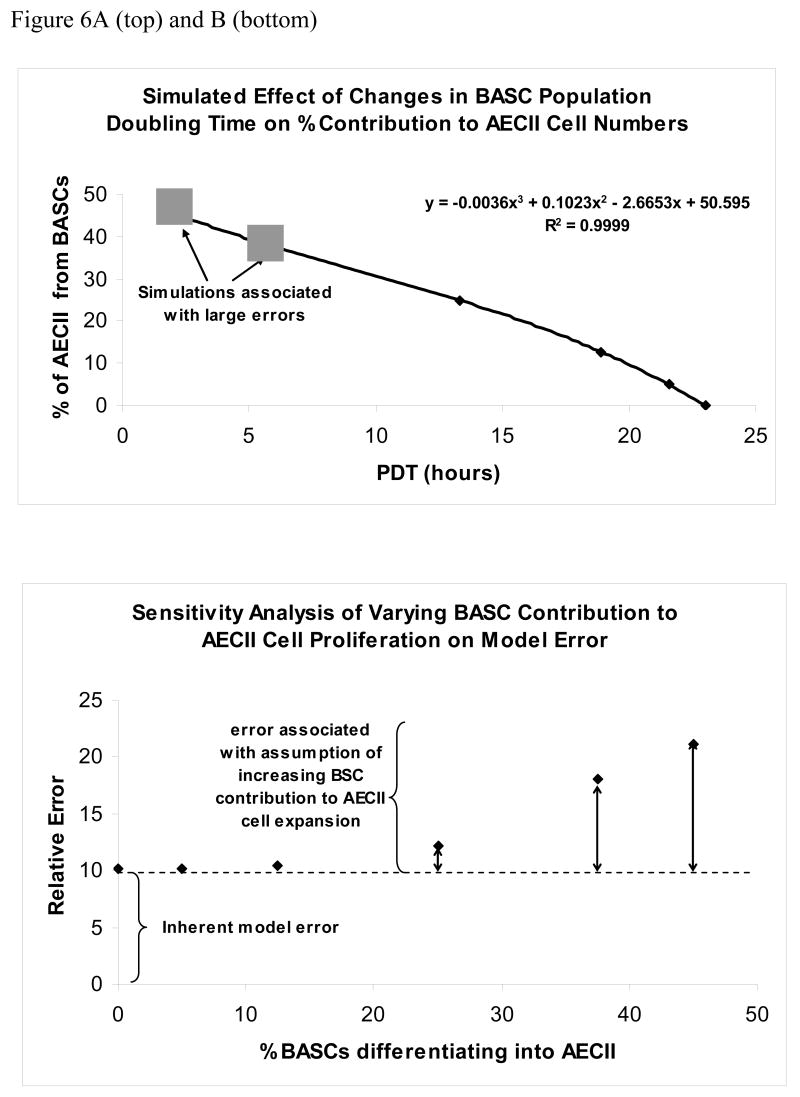
The range of PDTs that accommodate 0 to 45% BASC differentiation into AECII cells, and a sensitivity analysis showing the ability of the cell kinetics model to match experimental data over this range of % BASC differentiation into AECII cells are presented. Panel A (top) shows that BASC PDTs of 18 to 23 hours can allow up to a 12.5% differentiation rate of BASCs into AECII cells. Larger % differentiation rates are associated with PDTs that are not likely achievable in vivo. Panel B (bottom) shows modeling errors increase steadily as with simulated increases in the % BASC differentiation into AECII cells, even when high PDTs are used.

References

    1. Adamson IY, Bowden DH. The type 2 cell as progenitor of alveolar epithelial regeneration. A cytodynamic study in mice after exposure to oxygen. Lab Invest. 1974;30(1):35–42. - PubMed
    1. Brody JS. Time course of and stimuli to compensatory growth of the lung after pneumonectomy. J Clin Invest. 1975;56(4):897–904. - PMC - PubMed
    1. Brody JS, Burki R, Kaplan N. Deoxyribonucleic acid synthesis in lung cells during compensatory lung growth after pneumonectomy. Am Rev Respir Dis. 1978;117(2):307–16. - PubMed
    1. Brown LM, Malkinson AM, Rannels DE, Rannels SR. Compensatory lung growth after partial pneumonectomy enhances lung tumorigenesis induced by 3-methylcholanthrene. Cancer Res. 1999;59(20):5089–92. - PubMed
    1. Cuzick J. A Wilcoxon-type test for trend. Stat Med. 1985;4(1):87–90. - PubMed

Publication types

LinkOut - more resources