


Enzymology of the wood-Ljungdahl pathway of acetogenesis
- PMID: 18378591
- PMCID: PMC3040112
- DOI: 10.1196/annals.1419.015
Enzymology of the wood-Ljungdahl pathway of acetogenesis
Abstract
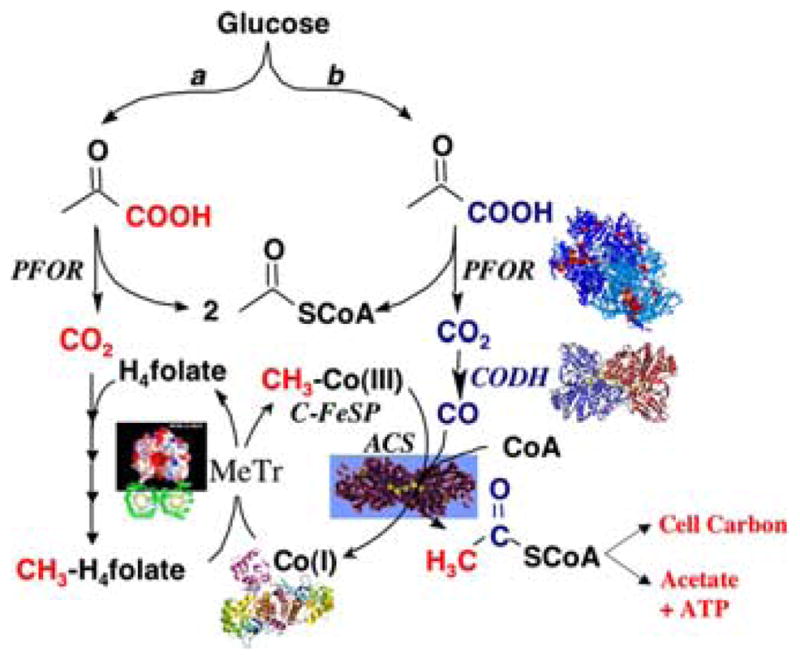
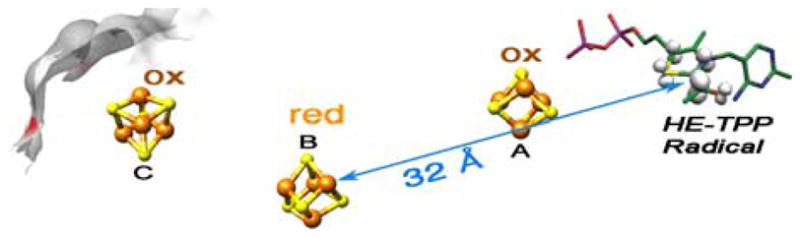
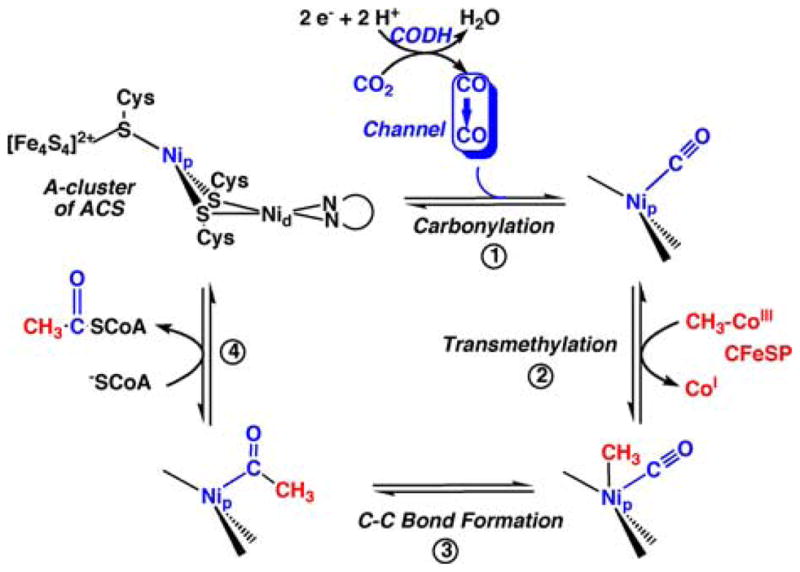
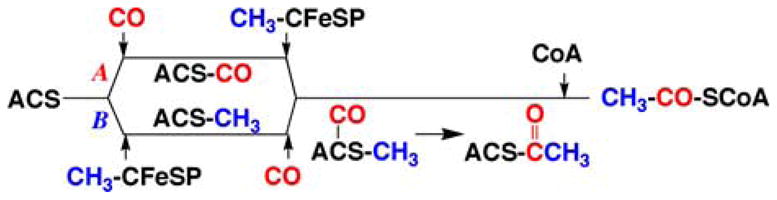
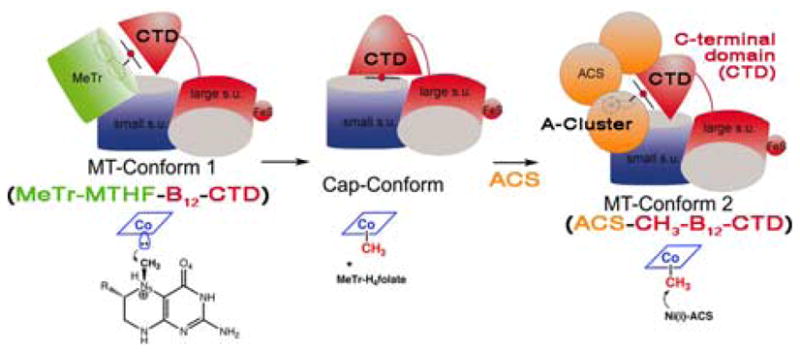
The biochemistry of acetogenesis is reviewed. The microbes that catalyze the reactions that are central to acetogenesis are described and the focus is on the enzymology of the process. These microbes play a key role in the global carbon cycle, producing over 10 trillion kilograms of acetic acid annually. Acetogens have the ability to anaerobically convert carbon dioxide and CO into acetyl-CoA by the Wood-Ljungdahl pathway, which is linked to energy conservation. They also can convert the six carbons of glucose stoichiometrically into 3 mol of acetate using this pathway. Acetogens and other anaerobic microbes (e.g., sulfate reducers and methanogens) use the Wood-Ljungdahl pathway for cell carbon synthesis. Important enzymes in this pathway that are covered in this review are pyruvate ferredoxin oxidoreductase, CO dehydrogenase/acetyl-CoA synthase, a corrinoid iron-sulfur protein, a methyltransferase, and the enzymes involved in the conversion of carbon dioxide to methyl-tetrahydrofolate.
Conflict of interest statement
The author declares no conflicts of interest.
Figures
References
-
- Ragsdale SW. Metalloenzymes in the reduction of one-carbon compounds. In: Bertini I, et al., editors. Biological Inorganic Chemistry: Structure and Reactivity. University Science Books; Mill Valley, CA: 2006. pp. 452–467.
-
- Ragsdale SW. Life with carbon monoxide. CRC Crit Rev Biochem Mol Biol. 2004;39:165–195. - PubMed
-
- Drake HL. Ann NY Acad Sci Incredible Anaerobes: From Physiology to Genomics to Fuels. 2008. Old acetogens, new light. In Press.
-
- Ferry JG. Biochemistry of methanogenesis. Crit Rev Biochem Mol Biol. 1992;27:473–502. - PubMed
Publication types
MeSH terms
Substances
Grants and funding
LinkOut - more resources
Full Text Sources
Other Literature Sources
