


Objectively measured, but not self-reported, medication adherence independently predicts event-free survival in patients with heart failure
- PMID: 18381183
- PMCID: PMC2751635
- DOI: 10.1016/j.cardfail.2007.11.005
Objectively measured, but not self-reported, medication adherence independently predicts event-free survival in patients with heart failure
Abstract
Objective: Medication nonadherence is presumed to be related to poor clinical outcomes, yet this relationship rarely has been tested using objective adherence measures in patients with heart failure. Which objective indicators of medication adherence predict clinical outcomes are unknown. The study objective was to determine which indicators of medication adherence are predictors of event-free survival.
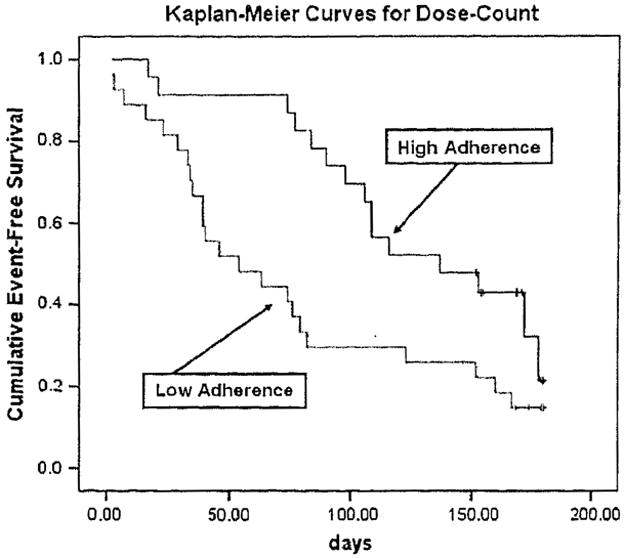
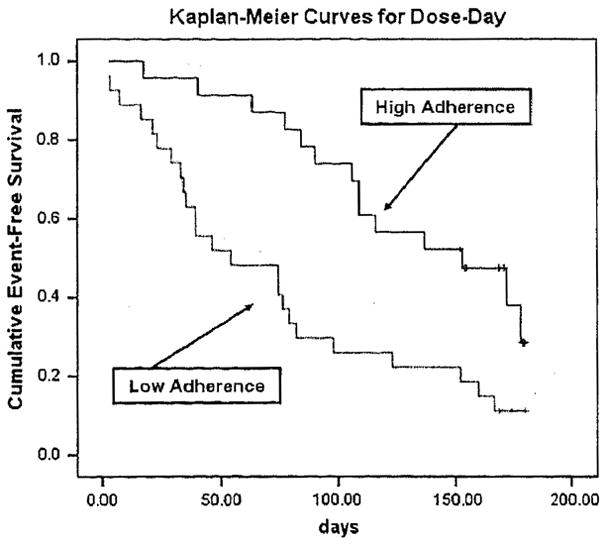
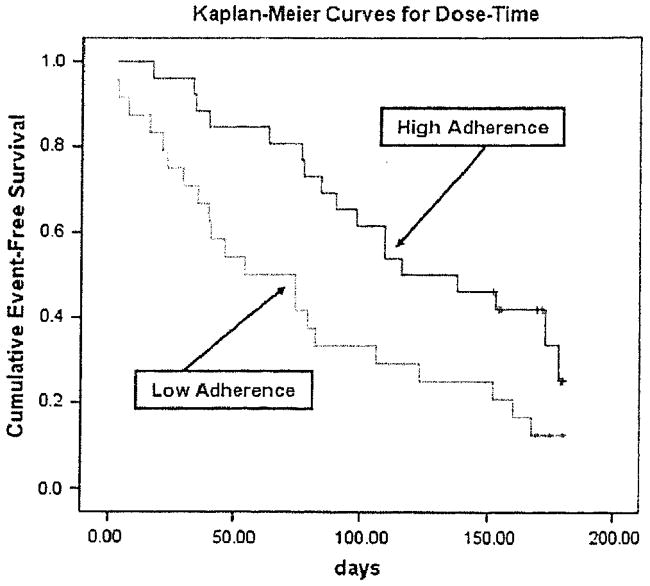
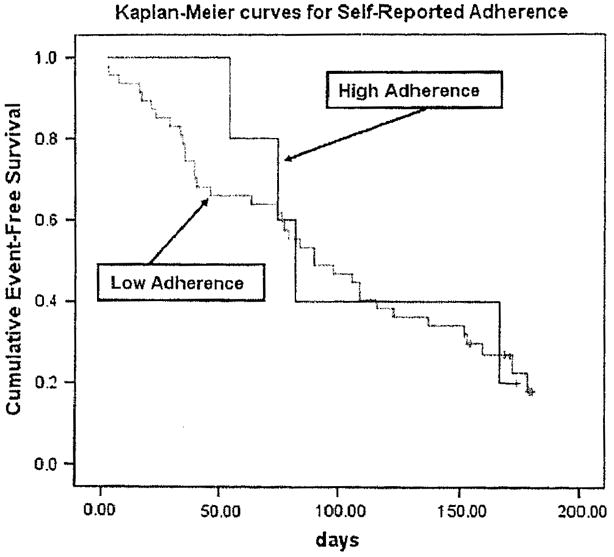
Methods: Patients (N = 134) with heart failure (69% were male, aged 61 +/- 11 years, 61% with New York Heart Association class III/IV heart disease) were enrolled in this 6-month longitudinal study. Adherence was measured using two measures: 1) an objective measure, the Medication Event Monitoring System (MEMS); and 2) self-reported adherence (Medical Outcomes Studies Specific Adherence Scale). Three indicators of adherence were assessed by MEMS: 1) dose-count, percentage of prescribed doses taken; 2) dose-days, percentage of days correct number of doses taken; and 3) dose-time, percentage of doses taken on schedule. Events (emergency department visits, rehospitalization, and mortality) were obtained by patient/family interview and hospital databases.
Results: In Cox regression, two of the three MEMS indicators, dose-count and dose-day, predicted event-free survival before and after controlling for age, gender, ejection fraction, New York Heart Association class, angiotensin-converting enzyme inhibitor use, and beta-blocker use (P = .004, P = .008, and P = .224, respectively). Self-report adherence did not predict outcomes (P = .402).
Conclusion: Dose-count and dose-day predicted event-free survival. Neither dose-time nor self-reported adherence predicted outcomes. Health care providers should assess specific behaviors related to medication taking rather than a global patient self-assessment of patient adherence.
Figures
References
-
- Stanley M, Prasun M. Heart failure in older adults: keys to successful management. AACN Clin Issues. 2002;13:94–102. - PubMed
-
- Cleland JG, Clark A. Has the survival of the heart failure population changed? Lessons from trials. Am J Cardiol. 1999;83:112D–9D. - PubMed
-
- Rich MW, Gray DB, Beckham V, Wittenberg C, Luther P. Effect of a multidisciplinary intervention on medication compliance in elderly patients with congestive heart failure. Am J Med. 1996;101:270–6. - PubMed
-
- Col N, Fanale JE, Kronholm P. The role of medication noncompliance and adverse drug reactions in hospitalizations of the elderly. Arch Intern Med. 1990;150:841–5. - PubMed
-
- Huang LH. Medication-taking behavior of the elderly. Kaohsiung J Med Sci. 1996;12:423–33. - PubMed
Publication types
MeSH terms
Substances
Grants and funding
LinkOut - more resources
Full Text Sources
Medical
