Review
. 2008 Apr;118(4):1291-300.
doi: 10.1172/JCI33947.

Pneumonia research to reduce childhood mortality in the developing world

Affiliations
Review

Pneumonia research to reduce childhood mortality in the developing world

J Anthony G Scott et al. J Clin Invest. 2008 Apr.

Abstract

Pneumonia is an illness, usually caused by infection, in which the lungs become inflamed and congested, reducing oxygen exchange and leading to cough and breathlessness. It affects individuals of all ages but occurs most frequently in children and the elderly. Among children, pneumonia is the most common cause of death worldwide. Historically, in developed countries, deaths from pneumonia have been reduced by improvements in living conditions, air quality, and nutrition. In the developing world today, many deaths from pneumonia are also preventable by immunization or access to simple, effective treatments. However, as we highlight here, there are critical gaps in our understanding of the epidemiology, etiology, and pathophysiology of pneumonia that, if filled, could accelerate the control of pneumonia and reduce early childhood mortality.


Figures

Figure 1
Figure 1. Mortality rate attributable to either pneumonia or influenza among children aged less than 5 years in the United States, 1900–1960.
The combined annual rates of death per 1,000 child years from either pneumonia or influenza were compiled from U.S. government reports and stratified into two age groups (6, 7). Improvements in the rates of mortality from either pneumonia or influenza before the introduction of antibiotics were associated with major interventions to improve infant feeding and nutrition and with improved housing and reduced indoor air pollution.
Figure 2
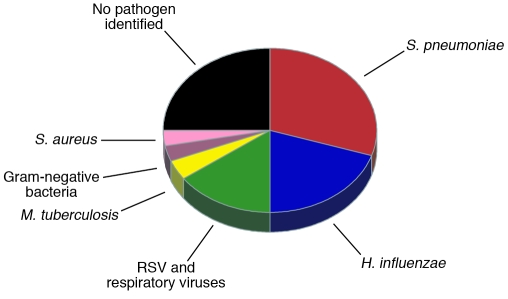
Figure 2. Etiology of severe pneumonia in children in developing countries.
Qualitative representation of the combined results of vaccine probe analyses (12, 113), studies of blood and lung aspirate cultures (, , –155), and virus studies (128, 156) in predominantly HIV-uninfected children. Note that children might be infected by two or more lung pathogens simultaneously. Single-etiology studies and studies of children in the developed world suggest the undiagnosed portion might be attributable, at least in part, to respiratory viruses (adenoviruses, influenza viruses, parainfluenza virus, human metapneumovirus, cytomegalovirus, rhinovirus, enteroviruses, and coronaviruses), Pneumocystis jirovecii, Mycoplasma pneumoniae, Chlamydia trachomatis, and Chlamydia pneumoniae. Etiology differs substantially in young infants (112), HIV-infected children (157), and malnourished children (15) as well as by region; for example, S. aureus accounted for one-quarter of the cases of pneumonia in a large study in Chile (158).
Figure 3
Figure 3. TLRs and the cytokine response to bacterial and viral pathogens.
Gram-negative bacteria (e.g., E. coli), Gram-positive bacteria (e.g., S. pneumoniae), and RNA viruses attach to different receptors on the respiratory epithelium, triggering a proinflammatory cascade that results in activation of macrophages and polymorphonucleocytes. The latter, in turn, trigger antiinflammatory negative feedback to shut down inflammation. MIP-1α, macrophage inflammatory protein–1α.

References

    1. Williams B.G., Gouws E., Boschi-Pinto C., Bryce J., Dye C. Estimates of world-wide distribution of child deaths from acute respiratory infections. Lancet Infect. Dis. 2002;2:25–32. - PubMed
    1. WHO Programme for Control of Acute Respiratory Infections. 1990. Acute respiratory infections in children: case management in small hospitals in developing countries. A manual for doctors and other senior health workers. WHO. Geneva, Switzerland. 74 pp.
    1. Scott J.A., et al. Aetiology, outcome, and risk factors for mortality among adults with acute pneumonia in Kenya. Lancet. 2000;355:1225–1230. - PubMed
    1. Metlay J.P., Fishman N.O., Joffe M., Edelstein P.H. Impact of pediatric vaccination with pneumococcal conjugate vaccine on the risk of bacteremic pneumococcal pneumonia in adults. Vaccine. 2006;24:468–475. - PubMed
    1. Preston, S.R., and Haines, M.R. 1991.Fatal years – child mortality in late 19th century America. Princeton University Press. Princeton, New Jersey, USA. 4–5.

Publication types

Substances