


Endocrine antecedents of polycystic ovary syndrome in fetal and infant prenatally androgenized female rhesus monkeys
- PMID: 18385445
- PMCID: PMC2531213
- DOI: 10.1095/biolreprod.108.067702
Endocrine antecedents of polycystic ovary syndrome in fetal and infant prenatally androgenized female rhesus monkeys
Abstract
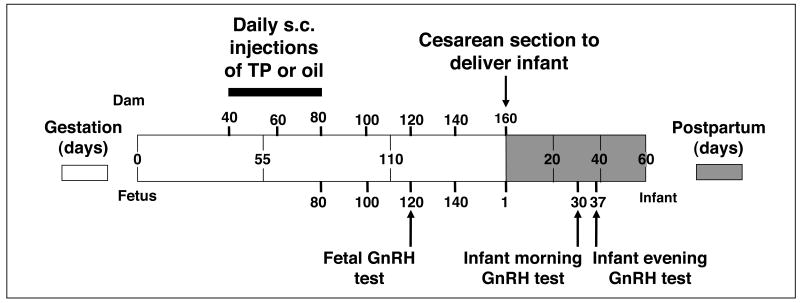
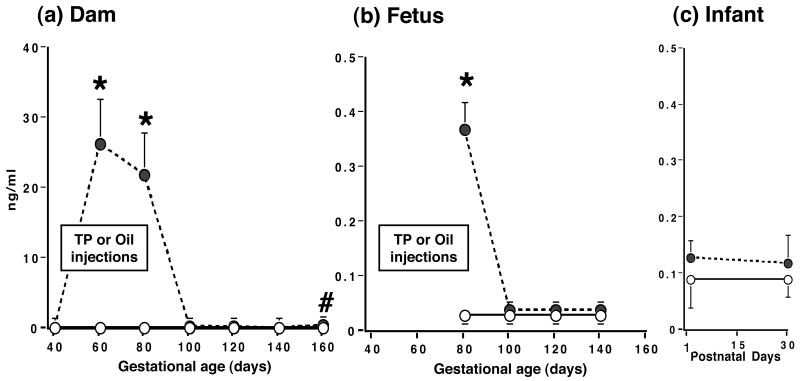
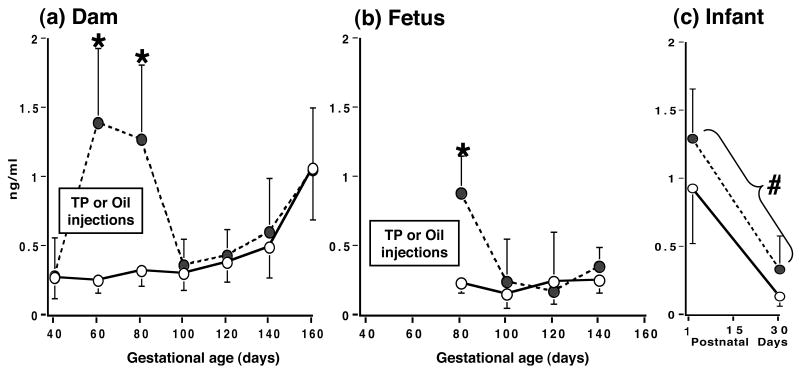
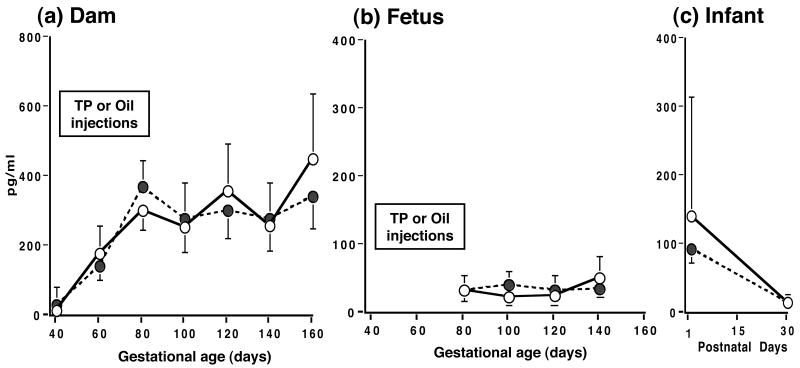
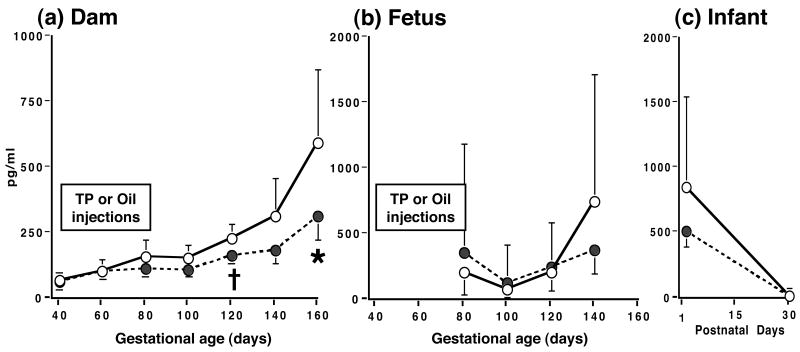
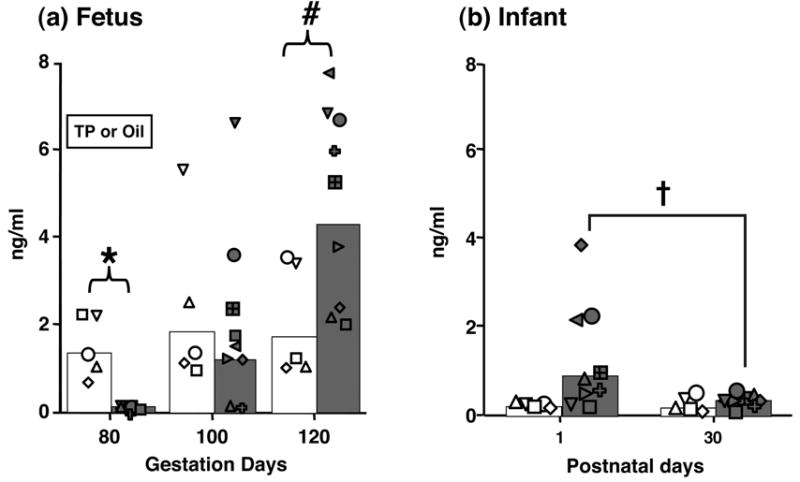
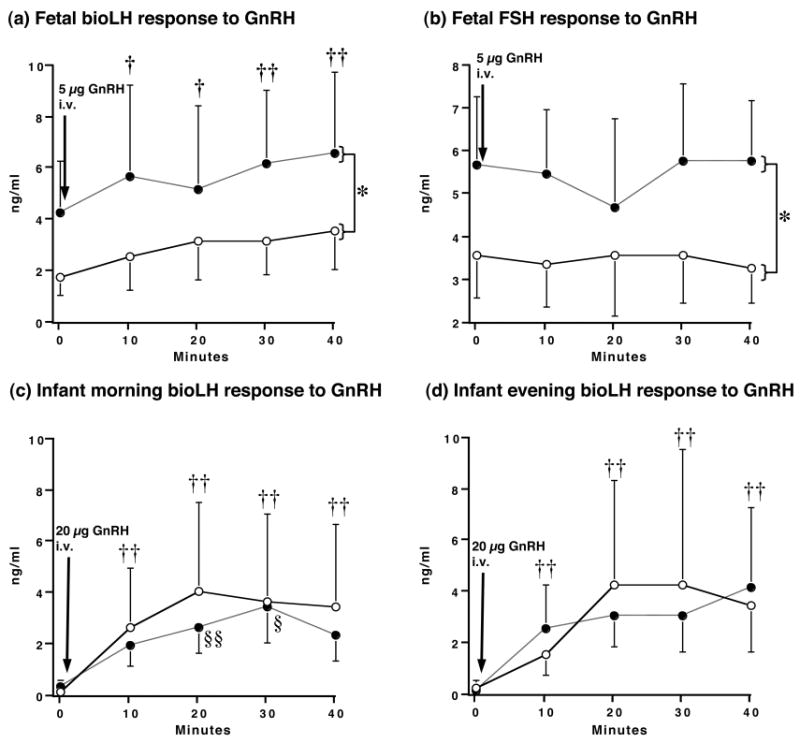
Experimentally induced fetal androgen excess induces polycystic ovary syndrome-like traits in adult female rhesus monkeys (Macaca mulatta). Developmental changes leading to this endocrinopathy are not known. We therefore studied 15 time-mated, gravid female rhesus monkeys with known female fetuses. Nine dams received daily s.c. injections of 15 mg of testosterone propionate (TP), and six received injections of oil vehicle (control) from 40 through 80 days of gestation (term, 165 days; range, +/-10 days). All fetuses were delivered by cesarean section using established methods at term. Ultrasound-guided fetal blood sample collection and peripheral venous sample collection of dams and subsequent infants enabled determination of circulating levels of steroid hormones, LH and FSH. The TP injections elevated serum testosterone and androstenedione levels in the dams and prenatally androgenized (PA) fetuses. After cessation of TP injections, testosterone levels returned to values within the reference range for animals in these age groups, whereas serum androstenedione levels in PA infants were elevated. The TP injections did not increase estrogen levels in the dams or the PA fetuses or infants, yet conjugated estrogen levels were elevated in the TP-injected dams. Serum levels of LH and FSH were elevated in late-gestation PA fetuses, and LH levels were elevated in PA infants. These studies suggest that experimentally induced fetal androgen excess increases gonadotropin secretion in PA female fetuses and infants and elevates endogenous androgen levels in PA infants. Thus, in this nonhuman primate model, differential programming of the fetal hypothalamo-pituitary unit with concomitant hyperandrogenism provides evidence to suggest developmental origins of LH and androgen excess in adulthood.
Figures
References
-
- Abbott DH, Barnett DK, Bruns CM, Dumesic DA. Androgen excess fetal programming of female reproduction: a developmental aetiology for polycystic ovary syndrome? Hum Reprod Update. 2005;11:357–374. - PubMed
-
- Abbott DH, Dumesic DA, Eisner JR, Colman RJ, Kemnitz JW. Insights into the development of PCOS from studies of prenatally androgenized female rhesus monkeys. Trends in Endocrinology and Metabolism. 1998;9:62–67. - PubMed
-
- Eisner JR, Barnett MA, Dumesic DA, Abbott DH. Ovarian hyperandrogenism in adult female rhesus monkeys exposed to prenatal androgen excess. Fertil Steril. 2002;77:167–172. - PubMed
-
- Abbott DH, Dumesic DA, Franks S. Developmental origin of polycystic ovary syndrome - a hypothesis. J Endocrinol. 2002;174:1–5. - PubMed
-
- Zawadzki JA, Dunaif A. Diagnostic criteria for polycystic ovary syndrome: towards a rational approach. In: Dunaif A, Givens JR, Haseltine FP, Merriam GR, editors. Polycystic Ovary Syndrome. Boston: Blackwell Scientific; 1992. pp. 377–384.
Publication types
MeSH terms
Substances
Grants and funding
LinkOut - more resources
Full Text Sources
Medical
